

No other work in American literature has haunted me like this one.
It is our Great American Play, I think. It’s truths are eternal, and the shock of recognition is terrifying.
It is a family play, set in 1912 in a house in New London, Connecticut. The story is deeply autobiographical. The characters are facsimiles of O’Neill’s family: the father, James, a once-promising Shakespearean actor who squandered his talent in exchange for an easy buck; the mother, Mary, a morphine junkie wrecked by addiction after the death of a young son; Jamie, the alcoholic and cynical older brother; and Edmund, the wayward, seafaring youngest son with a deep poetic streak, who is the playwright himself, but who takes the name of O’Neill’s real-life dead brother in the play.
O’Neill wrote “Long Day’s Journey” in the early 1940s, in the last decade of his life while in the throes of a severe neurologiocal disorder, after he’d been awarded the Nobel Prize. He never wanted it to be performed. His widow, determined to enshrine his legacy as one of the great American artists after his death, insisted that it be produced on the stage. It was, and it was a smash, winning the Pulitzer Prize in 1956, O’Neill’s fourth.
The play, like much of O’Neill’s work, is about what you’re left with after all illusion has been stripped away. It’s about saying everything you’ve ever wanted to say to your loved ones, but couldn’t. It isn’t always pretty.
As Tony Kushner said in a PBS documentary: “[O’Neill’s idea is that] there are great complexes and abysses of meaning under the surface of life, and our job as artists and people is to dig, and go deep, and to dive, as Melville kept saying, deeper and deeper and deeper, and the more deeply you dive the more you’re at risk of being dismantled and crushed. But that’s what your job is and you don’t flinch from it … O’Neill is our Shakespeare, he sets the standard.”
It’s been said that O’Neill invented American theatre, that he was our first serious playwright. It’s interesting to note that most of the major American writers of his vintage saw their talent flame out as they aged (Faulkner, Hemingway, Fitzgerald); O’Neill’s only improved, despite a worsening battle with a Parkinson’s-like disease. That is heroic.
O’Neill died in a Boston hotel along the Charles River in 1953, with his wife Carlotta at his side. “Born in a hotel room,” he told her before passing, “and goddamnit, died in a hotel room.”
#eugeneoneill #longdaysjourneyintonight #tonykushner #americandrama #broadway #jasonrobards #katherinehepburn #sidneylumet @americanexperiencepbs

This book taught me about the musical possibilities of the English language: that the sound and rhythm of words on a page could take on an almost symphonic-like power in the hands of a master.
I first read “All The Pretty Horses” as a senior in high school. It was a Christmas gift from a close family-friend — thank you, Mrs. Stacie — who strongly felt that I should read it before going off to college. I’ve returned to it many times since.
The soaring nature of the language ignited something in me that had only been lit by music up to that point, on songs like “Mr. Tambourine Man,” “Thunder Road” and the video for “November Rain,” when Slash is in the desert alone with his Les Paul, ampless in front of a white chapel.
It was never my dream to just “stick around,” and perhaps this book also spoke to a maladaptive sense of wanderlust. Part of me always wanted to wander the earth like my partial-namesake Kwai Chang Caine in the ’70s tv show “Kung-Fu.” But it was not to be.
In the book there are the brilliant evocations of the land and wildlife and a long disquisition on the history of Mexico (“They kicked [Francisco Madero’s] dead body and spat upon it. One of them pried out his artificial eye and it was passed among the crowd as a curiosity.), as well as a reckoning with the fragility of our relationship with our sister republic. McCarthy’s vision of the world can be incredibly dark but it is punctuated with flashes of breathtaking beauty.
As he wrote:
“He thought that the world’s heart beat at some terrible cost and that the world’spain and its beauty moved in a relationship of diverging equity and that in this headlong deficit the blood of multitudes might ultimately be exacted for the vision of a single flower.”
#alltheprettyhorses #cormacmccarthy #kwaichangcaine #kungfutvshow #franciscomadero
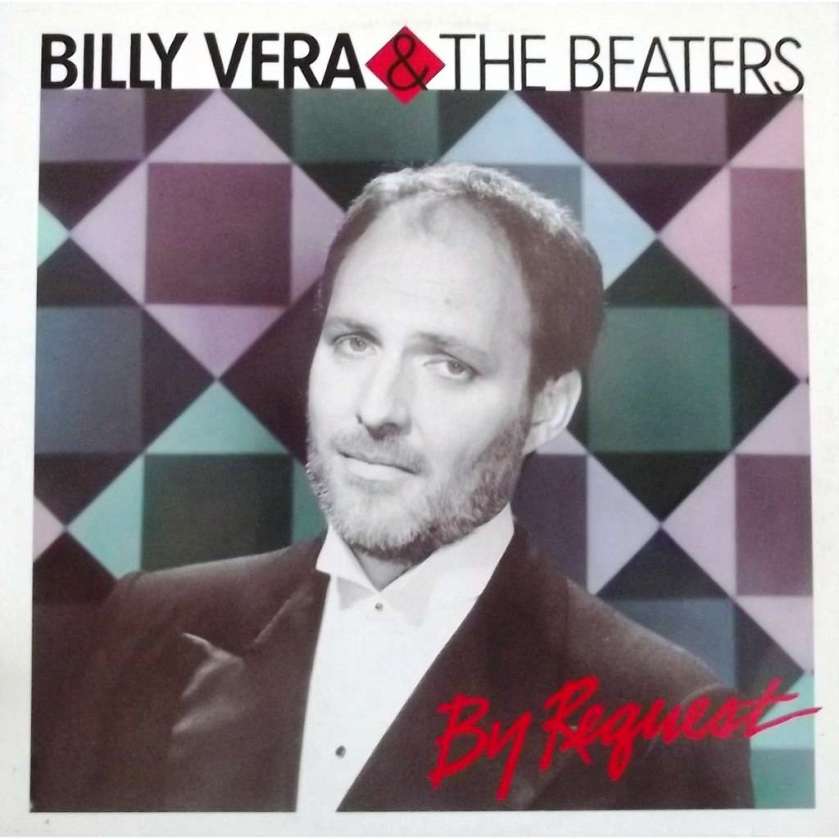
Continuing my theme of firsts (first base, first love, first smoke and beer will come later), this was the first cassette I remember purchasing myself. It was 1986, and I was about seven.
I had become obsessed with a song called “At This Moment” which appeared on this album. I first heard it one night on tv at my grandmother Mama Telle’s house in Panama City, likely during the holidays. The song played near the ending of an episode of “Family Ties,” a show I hadn’t seen till then as it ran past my bedtime. But I caught it that night, and I liked it immediately, mainly, I think, because it starred Michael J. Fox — a familiar face from “Back to the Future” and the very definition of cool to a seven year old.
Some time after we got back home, I got my mom to drive me to the Record Bar in her blue Ford station wagon. I recall the embarrassment I felt when, asking a clerk where to find it, I referred to Vera’s backing band as the Beatles. He laughed, then pointed me in the right direction.
“At This Moment” is a piece of maudlin, blue-eyed soul, and a really weird song for a kid to dig. But we like what we like, as they say. I don’t think I cared for any other tunes on the album, especially hating one number called “Peanut Butter.”
I forgot about the song for a long time. Then one night, around the time I got married in 2005, my now ex-father-in-law randomly mentioned at dinner that it was his favorite song. It was clearly personal to him, and likely spoke to the regret he felt over some things not voiced that night. I kept mum about my own history with the tune. #atthismoment #billyveraandthebeaters #familyties #michaeljfox

Jimmy Buffett’s live album Feeding Frenzy inaugurated my relationship with the compact disc. I think I bought it at Peaches Records— R.I.P. — on Airport Boulevard in Mobile around 1990. The album is so named because it includes the fan-favorite “Fins,” one of his lesser offerings. (“Why Don’t We Get Drunk and Screw” is also included.)
While I do not find Jimmy worthy of the Nobel, let the record show that I am not a Buffett hater. He is something of a patron saint in his native Mobile, and to hate this fun-loving and often off-key minstrel would be like betting against the home team.
Buffett, many are surprised to learn, has earned Dylan’s laurels — no small feat/fete. The bard even performed “A Pirate Looks at Forty” with Joan Baez after they reunited in the early’-80s. I thought of “Pirate” as an old man’s song when I was a kid, and now, so many years later, I find myself regarding mother, mother ocean beyond that nautical vantage point Buffett sang so wearily about.
My favorite song to this day on Frenzy is “Come Monday,” if only for the line “I got my hush puppies on.” Hush puppies were de rigeur for middle-school dances and gatherings under the Friday night lights from ’89 to ’92 in Mobile. Jimmy was singing about us, by God.
It is also pretty baller that in 2006 he got busted in France for ecstasy (a charge he denied to Matt Lauer on the Today Show).

There is a train that’s heading straight
To Heaven’s gate, to Heaven’s gate
And on the way, child and man
And woman wait, watch and wait
For Redemption Day
When Sheryl Crow, the subject of this issue’s cover, penned these lines in 1995 in response to her experiences on a USO trip to war-torn Bosnia, most Americans would not have imagined that, nearly 25 years later, they would resonate here at home as precisely as they do. The words are from “Redemption Day,” off Crow’s eponymous second album, which she has now reworked for her latest effort, Threads. On Threads, the song functions as the spiritual lever of the record, offering its prescience to the present with a power and clarity that is intensified with the vocal accompaniment of an American icon, Johnny Cash. Fans will remember that Cash recorded it shortly before his death in 2003, seven years before its posthumous release on Ain’t No Grave: American Recordings VI. This new version features vocals from both artists and the video weaves their images with scenes of human bravery and tragedy with such force that John Carter Cash, Johnny’s son, found it overwhelming.
Threads is a long-gestating effort from the Missouri native that boasts mostly new music, with a few well-placed covers and features collaborations with heavyweights such as Mavis Staples, Keith Richards, Chuck D and Stevie Nicks, as well as younger singer-songwriters Jason Isbell, Chris Stapleton, Margo Price, St. Vincent, and Gary Clark Jr. to name a few. It has been well worth the wait.
****
Our greatest artists have always chronicled the times, and the best among them today are documenting the present with their music. And still, they are doing it with defiant hope. Merely days after the shootings in Dayton and El Paso, Lana Del Rey posted to Instagram an excerpt from a song she’d written not long after the news of the carnage broke. The tune is called “Looking For America,” and it reads in part: “I’m still looking for my own version of America/ One without the gun, where the flag can freely fly/ No bombs in the sky/ Only fireworks when you and I collide/ It’s just a dream I had in mind.” Let’s hope it finds its way on to Del Rey’s soon-to-be released album, Norman Fucking Rockwell!
Elsewhere in this issue, we profile the Lumineers, whose new album, III, grapples with the plague of addiction. (In 2017, there were 94.4 opioid prescriptions for every 100 persons in Tennessee alone.) One of the band’s principals, Jeremiah Fraites, lost his brother to heroin addiction when he was 13, long before the opioid crisis hit. The album charts the trials of a fictional family but, for Fraites, the writing process was cathartic. “I’d be lying if I didn’t believe maybe some people are going to feel this album is too heavy,” he says, “but I think it’s a very raw, very honest album.”
We also talk to Brittany Howard, the vocal powerhouse for Alabama Shakes, who is about to release her first solo album called Jaime. The record is a tribute to her late sister, who passed away when Brittany was a young teenager, but it also explores in remarkably nuanced fashion issues of race, identity, and religion. Howard is bi-racial and has had romantic relationships with men and women, thus giving her a multiplicity of perspective. One song chronicles a family episode in her childhood when someone put a bloody goat head in her father’s truck, an event that her family believed to be racially motivated. Another song makes the case for unconditional divine love and acceptance, the kind that exists outside the dictates of organized religion.
Sadly, as this issue heads to the print, we say goodbye to David Berman, whom we featured in the last issue for his new project, Purple Mountains. Berman is best known for his work with Silver Jews, and though he is not a household name, his songwriting, along with his published poetry, commands a deep and abiding respect among fans, fellow artists and critics. Berman, who passed away on August 7 at age 52, was open about his struggles with depression and substance abuse. Throughout his life he suffered profoundly, but in the midst of that suffering he managed to carve out a body of work that is redolent with truth and beauty, humor and sadness. It is a body of work that will stand the test of time. We are left with the memory of his life, along with his sublime words and music.
I believe the stars are the headlights of angels
Driving from heaven to save us
To save us
Look in the sky
They’re driving from heaven into our eyes
And though final words are so hard to devise
I promise that I’ll always remember your pretty eyes
Your pretty eyes
— from the song “Pretty Eyes” (1996)

“He’s a dark horse, and the thing that’s revelatory [about his work] to me, is how much of our current media and technology and influence-environment he predicted. If I’m contributing anything to the Beat scholarship side of this, I hope that is valuable on some level. In my research I didn’t see anyone else who’d pulled those threads together — the idea that Burroughs is a mixed-media Nostradamus. His vision is dark and incredibly relevant in the era that we currently occupy.”
I interviewed Casey Rae about his book on William S. Burroughs’ place in rock music. Read it here on americansongwriter.com.

Not long after moving back to Mobile, in the early days of this cruel and wanton summer, I made a pilgrimmage to the last-standing Colonel Dixie in my hometown.
Colonel Dixie, or “The Dick” as it was so warmly known, was a local, homegrown approximation of McDonald’s (who once sued the company for trademark infringement) and home of the beloved “Dixie Dog.” This particular location had apparently closed down a few years ago, but the building remained, standing like some crooked monument to the franchise’s faded glory.
Colonel Dixie was a local instition throughout the ‘70s, ‘80s and ‘90s. It carried a history as rich and piquant as its beloved “Dixie Dogs.” The owner, a brash, redneck Mobilian by the name of Paul Leverett, had his wife murdered by a hitman in the early ‘80s so he could marry his mistress (“Phyliss”). Mr. Leverett was convicted and eventually murdered in prison.
A child of the Springhill neighborhood in West Mobile, my local “Dick” stood on the corner of Old Shell and McGregor. It was the regular meeting place after “ballroom dancing” class on Mondays in the sixth grade. Later, when you reached driving age, you’d meet up at there to find out where the party was that night. Sometimes, when the scene was slow, you would just hang out in the lot, smoking and drinking and maybe listening to Harrison pick an Allman Brothers tune, until a cop showed up and the Broncos and Blazers scattered like spooked horses.
R.I.P, Colonel. We’ll never forget you.


The Red Clay Strays at Callaghan’s in Mobile. Friday, July 26.
See full photo gallery on americansongwriter.com

A New Window
If there is one word that can describe the panoply of musical and intellectual voices that is Rhiannon Giddens, it is kaleidoscopic. A serious disciple of old-time music who first sprang to the public’s attention with her band the Carolina Chocolate Drops in the mid-aughts, this MacArthur fellow and our current cover star is now using her arsenal of talents to write an opera.
According to a report in the The New York Times published just before this issue went to press, the story is set in South Carolina and is based on the life of Omar ibn Said, an African-Muslim scholar who was enslaved and transported to America in 1807 and whose memoir, written in Arabic, is one of the rarest treasures of 19th century letters.
For nearly a decade, Giddens has been heralded as a luminary in the world of Americana, and for some time, she was one of the few African-American faces represented. Though she has since opened doors in roots music for several musicians of color, this is an artist for whom genre is perceptibly irrelevant. The 42-year-old banjoist is charting her own path, and as she explains in this issue’s cover story by Marissa R. Moss, she is not about to let anyone else dictate the terms of what country and folk music is or is not. Napoleon once said that “history is a set of lies that people have agreed upon,” and where that idea holds true for the conventional narratives of American music that are held up as Gospel, Giddens has provided a voice of clarity and completion. “The story is not that the banjo is from Africa, the story is why don’t we know that,” she says.
Giddens’ latest studio album, a collaboration with jazz musician Francesco Turrisi called there is no Other, finds her stretching the boundaries of her native folk idioms into reaches that are seldom explored, touching on elements of Arabic and Mediterranean music, even on songs like the traditional standard “Wayfaring Stranger.” The album is not so much an escape into the remote as it is an attempt to show the musical connections that apply the world over. At a time when it seems that the old tropes of country and folk have been completely exhausted, along comes a new artist with the capacity to offer a tectonic shift of perspective, and provide a whole new window through which to view our shared musical past.
We also check in with the eminently quotable David Crosby, who is the subject of the new feature-length documentary Remember My Name. The movie, which was co-produced by Cameron Crowe, examines the artist’s star-crossed history with his Crosby, Stills, Nash & Young bandmates. It also addresses his newfound approach to collaboration, an approach that he says is devoid of the trappings of rock-star ego, the very Achilles heel that sank the CSN&Y ship.
Jimmy Webb, one of our all-time great story songwriters, is back with a new album of solo piano instrumentals titled Slipcover. This curious offering features songs by Billy Joel, The Rolling Stones and Joni Mitchell, among others, and attempts to make the case that our best rock and roll composers deserve to be held in as high esteem as those that populate the pre-war Great American Songbook.
We also hear from John Fogerty who performed in residency in Las Vegas earlier this year and will return again this fall. Like so many great songwriters we’ve talked to in these pages over the years, Fogerty says some of his best work is a result of channeling the great muse, and explains his sense of awe and wonder after completing “Proud Mary” as a fledgling songwriter. “I started with nothing and it would be there,” he tells Paul Zollo. “It’s kind of daunting. You’re kind of scared.”
Elsewhere, we profile some of the most promising young songwriters on the scene today. One of those artists, Caroline Spence, recently released her debut album on Rounder Records, the title track of which won the grand prize in our lyric contest back in 2013. We also talk with Patrick Stickles of the New Jersey punk band Titus Andronicus, whose latest album was produced by a personal hero of Stickles’, Bob Mould of Hüsker Dü fame. And finally, we catch up with David Berman, a poet and songwriter best known as the frontman of the late, lamented indie-cult band Silver Jews. After nearly a decade of silence, or “playing chicken with oblivion,” as he sings, Berman has returned with a new project called Purple Mountains, an inspired collaboration with the band Woods that is full of bon mots and stands alongside some of his best work.
Early short story from 1986. Click link to read.

Soldier Creek, Alabama. May 8, 2019.
 Caine O'Rear