
Soldier Creek, Alabama. May 8, 2019.
Soldier Creek, Alabama. May 8, 2019.

From May/June 2019 Editor’s Note of American Songwriter.
“When I listen to other songwriters, I’ve never found anything more powerful than when you don’t have to use every little word in the English language. It has to be sparse.”
That’s Justin Townes Earle, the subject of this issue’s cover story, talking to American Songwriter back in 2014, shortly before the release of the album Single Mothers. Later this month, Earle returns to the mix with his eighth full-length studio effort The Saint Of Lost Causes, which is being released on New West Records. For this collection, the 37-year-old Nashville native continues to employ considerable economy in his lyrical approach. Thematically, the album finds Earle working with big-picture, topical subject matter, turning his eye on America’s social challenges à la one of his songwriting heroes, Woody Guthrie.
This pivot toward the macro marks something of a shift for Earle, whose subject matter has typically favored a more first-person, autobiographical approach. Yet Earle insists the new album is “social” and not “political” in nature. The songs address complicated subjects that are beyond any one person’s power to affect, but have an impact upon all of us individually — issues of gentrification, the opioid epidemic, among others, but make no mistake, nothing in this work drifts toward coffeehouse folk. Like many of the works in his catalog, these songs are dressed up in various elements of southern roots music: boogie-woogie blues, noirish country, Memphis rock and roll.
One of the album’s more affecting numbers, “Over Alameda,” comes about halfway through the album. It’s a ballad set in South Central Los Angeles that tells a story of generational poverty, de facto segregation, and deindustrialization that culminates with a subtle suggestion of the causes of gang life. A country folk-sounding number with ghostly pedal steel, the lyrics are sparse, and decades of American history and economics are detailed with a handful of simple verses about a family.
Mama would tell me of her hopes
What she hoped to leave behind
What she thought she would find out in California
She’d talk about Mississippi
Still don’t know how it is
Any place can be worse than this
It’s hard to believe
The song takes its place in the long line of “going-to-California” folk songs. The song’s speaker is a 19-year-old boy living in the Jordan Downs Housing Project in the Watts neighborhood of Los Angeles. We understand that his mother had moved from the Mississippi Delta to Los Angeles in the mid-’60s and his parents bought a home after his father landed a job at the Firestone factory in south Los Angeles. But the story takes a turn when the factory closes down, and that Promised Land remains ever elusive, even in the California of our collective imagination.
Then the jobs moved out
Then daddy died and we lost the house
Moved into the Jordan Downs
And been here ever since
Once they’ve settled in Jordan Downs, the mother dreams of life “Over Alameda,” the street that borders the housing project to the east, beyond which “the green grass grows” and the “white folks live.” But the young protagonist has only known life in Jordan Downs, and he says “all I have discovered/ There is nothing for a boy of color but to fight.” Jordan Downs was ground zero for the Grape Street Watts Crips, a notorious gang that was the subject of the early ’90s film Menace II Society, and while the narrator does not explicitly say he is a Crip, all he knows is that very neighborhood and the reality of an endless fight to escape to something better, “over Alameda.” The listener can fill in the gaps how they see fit.
Ernest Hemingway explained the importance of omission in writing in his treatise on bullfighting, Death In The Afternoon, arguing that he attempted to show only the tip of the iceberg in his work. “If a writer of prose knows enough of what he is writing about,” Hemingway said, “he may omit things that he knows and the reader, if the writer is writing truly enough, will have a feeling of those things as strongly as though the writer had stated them. The dignity of movement of an iceberg is due to only one-eighth of it being above water.”
In the same spirit, Earle does not spell out the historical and geographical minutiae of the story. Such details are not necessary for one to fully apprehend the overtures of meaning offered by the song. “Over Alameda” is really just a song about the hope for something better, and it allows the emotion of the music to convey that hope as much as anything else. The listener must rely on their own creative capacity to fill in the details of the story, which in turn helps deepen their connection to the song. As a result, instead of creating distance between the listener and his work through his economy, Earle is closing it.
Hemingway’s iceberg analogy is indeed an interesting theory of writing, certainly not the only one, but one Justin Townes Earle seems to have used remarkably well.

Cover story for March/April 2019 edition of American Songwriter.
Let It Be
Gary Clark Jr. was ready to take a stand.
When the Texas artist entered Arlyn Studios in downtown Austin to begin making This Land at the beginning of 2018, he wanted to get some things off his chest. Since the release of his last album in 2015, The Story of Sonny Boy Slim, Clark had, like the rest of us, been a witness to the greatest political and sociological shockwave to hit the United States since the Long Hot Summer of 1967. The Black Lives Matter movement, which first took root in 2014, had reached a crescendo after a raft of highly publicized killings of black Americans at the hands of police. From that followed the protests of NFL quarterback Colin Kaepernick and other players, who, as a show of solidarity with the movement, opted to kneel during the playing of the National Anthem. And then there were the events in Charlottesville, the picturesque college town that ended up playing host to a white supremacist rally that resulted in the vehicular homicide of one protester and the injury of 40 others. There had been more, and set parenthetically within the election of Donald Trump, it was clear something had changed in the ether of the republic.
There had been changes in Clark’s personal life too, mostly for the better. In 2016 Clark married his Australian model girlfriend Nicole Trunfio and the two are now parents to Zion, who is four, and one-year-old Gia. The couple also bought a 50-acre ranch just outside Clark’s hometown of Austin. Life was good, but the artist felt a growing angst within.
The swirling currents of the past three years had cut into Clark’s personal experience and created a need for an outlet of expression. According to producer and engineer Jacob Sciba, who’d also worked on the Sonny Boy record, it was this sense of urgency that informed much of the recording process. Clark was also determined to elevate the level of his songwriting, and this time around he wanted to have a message, to use his voice for the greater good. In short, he wanted to say something. “No more ‘Mr. Nice Guy,’” he told Sciba, “he’s dead.”
*****
I first meet up with Clark backstage before a show in Chattanooga, in late 2018. The album’s first single and title track, “This Land,” has not been released. When the video for the song drops in January, it makes a considerable splash. Directed by British-born filmmaker Savanah Leaf, the video is conceived as short film that features several black children in the Texas countryside, situated among Confederate flags and other emblems of the Old South. Clark’s character is holed up in a white-columned mansion throughout, “right in the middle of Trump country,” shredding on a Gibson SG next to a raised American flag.
Sciba knew it couldn’t be radio-edited and because of the raw power of the song he felt a twinge of concern for his friend of 10 years, knowing Clark was opening himself up to attack. Indeed, the video sparked a backlash from a portion of Clark’s audience via social media, who accused him of playing the “race card” and cashing in on the hot-button issues of the day.
Clark responded days later on Twitter in very clear terms: “People want to escape through music to be entertained and take their mind off of reality. I’m not an entertainer. I want to be in the middle of it and face reality in my life and be honest about my feelings.” What he did not say on Twitter, but did reveal to Rolling Stone after the video’s release, was that the song’s lyrics stemmed from an incident he’d had with a neighbor at the ranch. According to Clark, the neighbor had approached him and said, “Who owns this house?”, refusing to believe it could belong to someone who looked like Clark. All of which happened in the presence of Clark’s young son, who was left shaken and confused by the incident. Clark kept his cool in the moment, but tough questions followed. What had been swirling in the ether was now on the ground. A short while later Clark’s venom found its way into “This Land” when he wrote:
I remember when you used to tell me
‘Nigga run, nigga run
Go back where you come from
Nigga run, nigga run
Go back where you come from
We don’t want, we don’t want your kind
We think you’s a dumb bum’
Fuck you, I’m America son
This is where I come from
This land is mine.
My first question for Clark on the night we meet is about the song. Clark, who stands a wiry 6 feet 5 inches, is soft-spoken and demure, and there is a real gentleness about him. He takes some time before answering.
“I just got on the microphone and just let it out, you know?,” he says. “It’s hard to explain these songs. I spent my whole life being black in Texas and [there’s] blatant and subtle and abrasive discrimination. With the current climate politically, it’s like, ‘What the fuck is happening?’ Everyone just wants to be treated like a human being. We all have family and people that we love and care about, and we’re trying to take care of them and support them like everybody else and we’re here. We’re here. We’ve all migrated from somewhere in this land and we’re here … You can spend your whole life being pissed off at somebody that you don’t understand, but at the end of the day, you’re going to be buried right next to them. So what are you going to do?”
Sciba knew the song was a game-changer as soon as Clark shared the words. “I heard the song as a beat for seven months, and then one day all of the sudden I heard a lyric, and Gary was like, ‘I think I have something.’”
“It’s scary in a sense because Gary is such a calm and peaceful guy,” Sciba explains, speaking by phone one night after a studio session at Arlyn. “He’s very sweet and soulful and this is very aggressive … but I knew it was something that was going to get people’s attention. So let it be. If it offends, it offends.”
“This Land” subtly samples Sharon Jones and the Dap Kings’ R&B version of “This Land Is Your Land,” recorded by the group in 2005. Woody Guthrie wrote the original lyrics in New York City in 1940, inspired by a recent cross-country road trip he’d taken. He also wrote it as a response to Irving Berlin’s jingoistic “God Bless America,” which was dominating the airwaves at the time. The original lines include the more socialist-leaning verse that questions the notion of private property, a section largely omitted from schoolbooks.
For much of her professional life, Woody Guthrie’s daughter Nora has worked on behalf of her father’s legacy, as the former director of the Woody Guthrie Archives in New York City and through projects like the Billy Bragg and Wilco Mermaid Avenue albums. She says it’s been fascinating to watch how “This Land Is Your Land” has figured into American battles for social, economic and political justice through the decades.
“Sometimes the song is like a hymn or prayer. Sometimes it’s like an anthem. And sometimes it’s like a battle cry,” she says. “But no matter what the tone, taking a line from Woody’s ‘The Ballad of Tom Joad,’ the song belongs to ‘wherever people are fighting for their rights, that’s where I’m gonna be.’ So this is how, and where, Gary Clark Jr. is taking the fight now, with genuine passion and grit.”
Like so many Americans, Clark learned “This Land Is Your Land” as a kid at school.
“It’s one of the first songs we learn and we sing it together – it’s like the Pledge of Allegiance,” he says. “And when you’re kids, everybody’s together. You don’t see differences until you get older, and older people influence you to think about other people a certain way. I just want to get back to singing that song like we were kids again, you know? It’s fucked up when people don’t want to. There’s a huge debate over the NFL and people taking a knee. It’s lost what it’s supposed to be because people got so offended and hurt by it personally that they don’t want to understand what the message is. It’s like, ‘We want to be seen. We want to be respected.’ It’s been too long, it’s been too long. Our heroes and the people that we look up to, they either get murdered or exiled for trying to speak up and do the right thing for our people.”
Early Days
Gary Clark Jr. was born in the Oak Hill section of Austin, Texas in February of 1984. He was the second of four children and the only boy. His dad, Gary Clark Sr., sold cars for a living and his mother, Sandy, worked as an accountant. They were Baptists. It was a decidedly middle class existence.
Clark’s parents weren’t professional musicians but they embraced music: his mother’s Curtis Mayfield and Jackson 5 records were on the turntable, while Clark’s dad preferred B.B. King and the funkier stylings of Johnny “Guitar” Watson. He likely inherited the performance bug from his mom, who taught him to moonwalk as a child. When Clark was three, his parents surprised the family and took the kids to see Michael Jackson perform in Denver. Seeing Tito Jackson on stage with the guitar was a eureka moment for the young Clark. He never forgot it.
Seven or so years later, while in the fourth grade, Clark wrote his first song. It was called “Dream Girl” and he wrote it with his friend Ryan. It was about a girl named Courtney whom they both had a crush on. Clark had written the words down on yellow legal paper, which he carried in his pocket for what seemed like an eternity. When he and Ryan finally summoned the courage to sing it for her, she was unimpressed. Back to the drawing board, he thought to himself.
When he was in middle school in the mid-’90s, a classmate named Eve Monsees, whom he’d known since the third grade, got a guitar. She earned instant cool points at school and Gary wanted in on the action. That Christmas he asked his parents for a guitar, specifically requesting a “Mute Guitar,” a term he got from the setting on his dad’s Casio keyboard that made the notes sound funky. He got an Ibanez RX-20 electric. He’d been listening to his parents’ records at the time and the first song he attempted to play was “I Want You Back” by The Jackson 5, later trying his hand at other soul hits. (“Kind of one-note type of stuff,” he says.) He hit the school library when Christmas break ended and checked out a few books on guitar instruction, getting a handle on the basic chords. Then he started buying Guitar World magazine at the grocery store and began to hear the licks in songs, noticing little things from the instrument he hadn’t before. “I just ran with it,” he says.
To this day, Clark has never taken a formal lesson. In those early days Monsees was always a step ahead. At the time she was in an all-girl band that played mostly Ramones songs. She and Gary competed against each other in the 7th-grade talent show and then joined forces the next year, performing Stevie Ray Vaughan’s “Pride And Joy” and taking top prize. Clark has credited Monsees, who today performs regularly in Austin with her band Eve and the Exiles, as being his early mentor. He even gave her a shout-out when he accepted his Grammy in 2014 for “Best Traditional R&B Performance” for the song “Please Come Home.”
“I feel like he gives me more credit than he should sometimes,” says Monsees, whose day gig involves running Antone’s Record Shop in Austin. “He was someone who had a great ear and a natural ability to pick up on things.”
Sometime in 1998 Eve and Gary found their way to Babe’s, a now-defunct sports bar on Sixth Street that hosted a weekly blues jam on Sunday nights. For a middle-schooler, Eve was preternaturally hip to the music scene, Clark says, and the outing was her idea. That night on stage she performed “Pride And Joy,” along with “T-Bone Shuffle” by Texas blues great T-Bone Walker.
Before long, the duo began hanging regularly at the smoke-filled club and jamming with everyone from high-schoolers to grizzled pickers in their 70s. When they hopped on stage for a song or two a guitarist might call out, “Hey, we’re going to play Freddie King’s ‘Hide Away.’ Do you know it? Don’t worry, we’re just going to cue A. Just watch me,” Clark relates. So they’d just comp the A, soaking it all in.
Some of the musicians burned them CDs. Stuff from Lightnin’ Hopkins, Albert Collins, Magic Sam, old B.B. King recordings. “It just went on and on,” Clark says. “Every time we’d show up, we would learn about someone new … They would give us the chance to be up there and have that experience on stage while teaching us.”
It wasn’t long before Gary and Eve caught the ear of Clifford Antone, the late owner of Austin’s storied blues club Antone’s. He invited Eve and Gary to perform at one of the club’s blues jams. Soon they’d be playing regular gigs in various dives along Sixth Street, even on school nights, with X’s on their hands to denote “underage” status.
By this time, Clark was living and breathing the blues. “It took over everything,” he says. “I mean, I don’t really have any memories. Everything kind of faded away. It was just music. It was just the blues. It was like [Eve and I] had our own secret as young kids … it was music that wasn’t popular on the radio that all the other kids were listening to … it was like, ‘Holy cow, treasure over here.’”
Around the time school took a backseat, as did basketball, with Clark quitting the JV team so he could focus on guitar, a fellow student once told him, to his puzzlement, “Black folks don’t play the blues.” But Clark had found his musical home. He’d end up scrambling to finish his homework five minutes before class because he’d blown it off the night before. “I’d spent that time trying to figure out how to solo to Albert Collins’ ‘If Trouble Was Money.’ It was that, all day, all night.”
Clark was also writing — a lot. He had a big volume of Langston Hughes poems that he’d lug around and mine for inspiration. When he was supposed to be taking notes in class he was drawing in his notebook or writing poems and stream-of-consciousness passages. “My mom was going through that stuff a little while ago,” he says, “and she said, ‘I don’t know how you got out of school, all the stuff you wrote has nothing to do with school.’”
10,000 Songs
One night before a show several years ago, Clark was hanging with Sean McCarthy, a fellow Austinite and music biz vet who works with Jimmie Vaughan. They’d known each other for some time and McCarthy mentioned he wanted to share some tunes. Clark was expecting just a handful. Instead, McCarthy ended up giving him an entire hard drive of more than 10,000 songs, a lot of it stuff the artist hadn’t heard before.
By this time Clark had set up a home-rig with his laptop, turntables and beloved Akai MPC X drum machine, his main editing tool. It wasn’t long before he was chopping up songs from the hard drive and making beats, thinking at the time no one would hear them. “Then I thought, ‘Maybe, eventually, I’d start throwing them around and see if rappers or singers wanted to get on them,” he says. “But then I was like, ‘No, this is kind of good. I’ll keep this for me.’”
Most of the songs that appear on This Land grew out of the patterns Clark created on the MPC X. Since completing the Sonny Boy Slim album and setting up the home-rig, Clark had been constantly making music, programming beats, almost like a man possessed, Sciba says. And though it might seem surprising that a musician so renowned for his guitar prowess would find that much creative inspiration in a drum machine, to Sciba, it makes perfect sense.
“Those beats are still his musical patterns and heartbeat and I think that’s what makes him special,” Sciba says. “But he doesn’t program in a classic hip-hop style, he programs like a blues kid who uses different color palettes. He still has the musical knowledge of a melodic guitar player even when he’s programming a drum sound. It’s not a Pro Tools cut and paste. And his pocket on a drum kit is about as nasty as it gets. He could be playing pencils on a desktop, and it’s going to be funky.” (Clark began playing acoustic drums off and on as a teenager.)
Like most musicians, Clark doesn’t think in terms of genres. He sees the thread in everything. It was during his teenage years, not long after he began playing guitar, that he became aware of the monofilament that runs from the blues all the way through hip-hop.
“Let me play something for you,” he tells me in Chattanooga, his eyes lighting up. He picks up his iPhone, notices a few texts from his wife, and then dials up 2Pac’s song “Krazy” from the rapper’s posthumously released 1996 Don Killuminati album.
The guitar comes in and Clark says when he first heard the song it reminded him of riffs he’d heard in the music of Stevie Ray Vaughan. “It’s the blues,” Clark says, smiling. “It makes sense to me. He’s a rapper, but he’s a storyteller. And it’s bluesy.” When you consider that Clark was soaking up the sounds of B.B. King alongside the works of 2Pac, Dr. Dre, and hip-hop producers like DJ Premier and J Dilla, it all becomes clear.
“With black music, I feel like it kind of took a turn somehow,” Clark continues, noting that he’s been called “musically schizophrenic” in the past. “[At some point], blues was kind of abandoned and started to get funkier and more rebellious, I’d say. Right around when Johnny ‘Guitar’ Watson dropped ‘Ain’t That A Bitch’ [in ’76], we kind of went that way, and I feel like other artists took the blues and made it this big, electrified rock thing. I guess instead of going that way, I was like, ‘Well, what I’m doing is just a continuation of the blues.’ I think Big K.R.I.T. is a hip-hop artist, but I feel like he’s the Muddy Waters [of the time].”
At 32, Big K.R.I.T. is just a few years younger than Clark and, like Muddy Waters, hails from Mississippi. When I mention K.R.I.T.’s song “The Vent,” a brooding, plaintive number that laments the passing of some of K.R.I.T.’s comrades, not to mention Kurt Cobain, Clark says, “I mean, I cried listening to that. It’s heavy and you feel it. You can feel it.”
As a fledgling artist, Clark had difficulty wrestling with his elastic musical tendencies, especially given that he was being hailed as the next great blues champion. Then one day at Stubb’s in Austin he had a chat with Atlanta R&B singer Cody Chesnutt. Clark told Chesnutt he’d written a batch of songs that weren’t traditional blues, but felt sheepish about releasing them to the world lest the blues police call him out for it. Chesnutt told Clark he’d be doing the world a disservice if he kept the music to himself.
“He told me, ‘That’s your soul and that’s what you do. You’re grabbing the message and translating it somehow.’ And I was like, ‘Okay, there are no rules.’”
********
With This Land Clark was determined to make a lasting piece of art. And he was willing to obsess over every last detail that went into it. In preparation, he immersed himself in some of the great pop albums of all time, classic offerings that had moved him in the past like Michael Jackson’s Thriller and Off The Wall, Nirvana’s Nevermind, as well as works by Neil Young, OutKast and Bruno Mars. “I was just revisiting what it was about these albums that made me feel a certain way,” he says.
Clark has said he often struggles with lyrics and often they are the last piece of the pie to emerge. He says he still writes in notebooks; sometimes, it’s just a song title he’ll jot down and come back to later. Other times he’ll make voice notes on his iPhone where he’s either singing, humming a melody, or beat-boxing. In the studio he’ll often hit record and just start singing into the mic, freestyling to his heart’s content and then try to build something from that. “I try to make it all make sense in my head, so it sticks that way,” he says. “But if I can’t sing it naturally, or it just doesn’t flow, then maybe it’s not the right pattern.”
*****
This Land stands as a virtual survey of black American music, a widescreen offering that connects the tissue between blues, hip-hop, reggae, Stax- and Motown-era soul, Prince, the Jackson 5, and more. Some of the material sampled came directly from McCarthy’s hard drive, including music from Guyana reggae artist Johnny Braff, R&B/jazz sax-man King Curtis, and ’50s soul group The 5 Royales. But it must be noted, Sciba says, that Clark doesn’t sample in the conventional hip-hop sense, where it’s often obvious to the listener which song is being lifted. “[With Gary], the sample is not the same melody or riff … he’s merely sampling the sounds and the vibe of the song. And it becomes an instrument that can be replayed in any form that it wants to take.”
The album, for the most part, was built piecemeal at Arlyn. Sciba, who doesn’t believe there’s a quantum leap between a demo and a final track, knew everything Clark brought in didn’t need to be re-cut. Clark started off the recording process playing a lot of the instruments himself. By and by they enlisted supporting personnel, players like hip-hop and jazz bassist Mike Elizondo (Dr. Dre, Eminem), Austinite drummer Brannen Temple (Tedeschi Trucks Band), and, among others, percussionist Sheila E., who added some magic to the song “I Got My Eyes On You,” one of the more straight-up rock numbers and one Clark co-wrote with Sciba.
Much of This Land sports a definite Prince vibe, so it makes sense that Clark and co. reached out to Sheila E., another artist with an Austin connection. The Los Angeles-based musician who performed on Purple Rain and other projects by His Royal Badness is also the niece of Alejandro Escovedo. It was assistant engineer Joseph Holguin who suggested Sheila E., whom Clark listened to as a kid alongside records by Janet Jackson and Whitney Houston. “It was a spiritual experience being in the studio with her,” Clark says. “What she added to the record, it’s such a vibe-enhancer. I don’t think the album would be nearly as effective without her.”
Guitar Man
Don’t let the drum machine talk fool you — Gary Clark Jr. is still very much a Guitar Man. Even on the beat-heavy track “This Land,” his guitar playing glows. In Chattanooga, he made sure to deliver the signature fireworks on stage. Trading off on his Gibson SG, an Epiphone Casino, and an Ibanez, Clark stretched out and wailed on tunes like “When My Train Pulls In,” an old fan favorite that he likes to run with. “I like to use all the colors on guitar and I still enjoy it,” he says. “But I’m trying to stretch out and educate myself in music theory and trying to play piano more and understand how that works, so I can never become stagnant or stale [on guitar]. I’m going to be as fierce and as fiery as I can until my fingers won’t let me do it anymore.”
Some of the more guitar-centric offerings on the new album include “Low Down Rolling Stone,” which boasts a big, beefy almost Stones-ish riff. “The Governor” is a sing-songy acoustic blues that vaguely recalls Leadbelly, while “Dirty Dishes Blues” is low-down Texas electric blues, reminiscent of Lightnin’ Hopkins, the style’s leading practitioner.
For the recording process, Clark mostly used his new signature Gibson SG, which he’s outfitted with single-coil P-90 pick-ups for extra edge. He then funneled that sound into a Cesar Diaz 100-watt head that he ran through a Marshall cabinet, he told Guitar Player magazine. There are moments on This Land when he gets loud, really loud. “Gotta Get Into Something,” a Ramones-style romper that turned more than a few heads in Chattanooga, is the first time Clark’s gone full punk. For too long, Clark says he felt pigeonholed as a trad blues, R&B, and early rock-and-roll guy. Those days are gone.
“A lot of times you get into a business and [people say] you don’t want to confuse people, and you have to think of the audience as a demographic and blah, blah, blah,” he says. “You start thinking about art and how to make it, and all those things I never thought about, and all the sudden you’re having conversations about it. So I would have to put these things [like punk songs] to the side and say, ‘I may get to this someday.’ But you know what, I’m 34 years old, I don’t know when someday is. I love all kinds of music … and this is my life. At the end of the day, it’s how I express myself. So it’s all or nothing at this point. I’m going to give you all of it. It’s what I love. I don’t care what anybody says. And so far, it’s been cool.”
*****
Gary Clark Jr. has high hopes for This Land, an album he’s carefully nursed for the better part of a year and a half. He’d like for it to travel as far and wide as possible, reaching new ears that haven’t heard his music before. He knows there are more important things in the world, and that art is a first-world concern. Still, he feels his statement is important, and he wants it to be respected and appreciated for what it is.
“I can’t let myself get too wrapped up in it,” he says. “But yeah, I want all of it. All of the awards and everything.”
But for Gary Clark Jr., one gets the sense that, in his heart of hearts, art is its own reward.

This year’s Legends issue pays tribute to a number of old warhorses, each singular in their own way. If there is a common thread to the body of work produced by these musicians, it is steadfast allegiance to one’s artistic vision, one that has evolved and shifted over time without regard to the dictates of fashion or commercial pressure. These are songwriters making music built to last.
Vince Gill, this issue’s cover subject, has enjoyed one of the more interesting careers in country music. He tells writer Andrew Leahey that he has never had a master plan, preferring instead to “wing it” and let his artistic instincts take the wheel.
As a young Oklahoman living in Los Angeles in the ’70s, Gill joined Pure Prairie League for a spell and fell into the orbit of kindred spirits like Rodney Crowell, Emmylou Harris and Rosanne Cash. The road led to Nashville in the ’80s where he became a solo recording artist, finding chart-topping success nearly a decade later with the arch-angelic tenor he is known for till this day.
When the tides shifted in mainstream country music in the aughts, Gill did not whine and fall on his sword, but instead embraced his inner guitar god, playing events like Eric Clapton’s Crossroads Festival and achieving renown as a masterly picker. Around this time he also joined the Time Jumpers, an ensemble of crack Nashville session players who play weekly gigs to this day. If that’s not enough, he’s also become an adjunct member of The Eagles, playing guitar and singing with the group since Glenn Frey’s death in 2016, and is currently prepping a new solo album that is purportedly more Americana than mainstream country. In short, Gill is a man on a mission.
Elsewhere in this issue, we break down the latest release in the Bootleg Series from Bob Dylan, an artist who has always zigged where he was supposed to have zagged. This edition of the series features every surviving take from Dylan’s mid-’70s masterpiece Blood On The Tracks. On this project, the bard changed horses in midstream, re-cutting much of the album in Minneapolis after his brother suggested fleshing out some of the tracks that had been recorded in New York with backing from some Twin City musicians. Thus, a seemingly arbitrary suggestion during a holiday family gathering helps transform a work into an American classic.
Later, we check in with John Hiatt, who as a sexagenarian just released one of the finest albums of his career, The Eclipse Sessions. The Indiana native has kept at it year after year, even in periods of sustained drought, picking up the guitar at least once a day, he says, just to see if there’s a song rattling around in there. And Associate Editor Brittney McKenna catches up with Emmylou Harris, who is being honored with a new exhibit at the Country Music Hall of Fame. Part of the exhibit’s material concerns Harris’ underappreciated mid-’80s offering The Ballad Of Sally Rose, a stripped-down and somewhat autobiographical work that is based in part on her time with musical compadre Gram Parsons. We also talk with gospel spitfire Mavis Staples (who plans to start skateboarding when she turns 80), Loudon Wainwright III (one of the unacknowledged godfathers of Americana), and Ronnie Milsap (singer of 40 No.1 hits, the second most in country music history), who returns this winter with an album of duets with some of Nashville’s finest.
Finally, we bid adieu to the Swamp Fox himself, Tony Joe White, whom we interviewed just weeks before his untimely death of a heart attack in October. White was his own man all the way to the end, revered as a musician’s musician and ancient soul whose spirit remained tethered to the swamplands and cotton country of his Louisiana youth. “I’ve always thought of myself as a blues musician,” White told American Songwriter that day at his farm in Leiper’s Fork, Tennessee, where he was still growing his beloved polk salad in a truck patch, “because the blues was real, and I like to keep it real.” You kept it real indeed, Tony Joe. R.I.P
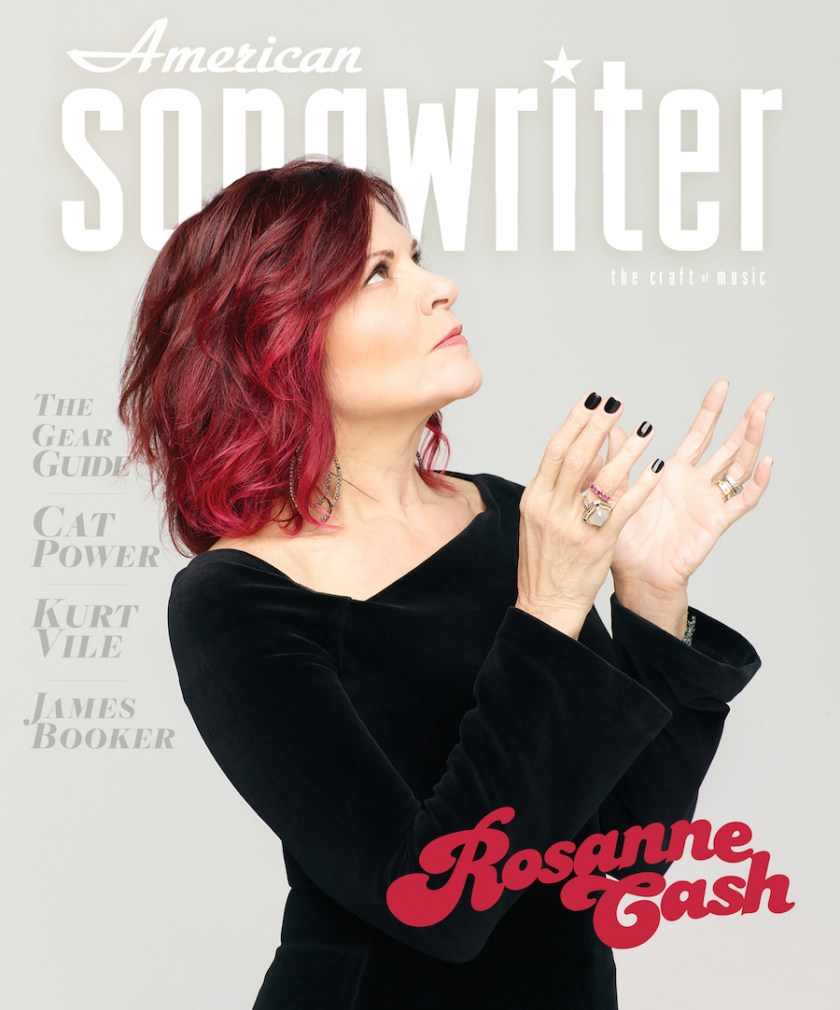
–from American Songwriter Editor’s Note. November/December 2018
Music is such an intrinsic part of the human experience some evolutionary anthropologists hold that it may have emerged as a communicative form of comfort between our ancestor mothers and their infants. These intonations may have even predated language itself. Maybe this is why, despite the suppurations of the recent and anomalous “shut up and sing” movement, we instinctively look to musicians for insight and leadership in trying times.
After accepting the “Spirit of Americana” Free Speech Award at the Ryman Auditorium during September’s AmericanaFest, cover subject Rosanne Cash reminded us why we do so. In her words, “Artists and musicians are not damaged outcasts of society, but indispensable members. We are in fact the premier service industry for the heart and soul. We cannot survive without music. It is the language everyone understands in this dangerous and divisive time.” The annual honor was presented by veteran journalist Ken Paulson of the First Amendment Center, an organization that first gave the award to her father, Johnny Cash, in 2002.
Rosanne, an active presence on social media, is an eternally vigilant and outspoken sort. For decades she has advocated against gun violence, even penning an Op-Ed in the New York Times following the gun massacre in Las Vegas last year. The four-time Grammy winner also serves on the board of the Content Creators Coalition (C3), a non-profit that advocates for fair compensation for artists in the digital realm. In the poison pit that is so often Twitter, hers is a voice that is always informed, measured and dashed with humor.
In accepting the Free Speech award, Cash was self-effacing, noting there are others more involved than her on the front lines who live “quiet, heroic lives of active compassion.” The Nashville Songwriters Hall of Fame member is indeed right when she says we can’t survive without music — and besides, who would want to?
****
The music business can be a dreary affair. And when you work in Nashville, the constant machinations of the trade can make it easy to lose sight of why you devoted your life to music in the first place. Because of the economics of the business today, musicians are required to submit to an endless cycle of self-promotion. It’s tiresome for both artist and fan.
Yet despite the rigors of the business, more artists are choosing to step out of the fishbowl and engage directly at the civic level.
“As artists, we know how to self-promote and it’s hugely impactful and freeing to turn that energy outward and lend your voice to a larger effort,” says Nashville-based artist Kate Tucker, who started a community outreach organization called BriteHeart. “Civic engagement is an art form. At BriteHeart, we call it artivism. What do you care about the most? How will you tell the world? Just like we make sure everyone knows about our new record or upcoming tour, there are serious matters at hand and it is art, and music especially, that will bring people together and heal the division in our country. Now is our time.”
Tristen Gaspadarek, another Nashville-based artist who records and tours under her first name and was profiled in these pages last year, has launched a voter-registration program in Music City called Please Vote Nashville. She shows up at concerts and mini-festivals around town, setting up shop, getting people registered, and talking with voters.
“I want to live in a place where everyone feels protected, and cared for,” Gaspadarek says. “This all comes through very literally in my music and poetry. But art is not direct enough for me right now, so I started community organizing.”
“Elections come and go without a peep around town, and it’s a pain to get registered,” she adds. “Please Vote Nashville was created to make all of this easier and to create a culture where voting is cool and most importantly, easy. I wanted to create a space where people can be politically active, without being evangelical.”
For many years Emmylou Harris has been involved with animal rescue with her organization Bonaparte’s Retreat, which you can read more about in this issue. Harris holds a big concert called Woofstock every year to help raise awareness. In large part because of her efforts and pro-adoption message, the euthanasia rate has been reduced drastically in Nashville. Her goal is for all shelters here to ultimately reach no-kill status. “It’s not political at all,” says Emmylou of Woofstock. “Dog lovers are everywhere, regardless of party.”
Political or not, music is never just an end unto itself. It can be a vehicle for a better world, a better life.

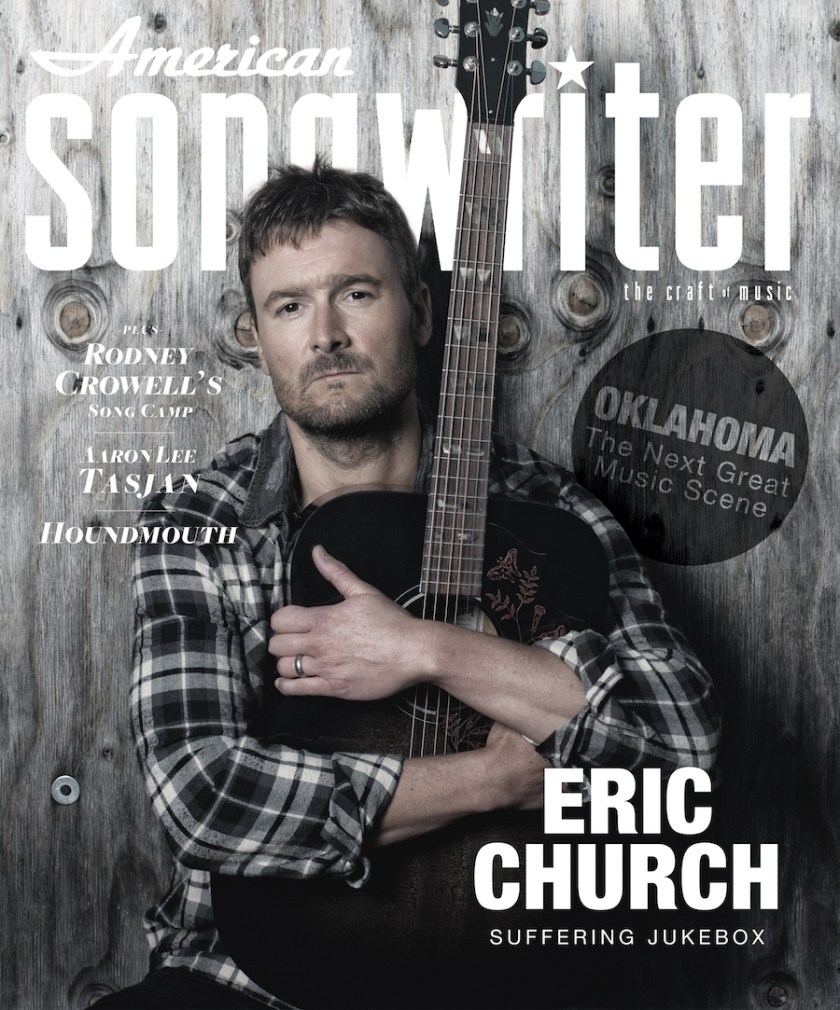
It’s been a busy summer at the magazine. We spent much of it on the road, taking in various music festivals, an awe-inspiring songwriting camp, and the music scenes of two Oklahoma cities.
After the dust settled on Bonnaroo in June, in nearby Manchester, Tennessee, we headed north on I-65 to Louisville, Kentucky for a weekend of revelry and music on the banks of the Ohio River at Forecastle Fest. There we caught some of the best live rock acts at work today: bands like Arcade Fire and the War on Drugs, as well as Houndmouth, from next-door New Albany, Indiana, whom we profile in this issue.
Beckoned by the spirit of Woody Guthrie, we then headed west to Oklahoma and submerged ourselves in the newly bourgeoning Tulsa music scene. With the excellence of acts like John Moreland, John Fullbright, Parker Millsap, and the Turnpike Troubadours leading the charge, the songwriting talent that’s emerged from the Sooner State in recent years has been nothing short of staggering.
In Tulsa, writer Lynne Margolis found a music community that is inclusive and close-knit. There all manner of collaborations are happening, and they are happening across genres. Fullbright, a pure singer-songwriter in the vein of fellow Okie Jimmy Webb, has found himself broadening his musical palette and playing regularly with jam bands and hardcore honky-tonk acts, something he never imagined happening before moving to Tulsa. There are also flocks of musicians and artists relocating to the city as they get priced out of long-standing music citadels like Austin and Nashville. In Nashville, the average one-bedroom apartment now goes for about $1,800 per month in the city’s urban core, while the income required to “live comfortably” in Music City shot to roughly $80,000 in 2018, according to a study by the personal finance website GoBankingRates.com. To put this in perspective, the average salary of a Nashville musician hovers at the $40,000 mark. (Source: payscale.com). It has become clear that the once-reliable bohemian outposts are no longer sustainable for the working creative class, so expect new scenes that will incubate the country’s best art and music to take root in the next decade.
After kicking around Tulsa for as long as we could, we Kerouac-ed out to Big Sur country and landed in Carmel, California for Rodney Crowell’s inaugural songwriting camp. The country and Americana veteran is regarded as a master of the craft, and nearly 100 students made the journey from all over the States, even Europe in some cases, to join him and a cast of instructors that included Bernie Taupin of Elton John songwriting fame, Joe Henry, and Lisa Loeb, among others. The camp focused not so much on how to write hit songs but how to write great ones. Crowell, a native Texan and disciple of Guy Clark during his salad days in 1970s Nashville, stressed hard rhymes and was forthright with his criticism, noting that he too had learned in that fashion. Having suffered the slings and arrows of the music business in a career that spans nearly 40 years, Crowell stressed the importance of perseverance and weathering failure — something he said happens more than success.
For this issue’s cover story, Marissa R. Moss goes behind the aviators and shines a light on the creative process and business approach of Eric Church, whose new album and best work to date, Desperate Man, comes out next month. Church, of course, is somewhat anomalous in the mainstream country music realm because of his album-oriented approach. He is also a fan-centric artist, not unlike the Phishes and Widespread Panics of the jam-band world, and a tireless road warrior. Church had a hand in writing all of the album’s tracks, and as Ray Wylie Hubbard, one of Texas’s most effective left-of-center wordsmiths, relates to Moss, Church is first and foremost a songwriter. Such auteurship is certainly rare in mainstream country.
There’s a lot more in this issue, including a chat with blues great Buddy Guy, whose latest album is titled The Blues Is Alive And Well. The guitar still sizzles and Mick and Keith show up for cameos as Guy pays homage to his fallen blues brothers of yesteryear.
“When I started,” Guy says, in explanation of the album’s title, “I was competing with all these greats like Otis Rush, Little Walter, Howlin’ Wolf, Muddy Waters and B.B. King. They all told me, ‘Whoever’s left has to keep the blues alive.’ Now they’re all gone, so it’s up to me.”
As Guy’s words remind us, batons must be passed in order to keep the best of our heritage alive as we move forward into an anxious and uncertain age.

Going To A Show
Iggy Pop once said, “Rock and roll is a solution to tragedy.” While discussing his 1982 memoir I Need More, the rock icon went on to say of the art form that it’s about “a small hunting and gathering group, anthropologically speaking, of young men who get together out of nothing more than sheer desperation and go for it in a small town. Everybody knows this, from the Stones down.”
It’s an interesting theory, and one I believe to be true. At this year’s Bonnaroo, when the Tennessee rock band Paramore played the main stage on Friday afternoon, Iggy’s words rushed to mind when lead vocalist Hayley Williams addressed the subject that had become the topic of much conversation among the crowd. That morning, festival attendees had awakened to the news of the suicide of Anthony Bourdain, the world-travelling celebrity chef with the rock and roll persona, who was also, unsurprisingly, a serious music enthusiast. It was another grim chapter in our nation’s lengthening book of grim news.
“We live in a really strange time, and it’s very dark,” Williams said late in the band’s set. “Every day you wake up, and you don’t know what the news is gonna be. And most of the time, it’s not great. This morning, it was really hard yet again to wake up and see another suicide in the entertainment industry, but most of all, just in the human race. We’re all people coexisting, or we should be, just trying to get through. And I want you to take one moment to be present enough to realize that you’re surrounded by people that you may never see again, but for some reason, we all came here today. No matter what you’re going through, I know this doesn’t make it go away, but just for one second, let’s be present and enjoy music, and dance!”
Paramore’s performance, and Williams’ words, encapsulated the Bonnaroo experience in 2018. Much of the band’s set cribbed from its latest album, After Laughter, a record born of desperation in which Williams addresses her struggle with mental health, the band’s almost career-ending inner turmoil, and the initiation into the realities of adulthood. Despite the often-difficult subject matter, the music itself is dance-worthy pop-punk with pulsing Afrobeat grooves, at once jubilant and defiant. The lyrics might knock you down, but the music lifts you up, as it did the crowd that Friday afternoon.
At first glance, Bonnaroo looks like a monument to neo-hippie millennial hedonism. And to some degree, it is. But in this age of increasing social isolation, gun violence, systemic opioid abuse, pervasive sexual assault and, for many, political despair, Bonnaroo in many ways represents the best the culture has to offer. Eighty thousand music lovers peacefully coexisting and having fun in a field on a Tennessee farm.
What the festival provides, above all else, is a chance to experience community, if only for moment, over the course of four days and nights. The advent of streaming and the ubiquity of music have changed the way we consume it. Listening, for the most part, has become more of an isolationist act and a background experience. But going to festivals, and seeing live music in your hometown, is a great way to deeply engage and be part of something positive.
Since Bonnaroo began, we’ve seen the festival experience become part and parcel of popular music culture. In that time, we’ve witnessed festivals like Forecastle, a more localized version of Bonnaroo that goes down on the banks of the Ohio River in downtown Louisville, take root. To our collective benefit, all manner of highly curated boutique festivals have sprung up. Wildwood Revival outside of Athens, Georgia resembles a laid-back Southern hang more than anything else, so, from the immense productions to more intimate gatherings, there is something for everyone.
Summer is the high season for touring, and if festivals aren’t your thing, there are a lot of great acts making their way across the country right now, including some of those featured in these pages, like Courtney Barnett, Milk Carton Kids, Shakey Graves and Kacey Musgraves, our cover star who is currently on the road with British pop behemoth Harry Styles. Musgraves’ new album Golden Hour represents a fresh, green take on country music, with elements of disco and pop set to her always sharp songwriting. Her live show is uplifting, and quite the party, too, so don’t miss it.
— from the editor’s note of the July/August 2018 edition
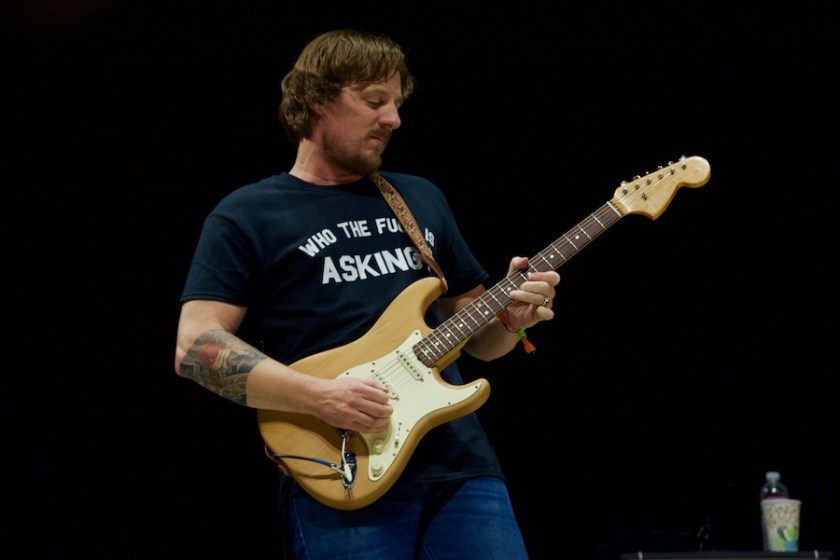
Sturgill Simpson turned 40 years old at Bonnaroo on Friday night. “If this is my mid-life crisis, it’s pretty fucking dope,” he told the crowd shortly into his set on the What Stage as the sun was going down in Manchester, Tennessee.
Wearing a black T-shirt that read “Who The Fuck Is Asking?” — an exercise in meta-merchandising, to be sure (see video below) — Simpson strode onto stage with his four-piece band and kicked into “Welcome To Earth (Pollywog),” the lead track from 2016’s A Sailor’s Guide To Earth.
The tune’s studio version boasts orchestral flourish, but Simpson’s current lineup is decidedly bare bones, and the song’s raw and stripped-down treatment gave the tune, a valentine to his first-born son, an added poignancy. Simpson, for all his shit-kicking tendencies, comes off as a pretty sentimental guy at times. Friday night’s set featured “The Promise,” the ‘80s love ballad originally done by When In Rome, and William Bell’s Stax soul classic, “You Don’t Miss Your Water,” a tune that has cropped up in his sets for the past three years.
Simpson, in many ways, is the perfect candidate to play Bonnaroo, a festival that tries to appeal to so many corners of popular music. His sound traverses so much of the American music vernacular— country, blues, bluegrass, soul, punk, psychedelia, early rock and roll — the notion of genre is rendered irrelevant.
For his Friday night set, there were no visuals or stagecraft to accompany the band, a rarity for an act on the main stage. It was as if he was trying to drive home the point that it was all about the music, as if anyone needed the reminder.
Simpson’s current band is the same retinue he’s been playing with since guitarist Laur Joamets left the group in early 2017, and features Miles Miller on drums, Chuck Bartels on bass, and Bobby Emmett, who famously toppled his organ on SNL, on keys. Many of the tunes were stretched out Friday night, allowing for extended musical interludes that gave Simpson a chance to pick and shred with unbridled ferocity, and for Emmett to cook up a Booker T.-like musical stew on the Hammond B3.
The set featured several selections from A Sailor’s Guide To Earth, along withMetamodern favorite “Turtles All The Way Down,” a tune, Simpson has said, about his past drug use, and not Stephen Hawking.
Of course, drugs are a common theme at Bonnaroo. At one point during the set, Simpson delivered a PSA, telling the crowd, “Ya’ll be safe out there, we don’t want anybody not waking up.”
The message was apropos. On Friday morning, festival attendees woke up to the news that one man had died the night before (of unknown causes), the first death onsite at the festival in three years. There was also the report of the suicide of Anthony Bourdain, the globe-trekking celebrity chef with the rock and roll persona. A serious music lover, Bourdain’s Nashville episode for Parts Unknown in 2016 featured several prominent Music City musicians, Margo Price and Alison Mosshart among them. Bourdain’s death cast a somber cloud over the day’s proceedings, and Paramore’s Hayley Williams addressed it onstage and the creeping darkness of spirit that seems to be gripping so many. “No matter what you’re going through, I know this doesn’t make it go away, but just for one second,” she said, “let’s be present and enjoy music, and dance!”
It was a message taken to heart.
*************
The Instagram video below was taken at Forecastle Fest, in Louisville, on July 15, 2017.
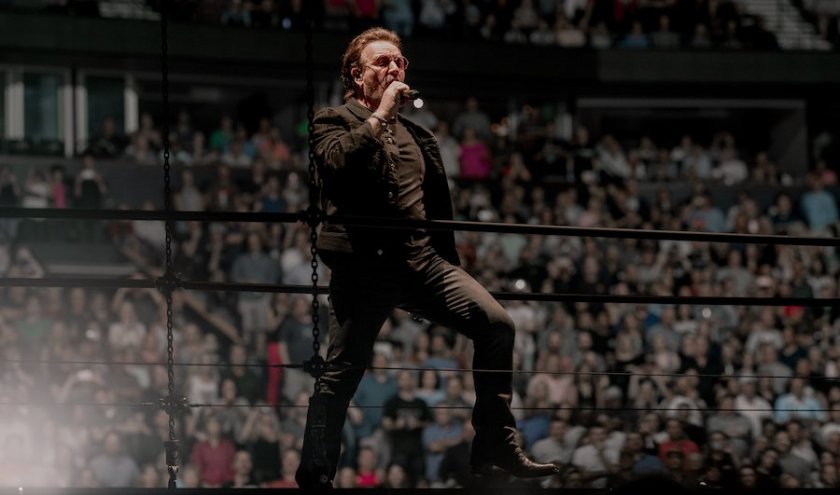
U2 has never been one for subtlety.
During a performance of “Staring At the Sun” at Bridgestone Arena on Saturday night, a song from its 1997 album Pop, images of the Unite the Right rally in Charlottesville flashed on the jumbo-screen. Young men in Polo shirts brandished Tiki torches and white nationalists with “Make America Great Again” hats waved Confederate flags as Bono crooned the lyrics “Afraid of what you’ll find/ If you take a look inside.”
It was a bit much, even by U2 standards, and an awkward moment for a crowd in party mode and buzzed on Michelob Ultra tallboys.
But U2 has never been afraid of overreaching. They are a caricature of rock star grandiosity, and they’ve always been in on the joke. “This is the moment in our story when it all went to our head, or went to my head,” Bono said at one point, before breaking into “Desire” from 1988’s Rattle and Hum.
Bono revels in pomp and circumstance (this is not a criticism), and U2’s concerts play by their own set of rules. Indeed, along with Springsteen, they are one of the only successful arena rock acts left. Few bands can occupy the stadium turf with such command, and have the catalog to sufficiently carry a two-and-a-half to three- hour show. And though there were moments when the delete button should have been hit in pre-production for this tour (Bono’s “mirror monologues” as his devilish alter-ego MacPhisto were downright cringe-worthy), it was still a riveting performance.
From a sheer production standpoint, the show was an absolute marvel. Two stages flanked opposite ends of the arena, connected by a catwalk that rose and fell throughout the concert. A jumbo widescreen hung suspended over the walkway, projecting all manner of visuals and animation, complimenting the actualities onstage to great effect.
The show was heavy on material from the last two albums, Songs Of Innocence and Songs Of Experience, the fruits of a band knowing what works and what it does well. Portions of Experience were written in the wake of Brexit and the Trump ascendancy, and much of the material amounts to a pep talk and rallying cry for the politically and spiritually broken-hearted. Flashing on the screen throughout the night were hashtag buzz phrases like “end internment,” “collusion is not an illusian [is the “a” intenTonal?]” (huh?), and “poverty is sexist.” The lyrics were less heavy- handed, thankfully.
The intertextual messaging of the concert touched upon other themes, such as Ireland’s struggle for independence, Bono’s childhood and the passing of his mother, and Martin Luther King’s civil rights crusade, which of course came with a performance of “Pride (In The Name of Love).
In Nashville or anywhere else, a U2 show is major public event, and with it comes an attendant celebrity presence. Oprah Winfrey was in the house (which Bono mentioned twice), as was Al Gore, who parted the crowd near the stage pre-show as he made his way to his seat with T Bone Burnett, who, strangely enough, looked more the statesman than Gore.
Surprisingly, the new material received the most inspired treatment of the night, while the old chestnuts (“Beautiful Day,” “Sunday Bloody Sunday” and “One”) came off as tired and uninspired. “American Soul” from Experience was a tight, muscular salvo and showcased a band in fine fettle. Bono’s voice is as strong as it’s been in 20 years, Larry Mullen Jr.’s drumming only gets more athletic as the years pass, and the guitar and bass combo of the Edge and Adam Clayton remains ironclad. Amid the visual spectacle and performative drama it is easy to lose sight of the truth that this set of musical relationships has always been the most remarkable aspect of a U2 performance — viewed up close and watching them work, it is astonishing that a four-on-the-outfit can wield such an imposing wall of iconic sound.
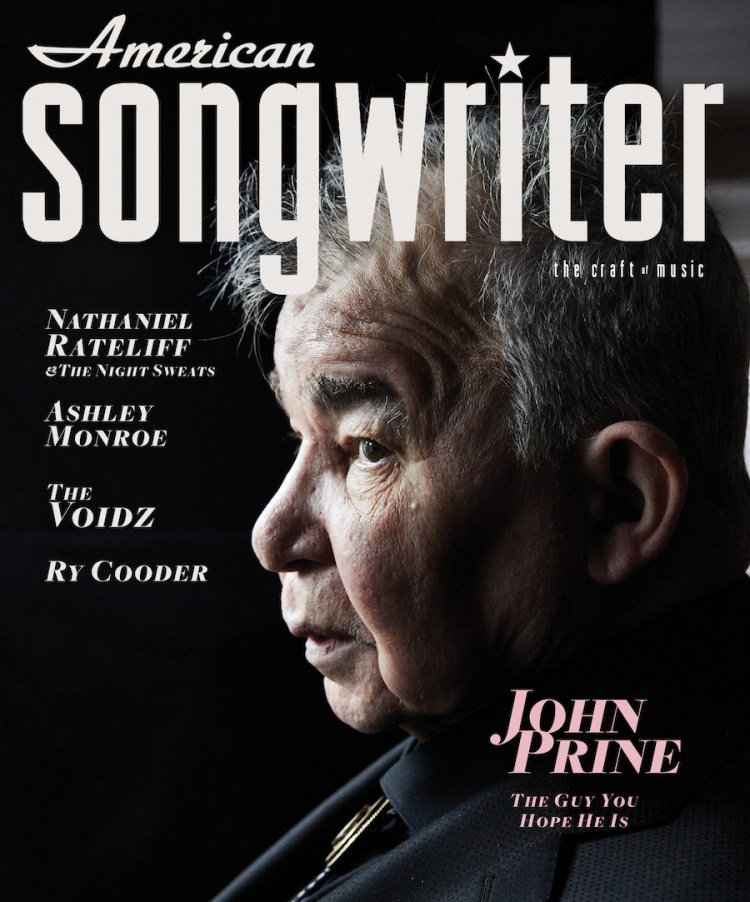
The first week I arrived in Nashville, back in the spring of 2009, I went to eat at Arnold’s Country Kitchen on Eighth Avenue. Nashville was not yet the boomtown it is today, so there was little wait time outside. This is not the case now – on most days, lines of tourists snake out the door.
As I made my way through the buffet line I noticed two men sitting in the corner conversing over lunch. One was Cowboy Jack Clement. The other was John Prine. “That’s not something you see every day,” I thought to myself. The patrons gave them their space and I didn’t notice any requests for a photo or an autograph.
These were the days before Nashville’s culture had begun its precipitous transformation into an entirely new reality. The nearby Gulch neighborhood was still in its relative infancy and the spread of this new Gulchure, with its nouveau-riche and tourist kitsch, articulated through gaudy condos, karaoke bars, pedal taverns and bachelorette parties, had yet to take root, stamping out from the city all but the last vestiges of the bohemian and the offbeat. The culture of the old guard still had a foothold.
The kind of scenes I saw at Arnold’s that day are fewer and further between as more of the old timers, like Cowboy Jack, leave this world for the great beyond, and more of the old haunts close up shop or change beyond recognition. I don’t know what Prine and Cowboy Jack were talking about that day, but I bet it wasn’t real estate.
Prine has always been a man who loafs and invites his soul in the best possible way. He is the Buddha of folk music. He is fond of saying he would rather go out and grab a hot dog than write a song. In our cover story written by Peter Cooper, Prine says he basically had to be forced to finish the album by his wife/manager Fiona and his stepson Jody.
Prine’s debut album, a collection of songs that still stands as one of the greatest debuts in American music, arrived so perfectly formed one wonders if its creation was a case of direct channeling. I saw him play that album in sequence in 2016 at the Station Inn, the little dingy bluegrass club in the heart of the Gulch. It was a special evening. Jason Isbell and Amanda Shires watched on in rapt awe, and yet, Prine is a hero who doesn’t try to act like one. His aw-shucks persona is natural and unaffected and a breath of fresh air in a town dominated by narcissism and attention-seekers and constant Instagram feeds.
The man who wrote “Angel From Montgomery” in his early 20s says he has no idea how songwriting works. At this magazine, we talk a lot about craft, but the great works of the imagination often seem to spring from someplace else, a mysterious and sometimes dark wellspring that offers its delights when it wants to. You can’t teach someone to write, “There’s a hole in daddy’s arm where all the money goes.” We now have robots writing poetry and music through AI algorithms, and nothing against robots, but I don’t think one could ever write, “Funny how an old broken bottle/ looks just like a diamond ring.” Or perhaps more aptly, ever would.
Country singer-songwriter Ashley Monroe, who just recorded a new album with Dave Cobb and is featured in these pages, says she doesn’t know how it works either. Some of the songs from the new record spring from the more difficult chapters of her childhood and attempt to reconcile those dark days.
“I’m not in control of it at all,” she tells Geoffrey Himes. “I get a feeling, and suddenly I have all these ideas I didn’t have three seconds before. I had got back from four days of intense therapy, grieving for my dad, which I had never done properly, and forgiving my mom … things were stirred up … so the songs came pouring out.”
The country group Brothers Osborne echo, whose new album Port St. Joe came out this spring, say they insist on maintaining an open mind when it comes to the creative process. “The more you try to create some sort of formula for songwriting, the harder it becomes, and the more disingenuous your songs become,” says John, the band’s guitarist.
To close this issue, we check in with Ry Cooder as he prepares to release his new album The Prodigal Son. The guitar maestro talks with Paul Zollo about working with his son Joachim and laments the death of sophisticated artistry in so much of the music he hears today. The instant, on-demand digital culture discourages deep and thoughtful listening, Cooder suggests. “Music is fundamental and human,” he says, “but will people lose their ability to appreciate a Beethoven quartet so that Beethoven becomes irrelevant … time well tell.”
It’s a thought worth considering. But there are still music lovers giving Prine deep and thoughtful consideration, and hanging on every relevant word.
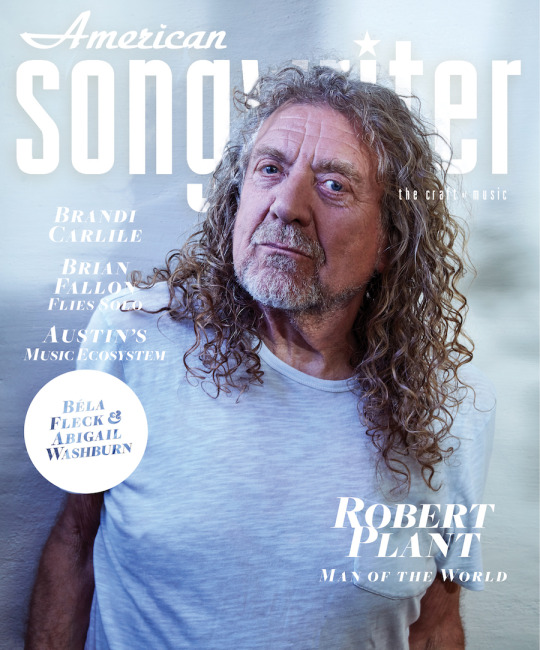
Editor’s note from the American Songwriter March/April 2018 issue
The number of full-time, professional songwriters working on Music Row has fallen 80 to 90 percent since 2000, according to songwriting trade association NSAI. That number is not scientific and the claim is somewhat controversial, but NSAI stands by it.
Most of the casualties involved non-performing writers with publishing deals who wrote for country radio. They made their income, or “mailbox money” as it’s called in the trade, from mechanical royalties collected on song sales, as well as royalties generated from the public performance of those songs.
The non-performing songwriter could make a living in the ’90s; indeed, they were boom times on Music Row. The success of Garth Brooks catapulted the entire cosmos of country music into another stratosphere. Albums went platinum left and right, and country music began to rival pop in sales figures. In 1992, a Kentuckian named Billy Ray Cyrus, equipped with an achy-breaky heart and a coif that resembled a coonskin cap, was the top seller across all genres. Because the big country artists of the ‘90s merely co-wrote a fraction of their material, a large number of non-performing songwriters collected a generous share of the compositional royalties.
At the end of the decade the music business changed. In 1999 a rough beast called Napster, founded by two teenagers, began slouching toward Bethlehem. It didn’t take long for the illegal, peer-to-peer file sharing service to make its mark. The next year, for the first time in history, the music industry saw a dip in global record sales.
Then, in 2001, iTunes arrived (with the iPod following shortly thereafter), and legal downloads provided songwriters a royalty rate equal to physical sales, though the sum of those royalties remained a shadow of pre-Napster levels. Apple’s new service ushered in the era of the single download, which killed the album as a business model — but at least consumers were paying for music.
Fast-forward 10 years to the advent of streaming. Spotify, an interactive streaming service that started in Sweden, arrived in the U.S. in 2011 and is currently the number-one service here. The new technology has been a godsend for consumers but it’s paid songwriters next to nothing for their creations.
Some in the music community have embraced the new technology. The three major labels — Universal, Warner, Sony — are now seeing substantial revenue increases as a result. But others decry what they consider to be outright theft.
So now, after years of much hand wringing, something’s finally being done about it. In January, the Copyright Royalty Board announced it was raising mechanical rates for songwriters by 44 percent, the largest increase in history. And the Music Modernization Act, which is being touted as the most sweeping copyright reform in a generation, has been introduced on Capitol Hill. The bill’s creation was the result of hard-fought efforts by NSAI, the National Music Publishers Association, and the Digital Media Association (DiMA), which lobbies on behalf of streaming royalties.
The MMA would create a new entity responsible for paying out mechanical royalties for interactive streaming, replacing what is currently a byzantine system. A marketplace rate standard would also be established, and songwriters would be entitled to at least half of all unclaimed digital mechanicals.
As part of the compromise struck with DiMA, the bill protects the streaming companies from most infringement lawsuits. (In early January, Wixen Music Publishing Inc. filed a $1.6 billion suit against Spotify claiming unpaid royalties.)
As always, the devil is in the details, and though the 100-plus-page bill is largely supported by the songwriting community, some argue that it gives way too much to Big Data (especially where safe harbors are concerned).
Bart Herbison, executive director of NSAI and a huge proponent of the bill, is optimistic it will pass. Though he says we’ll never return to the halcyon days of the ‘90s, he thinks the MMA can recover a small fraction of what’s been lost over the last decade. But even if it becomes law, there’s much more to be done, he says. “We’ve still got to attack consent decrees, and we’ve still got to see some kind of agreeable and meaningful payment system from Facebook and YouTube. There are more battlefronts.”
So sign the petitions, write your congressmen, and keep writing songs.
– Caine O’Rear, Editor-in-chief.

Obituary for Victor Cabas that ran in the Daily Progress.
October 28, 1948 — February 28, 2018
Victor Cabas, a Rhetoric instructor at Hampden-Sydney College whose ferocious intelligence, unorthodox style in the classroom, and unparalleled sense of humor impacted scores of students through four decades of teaching, died on February 28 at the University of Virginia Medical Center in Charlottesville, Virginia. He was 69. The cause was heart failure.
He was one of a kind, as anyone who knew him or took his class can attest. For many years, he taught introductory writing at Hampden-Sydney, which he affectionately referred to as “bonehead English,” and could turn even the most hopeless case into a decent writer.
“The saying is, those who can’t do, teach — but it’s a noble profession,” he once said. He took teaching seriously, and could even remember minute biographical details about individual students from decades prior. He was always turned off by any professor who talked down about their students. The many encomiastic reviews on RateMyProfessor.com are a testament to the esteem in which he was held, with former students praising him as “the best professor on campus,” and one saying “take every class you can from him.”
He was one of the funniest — and most quotable — people you were likely to ever meet. He peppered his classes with stories from a colorful and peripatetic life, stories that might include tales of misadventure in Guatemala, where he once got “stoned in the Biblical sense” by a horde of rock-wielding Mayans in a case of mistaken identity.
A native of Newport News, Virginia, Cabas spent much of his youth in South Carolina, where he attended high school. The son of a highly decorated Air Force Brigadier General, he was something of a military brat as a kid, living in England and Hawaii for a spell. Most of his adult life was spent in Nelson County, Virginia, on a large tract of land in the mountains in a house he built himself with the help of student labor. He raised cattle on the property and enjoyed life there immensely with his many dogs over the years. He never owned a cell phone and his lifestyle seemed to defy the instant, on-demand culture.
In 1970, he earned a B.A. from the University of Virginia, graduating first in his class. At UVa he encountered Herman Melville’s Moby-Dick for the first time. The book made such an impression that it inspired him to become an academic.
Cabas was accepted to the University of Virginia School of Law, but, after sitting in on classes as an undergraduate, decided it was like “reading your car manual over and over again.” So he accepted a scholarship at State University of New York at Buffalo, where he wrote his dissertation on the use of meta-drama in Shakespeare’s plays and earned his doctorate in literature in 1974.
In the mid-70’s he began his academic teaching career in the English department at the University of Virginia. He did not put himself up for tenure and started teaching at Hampden-Sydney shortly thereafter in the Rhetoric department. In addition to writing, he taught Shakespeare, Melville, Faulkner, the Civil War, American Blues Music, and Cormac McCarthy’s Blood Meridian, as well as a host of other subjects.
A talented writer, Cabas was putting the finishing touches on a novel called Postmodern Blues when he died. The book, which mostly takes place in Guatemala and Charlottesville during the ’80s, is a madcap roman à clef that recounts his post-divorce days of bacchanalia and hard-drinking, a vice he gave up not long after that. The book is also a blistering satire of academia, but ultimately, it is a tale about the redemptive power of love.
Cabas was also an accomplished blues guitarist, and a serious devotee of the Delta blues singer Robert Johnson, on whom he taught a class at UVa. He performed live music regularly, playing a weekly gig at Basic Necessities in Nelson County for the last 20 years. In the late ’90s, you could find him busking on the Downtown Mall in Charlottesville, belting out blues tunes by the likes of Son House, Bukka White, and Henry Thomas.
He was an avid vintage guitar collector, and spent the last weekend of his life at a guitar show in South Carolina. In his last decade he found great joy in the camaraderie of the guitar merchant scene.
For all his many gifts, Cabas will perhaps best be remembered by his friends as a generous man of uncommon integrity who lived life on his own terms. He also had the unique ability to find meaning in a seemingly broken world. When once asked what this life was all about it, he simply replied, “Just enjoy yourself and try to do a little good.”
Cabas is survived by his father, Brigadier General (Retired) Victor Nicholas Cabas, Sr., USAF; stepmother, Norma Cabas; and his dogs, Jake and Mojo. In lieu of flowers, donations can be made to Hospice of Piedmont, Charlottesville, Virginia, or to the Nelson County SPCA, Lovingston, Virginia.
A memorial service will be held at his home on May 5, 2018, at 3 p.m. For more information on the service, please email Caine O’Rear at caineorear@gmail.com. Condolences and remembrances can be mailed to Brig. Gen. Victor Nicholas Cabas, Sr. at 31021 Marne Drive, Rancho Palos Verdes, CA 90275, or e-mailed to ncabas@icloud.com. Funeral Home Services are being provided by Cremation Society of Virginia —Charlottesville.
 Caine O'Rear