Caine O'Rear is a writer and editor based in Mobile, Alabama. He is the former editor in chief of American Songwriter Magazine. Follow him at www.instagram.com/caineorear.
Fort Payne, Alabama, the “Sock Capital Of The World,” is also the home of the country music group Alabama. Randy Owen, Jeff Cook and Ted Gentry, the band’s founders, all grew up in and around this little mountain town in northeastern Alabama, in the years following World War II.
After many a wild sock-hop, Randy and the boys enjoyed nights of ecstasy with their lovers while parked in cars, down in the holler under the glow of the mountain moonlight.
Indeed, these were days of plenty in Fort Payne, and the boys had a little jingle in their pocket. The Buster Brown Mill No. 2 was running strong and the town was reaping the benefits of having invented the Argyle Sock – a weave that legions of Southern grandmothers still give as gifts every Yuletide season.
Not content to spend their days working forty-hour weeks in the sock mills, Randy and the boys started a country band, notching their first hit in 1980 with “My Home’s In Alabama.” The rest is history, as they say. The boys went on to become one of the most successful recording groups of all time, selling more than 75 million records.
I first met Randy in the spring of 1993. It was during my school’s 8th Grade Alabama History Trip. When the bus pulled off the interstate in Fort Payne, the teachers gave the students the option of eating at McDonald’s, Hardees, or Quincy’s, the former home of the “big, fat yeast roll.” I chose Quincy’s, along with a few other eccentrics. We met Randy in the buffet line. He graciously signed our napkins and posed for a picture, which ended up in the school yearbook.
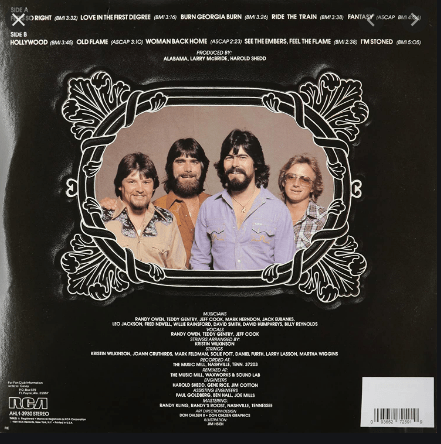
Five years and a galaxy of pimples later, I found myself standing in that very same parking lot. I was working as a camp counselor on Lookout Mountain and had been granted leave that evening, so I drove into nearby Fort Payne for a quick bite. After finishing my meal, I went outside and started walking toward the Dairy Queen when I noticed a large flyer that had been stapled haphazardly to a telephone pole. The flyer featured the picture of Alabama you see above. Below it was written: FOR SALE! SHIRT WORN BY RANDY OWEN ON BACK OF FEELS SO RIGHT ALBUM COVER. SERIOUS INQUIRIES ONLY!
I never made that call, friends, and I’ve regretted it to this very day. Live and learn.
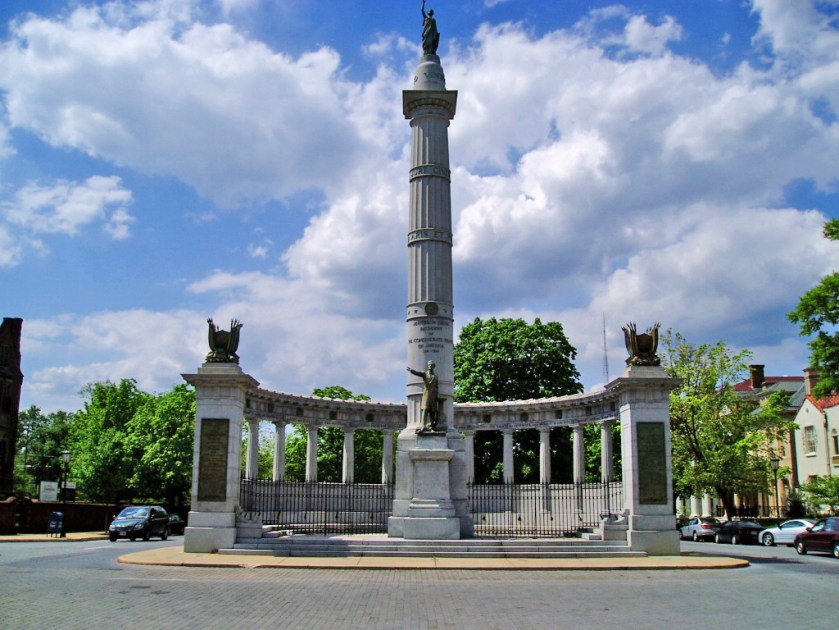
Former Jefferson Davis monument on Monument Avenue, Richmond, Virginia. Public domain
The Black Lives Matter movement has called for the removal of Confederate symbols on public land, making the legacy of the Civil War a hot-button issue for candidates and elected officials in the South.
Black Lives Matter, originally conceived in 2013 as a protest against police brutality toward black Americans, has begun to target other agents of oppression. The recent chapter of the burgeoning movement, ignited by the May 25 death of George Floyd at the hands of a white Minneapolis police officer, has seen protestors fighting for the removal of Confederate names and monuments from the public sphere. The growing chorus has forced a closer inspection of the South’s “Lost Cause” propaganda campaign, and why the memorials appeared in the first place.
The issue found its way to Capitol Hill on June 11, when the Senate’s Republican-led Armed Services Committee heeded the call of Black Lives Matter, voting to rechristen the names of all U.S. military bases and installations named after Confederate generals within the next three years, setting up the potential for a Senate vote on the bill this year. President Trump said on Twitter that he would not consider renaming any of the military bases.
On June 13, the committee’s vote became a flashpoint issue in Alabama’s senate campaign when former U.S. Attorney General Jeff Sessions, a candidate for the Republican nomination, launched a Twitter attack against incumbent Democratic Senator Doug Jones. Sessions accused Jones of dishonoring the memory of Confederate soldiers by voting to change the names, arguing that he was catering to the “woke mob” in “an insane attempt to erase history.” In his official press statement, Sessions said, “Naming U.S. bases for those who fought for the South was seen as an act of respect and reconciliation towards those who were called to duty by the States.”
Jones responded by telling Sessions to “delete his account,” adding, “I know it’s tough for you to be on the right side of history when it comes to the Confederacy, but you should give it a try.”
Fort Bragg, which is in North Carolina, is considered the largest military base in the world, with some 50,000 active duty soldiers. It is one of ten military bases currently named after Confederate generals. Established in 1918, the fort was named after North Carolina native Braxton Bragg, a Confederate general and West Point graduate who also fought in the Mexican-American War. According to William Sturkey, a professor at the University of North Carolina in Chapel Hill, the local chamber of commerce named it after Bragg because he was the only general from North Carolina during the Civil War, rather than as an effort toward reconciliation between North and South.
Sessions’ concern for the memory of Confederate soldiers doesn’t appear to jibe with the feelings of some U.S. veterans. A report in the New York Times on June 14 featured comments from black military veterans about being stationed at Confederate-named bases, with one veteran calling it a “slap in the face.”
In cities across the South, Confederate monuments have been toppled by Black Lives Matter protestors; foremost among them the Jefferson Davis statue on the fabled Monument Avenue in Richmond, Virginia, the capital of the Confederacy. According to a 2019 report by The Southern Poverty Law Center, a civil rights legal advocacy organization, 783 Confederate statues remain standing on public ground in the U.S.
On the night of June 14, the statue of Robert E. Lee, also on Monument Avenue, was tagged with the Black Lives Matter slogan and painted in the rainbow bars of the LGBT-Pride flag. Virginia Governor Ralph Northam (a Democrat who came under fire last year when a 1984 photograph surfaced of him pictured in blackface) has said the Lee statue, along with the four other Confederate monuments on the street, would be removed. (Property owners on Monument Avenue have filed suit against the City of Richmond seeking to block removal.) On June 16, the Monument Avenue statue of Arthur Ashe, a champion black tennis player from Richmond, was vandalized and spray-painted with the tag “White Lives Matter.” The Ashe statue is one of six that line Monument Avenue, and the only one of a black Virginian. It stirred controversy in Richmond when it was unveiled in 1996.
***
Sessions, who was first elected to the Senate in 1997, is currently locked in a close race in the Republican primary with former Auburn University head football coach Tommy Tuberville. The two will meet in a runoff on July 14. Tuberville, who refuses to debate Sessions, has castigated his opponent for abandoning Trump during the Department of Justice investigation into the possibility of Russian interference in the 2016 presidential election. Sessions has been harangued by Trump on social media for recusing himself in the investigation, but he still maintains support for the president, campaigning on the idea that he was the first prominent sitting politician to embrace the Trump movement. As of June 20, Trump will hold a rally for Tuberville at Mobile’s Ladd Stadium, sometime in July, according to national media reports.
Instead of only focusing on Tuberville, whose campaign has been marked by cheesy football metaphors and blind fealty to Trump, Sessions has targeted Jones, his would-be Republican opponent in November, for his vote on the Confederate-named bases. A former attorney, Jones won the Senate seat in a 2017 special election that pitted him against former Alabama Supreme Court Justice Roy Moore, a Republican evangelical who was accused of inappropriate sexual and social conduct by nine women during the course of the campaign, including one who claimed she was sexually assaulted by Moore at age 14. Jones, who was considered an underdog in the race, was vaulted into office after receiving overwhelming support from the state’s female black voters.
As of June 19, Tuberville had not weighed in on the issue of Confederate-named bases, and could not be reached for comment as of this writing. When Tuberville was head football coach at Ole Miss, he was instrumental in banning the Confederate battle flag at Ole Miss games in Oxford, Mississippi. Early in his tenure as coach, Tuberville said he faced obstacles in his effort to recruit black players as a result of the flag’s presence at games. The effort to remove the flag was met with protest from a portion of the student body and some Ole Miss alumni, so, in a diplomatic sleight of hand, the school’s president issued a ban on “sticks” at games.
When the issue of Confederate monuments comes up for debate, historians often note that Lee was opposed to the erecting of Confederate statues after the war. Lee’s objections were ignored during the advent of the Lost Cause movement, a century-and-a-half propaganda campaign which advanced the theory that the Civil War was fought over the issue of “states’ rights,” a viewpoint a plurality of Americans adhered to as recently as 2011, according to a Pew research poll.
Upon close inspection, the states’ rights argument withers when one considers that the Confederate States Constitution, established in 1861, did not grant the individual states in the Confederacy the sovereign right to decide the question of slavery [Constitution of the Confederate States, Article 1, Section 9:4], though the document’s preamble says each state was acting in its “sovereign and independent character” when the new government was formed.
The Lost Cause idea, which was first promoted in an 1866 book by Virginian Robert A. Pollard, deified numerous figures in the Confederacy, none more so than General Robert E. Lee, whose characterization was emphasized as that of the chivalric man who could not take up arms against his home state of Virginia. Lee and his soldiers fought heroically on the field of battle, but were grossly outmatched in military size and industrial strength and defeated for this reason (and not because of strategic mistakes), the Lost Cause asserts.
Some historical accounts paint Lee the man in a much less honorable light. Writing in The Atlantic in 2010, Ta-Nehisi Coates relates the tale of a black man who says Lee ordered his slaves to be washed with brine after they had been flogged. Lee at times called slavery a moral and political evil, adding that it was God’s will and the duty of the white man to nurture the black population until it had evolved to the point where it could live freely (a common refrain among Southern preachers then). Lee’s sentiments partly echoed those of Alexander H. Stephens, vice-president of the Confederacy, in his notorious “Cornerstone Speech,” a virulently racist tract which claimed that “slavery subordination to the superior race is his [the black man’s] natural and normal condition.” In his speech, Stephens also rebukes the founding fathers’ notion that slavery was inherently evil, making his views on race retrograde to those ofGeorge Washington, whose statue in Portland, Oregon was toppled by protestors on the night of June 18.
On “The Jeff Poor Show,” a conservative radio program broadcast in Alabama, Sessions said the current movement to eradicate Confederate monuments jettisons any opportunity for debate. “It’s a demonizing of anybody who was not perfect,” Sessions told Poor. “The great [scholar] Shelby Steele talks about this and it was clear in the 1980s, the radicals of the ’60s and ’70s and coming into the ’80s — but, they judged America by a standard of perfection. And, of course, we fall short. Good Americans will say to the radicals, ‘We hear you. We want to get better. We want to have better racial relations. We want to have a better justice system. We want to have a better economic system.’”
****
James Longstreet, Lee’s right-hand man and most trusted general during the Civil War, was not honored by the Lost Cause. A cool-headed officer from South Carolina that Lee called “my old warhorse,” Longstreet was often blamed by Lost Cause ideologues for the defeat at Gettysburg and consequently the loss of the war. But it was Longstreet, along with other subordinate officers, who cautioned Lee against Pickett’s Charge, a crippling psychic and physical blow to the Confederacy. Gettysburg National Military Park contains a statue of Longstreet, but there was never one erected in the South. After the war, Longstreet joined the Republican Party in support of Reconstruction and was branded a scalawag by most Southerners. Though he owned slaves before the war, he is also remembered for helping lead a black militia in a fight against white supremacists in New Orleans in 1874.
Gary Gallagher, a Civil War historian and professor at the University of Virginia, explained the rationale for the Lost Cause movement on “The Civil War in American Memory” podcast in 2011. “They knew they were out of step with the great tide of Western civilization,” Gallagher said. “They knew they would not be received well if they played it straight on how important slavery had been.”
It’s certainly no myth that the Confederate army performed valiantly on the field of battle (as was also the case for the Union). Take the 15th Alabama Infantry Regiment, for instance, whose members were said to range in age from 13 to 70. At the start of the war, the regiment, which consisted of soldiers from southeastern Alabama, contained 1,958 men. After seeing action in 15 major engagements, including horrific bloodbaths like Gettysburg (where they famously charged the 20th Maine on Little Round Top), Antietam and Chickamauga, not to mention dealing with the onslaught of disease in consistently deplorable conditions, the regiment contained only 170 soldiers by the end of the war.
In his Twitter thread June 13, Sessions writes: “Make no mistake, this [Jones’ vote] is not a little matter. It reveals a profound deficit in his understanding of what it means to be AL’s Senator. Doug Jones’ vote seeks to erase AL’s & America’s history and thousands of Alabamians for doing what they considered to be their duty at the time.”
While many volunteered to fight for the South, a great portion were forced to by law. After having trouble attracting volunteers to fight in the early days of the war, the Confederate Congress passed its first Conscription Act, or draft, in 1862, making all white males ages 18 to 35 available for service for three years. By early 1864, the age limit had been increased to 50 years old. Wealthy Southerners also had the right to purchase “substitutes” to fight in their stead, a common practice. Historical estimates of the number of “substitutes” range from 50,000 to 150,000. There were also parts of Alabama that did not fully support the Confederate cause. In Winston County, where plantation life was largely non-existent due to the non-arable soil, pro-Union sentiment was strong enough to generate a legend that the county had seceded from Alabama.
*****
At the start of the war, nearly one-third of Southern families owned slaves, according to the 1860 census. Many of those who fought in the Confederate army, whether voluntarily or through conscription, were objects of derision among the slaveholding class. Like so many American military conflicts, the Civil War could be viewed as a rich man’s war fought by poor boys. In the case of the Confederacy, the South’s ruling class had to secede in order to ensure the preservation of an economy that was fueled by a slave-labor state.
For the North, preserving the Union was paramount at the start of the conflict. In August 1862, President Abraham Lincoln wrote to the New York Tribune, “If I could save the Union without freeing any slave I would do it, and if I could save it by freeing all the slaves I would do it; and if I could save it by freeing some and leaving others alone I would also do that.” When Lincoln issued the Emancipation Proclamation in 1862, an executive order, it was done to punish the Southern states who had rebelled against the U.S. It was a strategic decision on Lincoln’s part as much as anything else. Regardless, abolition had now moved to the forefront of the Union cause.
****
Alabama, of course, is no stranger to racial politics. The Yellowhammer State was one of the main stages of the Civil Rights movement in the 1960s. And now, in 2020, Alabama finds itself grappling with the legacy of the Civil War in a prominent political campaign. In his Twitter thread, Sessions says the issue of Confederate names on bases is not about slavery, arguing that the issue was “settled by the war.” Sessions went on to label Jones as a member of the “radical left” who would advocate for the demolition of the Jefferson memorial and Washington Monument, presumably because these figures owned slaves. But it’s worth noting that the men of the Confederacy did fight a war against the United States.
As an argument, the defense of Confederate symbolism on public land is a tough sell, as quixotic as the doomed Pickett’s Charge, when Lee ordered some 12,500 Confederate infantry to march for three-quarters of a mile across an open field in the face of enemy artillery and rifle fire that was being directed from behind a fortified stone wall. In his 1948 novel Intruder In The Dust, William Faulkner reimagines the scene leading up to Pickett’s Charge, writing that “for every Southern boy fourteen years old, not once but whenever he wants it, there is the instant when it’s still not yet two o’clock on that July afternoon in 1863 …” The historical record, as many are learning, suggests that Confederate hagiography is itself a fantasy, a nostalgia for a past that never was, the defense of which is, indeed, a lost cause.
I wonder if anyone in Richmond has considered erecting a statue in memory of Black Dog. This near-mythical, dread-locked stray canine roamed the streets of Richmond’s West End neighborhood for nearly fifteen years, some say, eluding animal control the entire time. A woman once claimed he saved her from a mugging, such was his legend. Some Richmonders built dog houses and left food out for him, hoping to adopt and domesticate him (he never let humans get too close), but that is not how outlaws roll.
In the two years I lived in Richmond I saw him three or four times. He would sometimes come out of hiding and walk the perimeter of the park near Mary Munford Elementary in the mid-afternoon, when the kids were being let out of school. I looked for him every day for a year before first clapping eyes on him. When I did finally catch a glimpse, it was as if I had just seen Bigfoot. One afternoon, my toy poodle at the time got loose on a walk and, to my horror, approached him, as if to say, “Hey buddy, wanna play?” He declined the offer, but was cool about it.
His longevity was such that some speculated it was “Son of Black Dog” they were seeing in those later years. But they underestimated the indomitable old lion.
Mark Holmberg, a celebrated Richmond journalist who penned several columns about the stray, said it best when he wrote: “It’s important to remember how much Black Dog reminds us it’s okay to be independent, to be free, to be scruffy, and to be hungry every once and a while.”
Black Dog has been gone for nearly a decade. It’s high time the city of Richmond commemorates his legend.
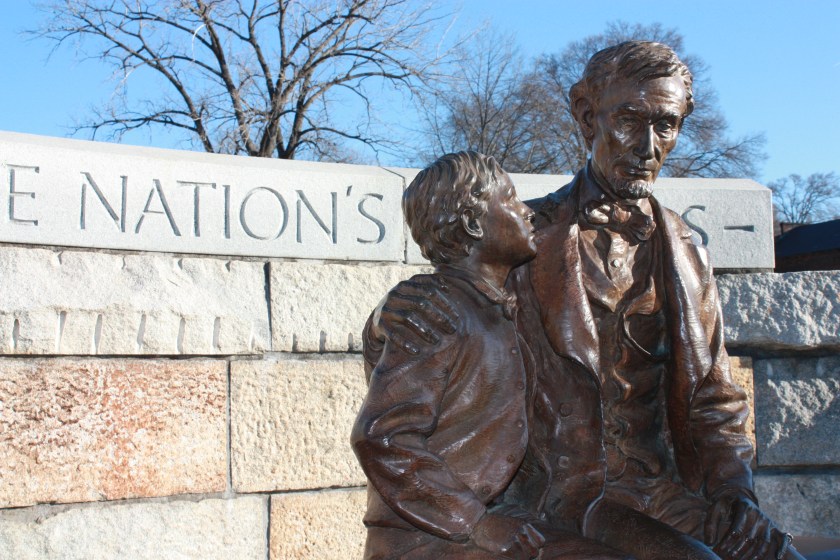
On April 4, 1865, two days after Union forces had taken Richmond, Abraham Lincoln arrived in the fallen Confederate capital with his son Tad. The city’s black residents gave the president a hero’s welcome, while the city’s white population greeted him coldly.
Lee surrendered at Appomattox five days after the Richmond visit; Lincoln would be killed less than a week after that. I was always struck by the fact that Lincoln took Tad with him to Richmond. He had to have known there was a risk of assassination (he only had a few sailors with him for protection), but there was something there that he wanted his son to see, and for him it was, perhaps, worth the risk.
Today, a bronze statue of the two, which was unveiled in 2003, sits at the Richmond National Battlefield Park Civil War Visitor Center. The president has his arm wrapped around his 12-year-old boy. Behind him, etched in stone, are the words: “To bind up the nation’s wounds.” The phrase is taken from Lincoln’s Second Inaugural Address, delivered in March 1865. #blacklivesmatter
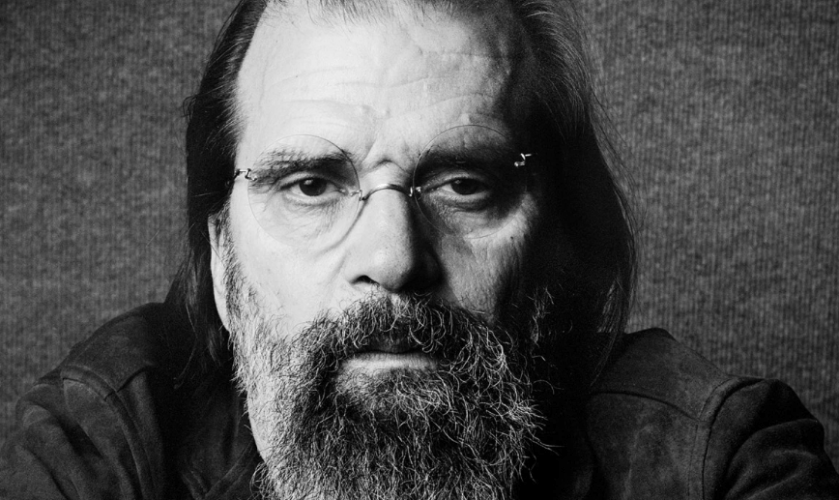
Beneath the veneer of his country-rock stylings, the early work of Steve Earle is shot through with moving descriptions of working-class life. His stirring debut album from 1986, Guitar Town, is haunted by characters hopelessly mired in small-town and rural America, barely scraping by in landscapes that are as bleak spiritually as they are impoverished. On the title track, Earle writes about his own life, with a deft nod to Hank Williams: “Nothin’ ever happened ‘round my hometown/And I ain’t the kind to just hang around/But I heard somethin’ callin’ my name one day/And I followed that voice down a lost highway.” It’s a nod, of course, to Williams’ classic “Lost Highway,” a song written by Leon Payne.
This image of small-town life and the urgency to leave it behind is as blue-collar as it is timeless Americana. But Earle’s characters are not so much conquered by fate as embattled by the forces of culture and economics — and he returns to these subjects for his latest project, Ghosts of West Virginia, out Friday. In these early works, there is the distance between aspiration and reality, and it is here where the struggle to survive with some semblance of meaning intact is maintained. On the song “Someday,” a Springsteen-esque anthem from Guitar Town, Earle relates the tale of a young man who pumps gas by the interstate yet yearns to know “what’s over that rainbow.” In “No. 29,” a tune from Earle’s sophomore album Exit O, a middle-aged man is sustained by little more than his glory days on the gridiron, which he relives every Friday night when he watches the town’s star tailback, wearing the narrator’s old jersey number, play at the local high school. Early Steve Earle was country music, all right: songs about the frustrated working man and the tender mercies that keep him going through hard times. But in Earle’s case, it is country music written by someone who knows the city just as well.
Visiting with Mackey Sasser in Lynn Haven, Florida. Circa ’89.
The latest album from the Strokes ends with a song called “Ode to the Mets,” an affecting closer that has me thinking about one of Shea Stadium’s forgotten sons.
That son would be Mackey Sasser, a Georgia country boy who, after replacing Gary Carter behind the plate in 1990, became the first Mets catcher to hit over .300. Sasser, who played for Pittsburgh before finding his home in New York, had a loping, old-timey sort of swing, with the ability to hit for power as well as average. He had a cannon for an arm and was the first Met to throw out speedster Cardinal Vince Coleman on the base path.
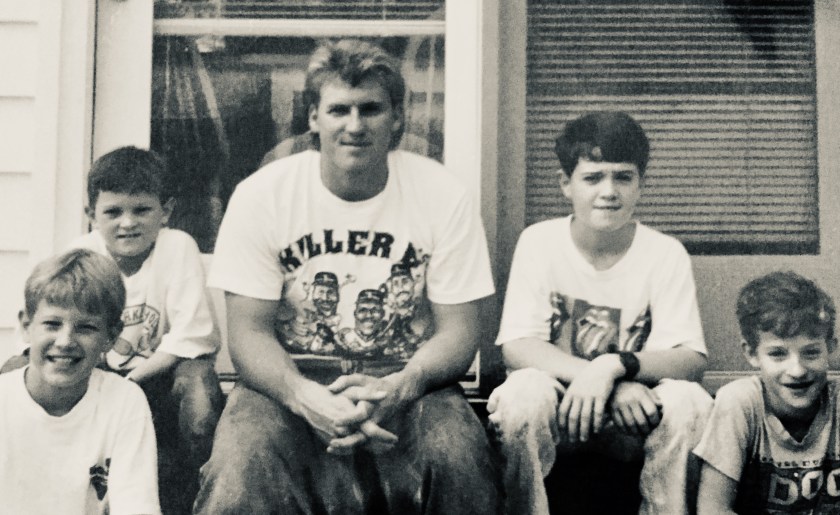
Mackey married my first cousin’s childhood best friend, and my brothers and I got to visit him at his home in Lynn Haven, Florida, just outside of Panama City. His dog was named “Mookie,” after Mets centerfielder Mookie Wilson. We hung out, tossed the ball, and hoped some of that big-league pixie dust would settle on us.
Not long after our summit, Mackey’s career took a dark turn. Midway through the ’90 season, Sasser began to have trouble throwing the ball back to the pitcher from home plate. Without fail, he would double-clutch the ball in his mitt – a malady that would come to be known as “Mackey Sasser Disease” – allowing opposing runners to execute delayed steals. Sasser eventually lost his starting gig and became the subject of much ridicule. Daryl Strawberry, no stranger to confrontation and the ringleader of the team’s wild boys faction, taunted Sasser about it one night and the two came to bloody blows.
Today, Sasser says the problem began during AAA ball when he injured his right shoulder after getting hit with a foul tip. To make matters worse, his coach would fine him every time he double-clutched, adding insult to injury. Mackey overcame the problem, but the demon returned after a home-plate collision with the Braves’ Jim Presley during the ’90 season.
Today, Sasser coaches baseball at his alma mater, Wallace Community College, in Dothan, Alabama. Whenever I hear “Ode to the Mets,” I’ll forever think of the Georgia boy who wore the cursed No. 2., a former boy-prince of Queens who gave Met fans some real fireworks for a time.
I wrote a brief bio of John Hartford for the new Hartford tribute, On The Road, a benefit album for MusiCares.
John Hartford is one of those unique American creations whose life could have been born from the pen of Mark Twain. Like Twain, Hartford grew up along the banks of the Mississippi River, where in his youth he worked on a steamboat, a passion that would have become a career, he said, had the imprint of the roustabout minstrel within been any less strong.
Like the great American river, Hartford’s music traverses vast terrain: he was a masterly country-folk songwriter, a brilliant interpreter of old-time and early bluegrass, a progenitor of newgrass, and a dynamic live performer whose sense of exuberance and whimsy influenced scores of musicians across generations. Vince Herman of Leftover Salmon recalls Hartford’s onstage power, saying, “I’ve never seen a performer so absolutely capture a crowd. He was the complete package…and there will never be another like him.”
Hartford’s late-’60s, country-folk-pop masterpiece, “Gentle On My Mind,” made popular by his friend and frequent collaborator Glen Campbell, is regarded as a standard in the Great American Songbook. In 1971, Hartford pioneered a new sound with the album Aereo-plane, a solo project that found the musical visionary connecting the hippies with the hillbillies and stretching the boundaries of traditional folk and bluegrass into more “herb-friendly” zones. “Without the album Aereo-plane, there would be no newgrass music,” says Sam Bush, the revered mandolinist who popularized the genre with his band New Grass Revival.
LoHi Records will honor Hartford’s legacy this summer with On The Road: A Tribute To John Hartford. All proceeds from the project will benefit MusiCares, an outfit run by The Grammy Foundation that offers critical assistance to musicians in times of crisis and need. Their work is crucial, for the economic realities of being a musician have never been more dire. All of the artists on this album understand the pressures of not only surviving but creating art in a deteriorating financial landscape. Sadly, the past year witnessed several well-known musicians succumbing to deaths of despair and this album serves as a rallying cry in the face of those tragedies. Resources do exist and it is hoped that this album can shine more light on those that can help. Now with the arrival of Covid- 19 erasing all live performance, a further reduction in artists’ incomes is inevitable and resources like MusiCares have become even more essential. “This is going to call on our better angels to come out during this time,” says Vince Herman. “I hope we all are feeling that we’re all in the same boat, and we either sink or swim together.”
The music of Hartford, who died in 2001 after a long battle with non-Hodgkin’s lymphoma, courses through myriad styles of American music, so it’s fitting the album features 14 reworkings of Hartford originals from some of the preeminent artists in the worlds of Americana, folk, country traditional bluegrass and jamgrass. “This album is an homage to all these hardworking musicians who are out on the road making their living,” says Chad Staehly, one of LoHi’s founders, who is also keyboard player for Great American Taxi and Hard Working Americans.
The album opens with Sam Bush’s rendition of title track “On The Road,” a song Bush performed live with Hartford as far back as 1977. As a kid growing up in Bowling Green, Kentucky, Bush first heard Hartford on CBS’s Smothers Brothers Comedy Hour and later on The Glen Campbell Goodtime Hour, and he’d record some of those television performances straight from the tube into a cassette player, he says. On trips to Nashville with his dad, Bush would gobble up copies of Hartford albums at Ernest Tubb’s Record Shop. Years later, he would go on to collaborate with Hartford on numerous occasions. He looks back fondly on picking parties at Hartford’s residence in Nashville that, he says, would last four or five days at a time. “I never met anyone who liked to jam as much as John,” Bush says. And coming from the mouth of Sam Bush, that’s saying something.
On The Road was recorded in studios across the country, and yet, it sounds amazingly cohesive. Hartford’s music had a deep spiritual center, to be sure, and it’s that core that shines through in each of the album’s cuts. And while no tribute album could explore every nook and cranny of Hartford’s extensive catalog, this album hits some of the high points of a career that spans more than three decades. Railroad Earth offers an affecting version of “Delta Queen Waltz,” one of several paeans to the steamboat life written by Hartford in his lifetime. John Carter Cash and Jerry Douglas perform one of his better known and well-covered tunes, “In Tall Buildings,” a song about bidding adieu to the pastoral life and going to work for the man. The Infamous Stringdusters contribute a soulful reading of “Gentle On My Mind,” while Americana folkie Todd Snider serves up a stripped-down version of “I Wish We Had Our Time Again.” Keller Williams, the pan-genre wunderkind, teams up with the Travelin’ McCourys for the zany “Granny Woncha Smoke Some Marijuana,” a cut from Hartford’s mid-’70s pushing-the-envelope period when he was recording on an independent label. Williams, a wild and chameleonic performer in his own right, is certainly an heir to Hartford’s solo performance tradition. Longtime Hartford enthusiasts Leftover Salmon funk it up with “The Category Stomp,” one of Hartford’s earlier songs from the late ’60s, and one whose lyrics speak to the man’s musical manifesto (“It’s a folk-country-disco-tech-soft-rock-contemporary-abstract- expressionism-word-movie-flower-power-hard-ragging-neo-bluegrass-stoned-billy-dirty- boogie-freak-down-coming-on-jellybean-psychedelic stomp”). “I just love that stuff,” says Vince Herman. “It’s old-timey rap, I guess, and the chance to put a kind of funky thing on it seemed like a good idea. I think John would approve of the direction we took on it.”
The lyrics to “On The Road” encapsulate what the album is about. “Every day it’s your turn, another verse to be earned/ it’s a road, no big turn/ won’t get home much this year.” The album closes with an additional version of the title track, this one by banjo whiz Danny Barnes in solo guise. It’s a full-circle moment that captures the spirit of Hartford’s life and music, and in a very real sense, all of American music, that great unbroken circle that connects one and all forever. Long live John Hartford.
For the past month, I’ve worked as a part-time tutor in south Alabama, helping high-schoolers prepare for the verbal portion of the ACT, the standardized college admissions exam generally preferred by the universities down in Dixie.
As part of the interview process, I was required to take the English section of the test and notch a certain score.
I felt a pang of terror upon hearing the news. It had been 24 years since I walked into Murphy High School one fine spring morning and filled in those tiny ovals with a pair of sharpened No. 2s. I had worked as a writer and editor since 2004, but, under the gun, was I really the prince of punctuation I fancied myself to be?
It was too late to take a practice test, so I decided to “get in the zone.” I sought to achieve this through a form of method-acting, by which I’d recreate a day in the life of my 17-year-old self. That afternoon I ran wind-sprints in cleats and washed my hair afterward with a green, toxic slime known as Pert Plus. I ate ham-steak for dinner with baked potato and washed it down with a Carnation Instant Breakfast while watching an episode of “Hangin’ with Mr. Cooper.”
The next morning, I was ready to go.
I finished the English section of the test with a minute to spare, and completed Reading Comp at the buzzer. I think the ACT gods were smiling on me. The Prose Fiction section of Reading Comp was written by a not-so-well-known Vermont novelist named David Huddle, whose daughter taught me poetry writing at UVa. The Natural Sciences section sported a passage by Oliver Sacks, whom I’d been reading that very week.
After finishing the test, I sat nervously in a small cubicle awaiting the results. I soon found out I’d aced the Reading and missed a few on English. I was ecstatic. I imagined at that moment I had the world by the balls. I had made it. I could go to any college of my choosing. Then I could land any job in the world and marry any girl I wanted.I walked out of the tutoring center like a man on fire. I got in my car and blasted “Rain King” by Counting Crows, fishtailing out of the parking lot as my car shape-shifted into a burgundy-and-cream ’89 Ford Bronco.
“My earliest memory is waking in the predawn of a midwinter morning to the sound of my father’s clown shoes treading the floorboards of the hallway outside my bedroom. It was a sound I’d continue to hear through the years, and one that gave me great comfort. As much comfort as the summer rain when it danced the Charleston on the tin roof of our Illinois home on hot July nights. I always smiled beneath my covers when I heard the sound of those clown shoes. As much as I wanted Dinky the Clown to eat his Pop Tart with me over breakfast, I knew he had a job to do, and that in a few hours he’d be titillating a gaggle of four year olds with his clever bag of tricks somewhere in the wilds of Illinois.”
Charlie Craddock stood on his wharf and looked out over Barnacle Bay with two good eyes. It was the morning of his seventieth birthday. The day was clear and he could see schools of mullet in the water. He threw his casting net and caught several on the first cast but decided to release them back in the bay. Honor thy fish, he thought. His wife Tammy never had a taste for mullet anyway (“a trash fish,” she snobbishly would say) and he sure as hell wasn’t frying or smoking anything on his birthday. Today was a day for fishing.
Charlie didn’t mind that he was 70. Still it wasn’t cause for celebration. He wasn’t always sure he’d live that long. He’d smoked nearly a pack a day since the age of 16, cutting back to four or five a day two years ago after suffering two heart attacks in the span of six months. He flatlined at one point during heart surgery and liked to joke that his family told the doctors not to revive him. Charlie wasn’t exactly active and was never one for exercise. Ever since his last high school football game playing noseguard during senior year he hadn’t so much as jogged. The walk to the wharf from the house had become burdensome in recent years, so he used a golf cart for transportation. He’d light up a Pall Mall during the trip as Tammy no longer allowed smoking on the patio even going so far as to post a no smoking sign on the side of the house.
Charlie’s little brother Big John was arriving that afternoon from North Carolina. Tammy was driving to Albacore in Charlie’s Lincoln to pick him up from the airport. She couldn’t take her Ford Fiesta because Big John weighed 400 pounds and couldn’t fit in an economy car.
Charlie thought of Big John as a pain in the ass. Ever since they were little kids growing up in Chicory County Big John had been a pain in the ass. To Charlie at least. Big John always got car sick on trips and shit his bed a few times a year. The two brothers quarreled a lot as kids. Perhaps it was Charlie’s doing. When Big John was six Charlie took a pebble and blinded his brother with a sling shot during a game of war at their grandaddy’s farm on Old Dike Road. Charlie got a whipping every day for two weeks as punishment. On some days Daddy whipped him with a stick, other days it was the belt. His daddy spanked the boys with the palm of his hand when they were real little, but after a certain point, the bare-handed spankings made Charlie laugh. That really pissed daddy off. So there was no laughing with the belt. Not by a long shot. Charlie screamed bloody murder during those whippings. Especially when the belt would lash the back of his thigh. Mercifully, daddy never hit him with the buckle. That would have been cruel and unusual, something mama never would have allowed. Big John watched the series of whippings from his bed with his one good eye, solemn and stoic like a prison guard observing an execution. Daddy had done his job all right, but in his mind justice had not been served.
For the entire next year Big John wore a patch over his eye and earned the nickname Pirate John at school. The paper even did a story on him. He became Big John when he fattened up around age 10 and got a glass eye. His pirate days were over.
****
Big John and Tammy arrived at the house around 2 p.m. Charlie had eaten a box of Fig Newtons for lunch and was eager to get on the water once Big John arrived. The day was still clear.
When he saw the Lincoln pull in the driveway he drove the golf cart back to the house.
“Well, we made it,” Tammy said as she got out of the car. She was wearing a floral top that matched her pants. “You wouldn’t believe the traffic in Albacore. Don’t see how folks live there.”
Charlie pulled the golf cart up next to the car. He got out and helped Big John out. Big John breathed heavily as he struggled to pull himself out of the fine American automobile that Charlie had purchased with cash money.
“Gimme a hand, will you old brother?” Big John wheezed.
Charlie grabbed the upper part of Big John’s left arm. There was so much loose skin it was easy to maintain a grip. He got him situated in the golf cart.
“Tammy, you can take his suitcase in now or I”ll get it out later. We need to get out on the water.”
“You boys and your fishing,” Tammy said. “I’ll start getting stuff ready for the party tonight.”
“Thank you, baby doll, I love you,” Charlie said.
****
It was 3 p.m. by the time they reached the artificial fishing reef in Barnacle Bay. Charlie had brought along some frozen shrimp and cut-up cigar minnow for bait.
The two brothers hadn’t talked much on the way out. The motor on Charlie’s boat was loud and Big John didn’t hear well. Now that they were anchored on the reef Big John could hear.
“How’s the fishing been this year?” Big John asked him.
“I been fishing this bay for forty years,” Charlie said. “And I still know the spots.”
“How you been feeling? Your health holding out okay?”
“Never felt better in my life,” Charlie said. “Tammy don’t complain if you know what I mean.”
At that moment Big John’s line went taut. “Fish on,” he yelled.
The fish was in the boat within the minute. It was a white trout, which is what Charlie was expecting they’d catch.
“What’s new in North Carolina?” Charlie asked.
“Just people getting old and dying,” Big John said.
By the next hour they’d caught the limit.
It was around this time Big John felt the urge to speak his heart.
“I know we ain’t been close for a while,” Big John said. “I hate that. Lord knows Mama woulda hated the way things turned out. But I wanted to say I forgive you or what happened that day.”
“What happened what day,” Charlie remonstrated.
“With the slingshot,” Big John said. “The day you blinded me. The day you blinded me with the slingshot.”
“Accidents happen,” Charlie said. “I meant nothing by it.”
“Well, if you’re going to be that way about it,” Big John said, “never mind. Sorry I brought it up.”
“We need to head on back,” Charlie said. “My boys will be arriving soon for my birthday dinner.”
****
When they got back, Charlie’s boys, twins named Rod and Todd, had already arrived. Rod had taken off early from Little Caesar’s so he could make the party. Todd hadn’t slept in two days on account of his meth habit. He didn’t work. His mother hated the drugs but knew they cut down on his grocery bill. She always looked on the bright side.
Big John offered to clean the fish on the wharf but Charlie said no and that he would do it. So Big John walked back to the house to clean up. He spoke to both Rod and Todd and fetched a glass of sweet tea from the kitchen. It was so good to see family, he thought.
He thought about showering but remembered that he couldn’t fit in the shower, so he just applied another coat of Speed Stick to his pits.
By the time Big John was well fragranced, Charlie was back in the house.
“Fish cleaned,” he told Tammy, handing her two ziplock bags full of filets. “My work is done.”
“How you want me to do em? Use the crispy fry or the seasoned?”
“You the boss,” Charlie said.
****
An hour later dinner was ready. Big John and Charlie had been on the porch talking and drinking Crown and coke in plastic cups.
“It’s just so smooth going down,” Big John said, “it’s just so smooth.”
A moment later, he added, “It’s just so peaceful out here.”
Charlie wasn’t talking much. He started to think that maybe he was in the wrong when they were out there on the boat. He should have accepted Big John’s forgiveness. He should have said he was sorry for what he had done so long ago. He should have told him … something.
By this time both men were quite drunk. Crown was a fine beverage win lose or draw, Charlie thought. Charlie didn’t want to eat in the dining room so he instructed his woman to bring the fish outside. Rod came out and ate with them, as did Tammy, but Todd said he wasn’t hungry and stayed inside watching Family Guy.
After the meal was finished Charlie made a night cap and then went to bed. Tammy soon followed. Big John stayed out on the patio looking at the stars. How did the aliens live on those things he wondered. Not much later Todd came outside. Rod had left and gone back to Little Caesars. Todd offered Big John some of his meth. He snorted a bump, then another, then another. He kept drinking the Crown. He was feeling good. It was so good to be back with family. He loved his brother Charlie and wanted to rekindle the old days, not the way they were but the way he wished they were. Maybe he could pull a prank on him in good fun. Big John left Todd on the patio and went into the toolshed. He found a liquid solution of weed killer in a white bottle.
“Bingo,” he said out loud.
He took the weed killer inside and walked down the hall. Charlie and Tammy’s room was at the end. He summoned all his powers of concentration in his state of fat drunkenness and slowly opened the door. Charlie was snoring loudly through a mask he wore for sleep apnea. He was out cold. Big John approached the bed, slowly. He unscrewed the cap on the bottle of weed killer and poured it over his brother’s right eye.
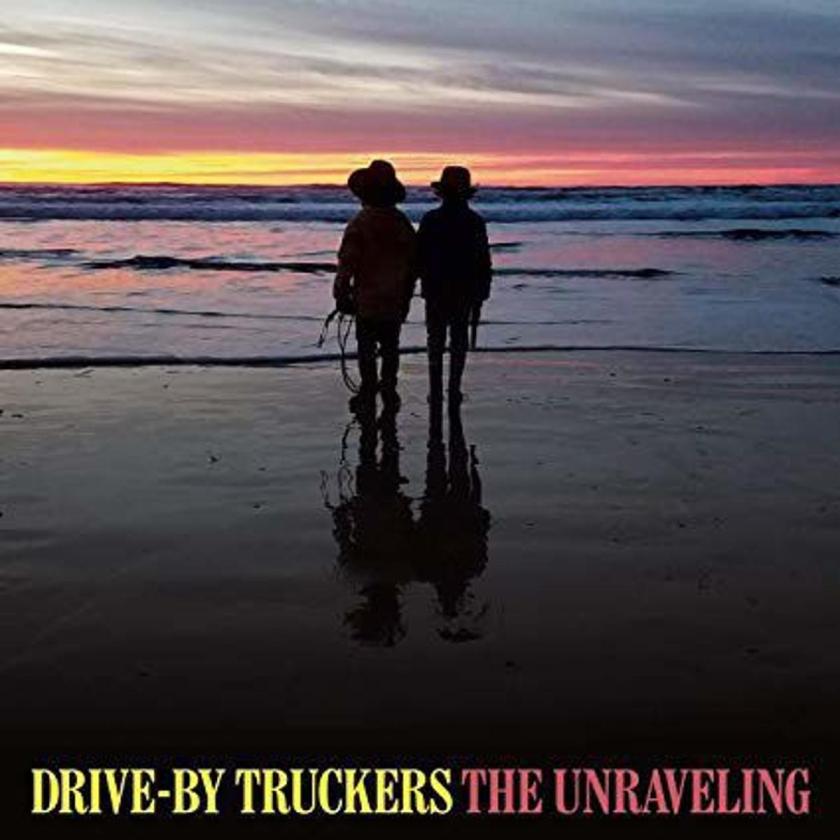
The night before the release of The Unraveling, the new album from Drive-By Truckers that dropped January 31, Patterson Hood posted a picture to Instagram of the New York City skyline at night. He captioned the photo: “Thirty-one years ago, Lou Reed’s New York album was one of my two favorite albums of the year. Neil Young’s Freedom was the other one. Both of those album politically pointed to this current moment in time … Within a week there will be Brexit, the Iowa 2020 caucus and most likely Trump’s acquittal. The soul of America has been sold out (to paraphrase Marianne Faithful) ‘for such a low bid.’”
Lou Reed’s New York, generally regarded as one of his stronger solo efforts,documents the dark underbelly of Gotham in the late ’80s, turning its lens on the city’s street denizens and working-class hustlers, the folks struggling to pay rent to a landlord “who’s laughing till he wets his pants.” The album could’ve been written yesterday. As Reed sings on “Dirty Boulevard”: “Give me your hungry, your tired, your poor, I’ll piss on ‘em/ that’s what the Statue of Bigotry says/ Your poor huddled masses, let’s club ‘em to death/ and get it over with and just dump ‘em on the boulevard.”
Young’s Freedom, the more well-known of the two, opens and closes with acoustic and electric versions of “Rockin’ In The Free World,” respectively. It’s a song the Truckers uncork regularly in concert these days and it works as a sort of thematic centerpiece to the live show.
The Unraveling — the title of which recalls liberal economist Paul Krugram’s 2003 book The Great Unraveling — is very much in the spirit of the Young and Reed efforts. It’s also a suitemate of sorts to the band’s 2016 release American Band, the group’s most pointedly political album up to that point and one that attempted to grapple with hot-button issues of the republic like gun control and Black Lives Matter.
The Unraveling was recorded in a mere six days at Sun Studios in Memphis, and the immediacy shines through. The album is mostly a Hood affair, with co-principal songwriter Mike Cooley contributing just two songs. The opening track “Rosemary With A Bible And A Gun,” a Southern Gothic travelogue that recalls Springsteen’s Nebraska and namechecks Memphis photographer William Eggleston, is a bit of an outlier on the record. Cinematic in its scope, it’s a cryptic story that sets the tone for what’s to follow. The next song, “Armageddon’s Back In Town,” is a dirty rocker about the return of Reagan-era, Cold War paranoia, with Hood lamenting that “you can’t tell the rabbit from the hat” in his trademark Southern rasp. “Thoughts and Prayers,” the album’s first single, deals with the failure of the political establishment to take action on societal horrors like mass gun violence, while “21st Century USA” chronicles the dry rot of small-town life, painting Anytown, America as a place of Wells Fargos, KFCs, payday loan centers, and shitty bars, populated by folks working for shrinking pay while awaiting the return of the Savior. “Heroin Again” laments an acquaintance’s relapse on a drug that is finding its ways into new corners of American society as painkiller addictions rage and scripts get harder to come by.“Babies In Cages,” a title that could be the authoritarian state writ large, is a plaintive cry of the heart, with Hood singing, “This ain’t the country our grandads fought for us to be.”
The Truckers, now 12 albums deep in a career full of twists and turns, have never been shrinking violets when it comes to politics, which is something of a rarity for rock bands from the American south. The group’s breakthrough double-album Southern Rock Opera was a deeply political affair, one could argue, exploring what Hood called “the duality of the Southern thing.” Hood was born in the Muscle Shoals region of Alabama in 1964, the year of the passage of the Civil Rights Act, a watershed piece of legislation that tilted much of the white, working-class south in the direction of the Republican party. Southern Rock Opera explored the nuances of race and politics throughout Alabama history, referencing everyone from Lynyrd Skynyrd to George Wallace, a politician now regarded as a forerunner to Trump. As The Unraveling drops, three Alabama politicians are vying for the Republican nomination for Senate, all of them desperately trying to out-Trump one another, with former Auburn football coach Tommy Tuberville suggesting Trump was chosen by God to be president, House Rep. Bradley Byrne running a series of blatantly racist ads that go well beyond dog-whistling, and former Attorney General Jeff Sessions championing the record of a president who kicked him to the curb like a mangy dog. Clearly, not much has changed in the neighborhood.
“This is no time for circumlocution, this is no time for learned speech,” Lou Reed sings on New York. The Truckers would seem to agree. The Unraveling is as hard-boiled and direct as anything they’ve written, and there are no words minced. Politics and art have always been tricky bedfellows, and some artists come up short in their efforts, with the music amounting to nothing more than cheap dogma and rhetoric. And while this isn’t the best Truckers’ album by a long shot, it is a pretty good one, and one that achieves its objective of holding the mirror up to a country that’s bargained so much of its soul.
In a recent interview with Forbes magazine, Hood said he wanted his kids to know which side of history he stood on when the smoke eventually clears. This album makes it abundantly clear.



 Caine O'Rear