We Know Better

image

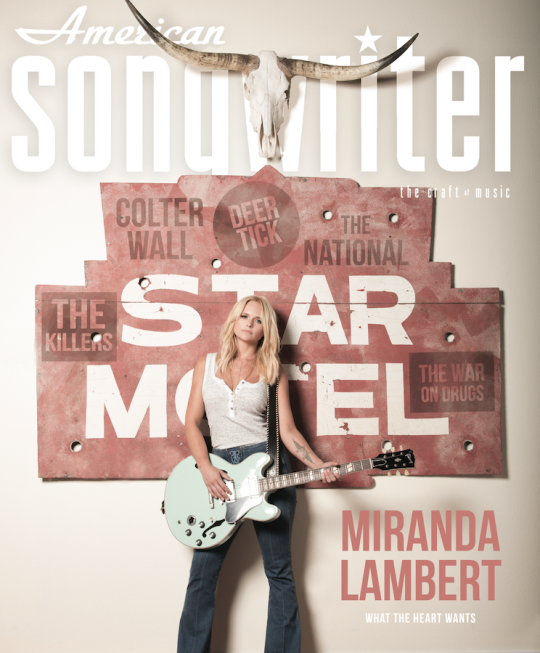
The September/October 2016 issue, featuring Miranda Lambert on the cover, hits newsstands on September 12, but the digital edition will be ready and available for download on September 6. In addition to the feature on Lambert, the issue includes profiles of The National, The War On Drugs, Colter Wall, The Killers, Torres, Ray Wylie Hubbard, and many more. Below is the editor’s note from the new issue.

This issue is going to press just days after a 32-year-old woman named Heather Heyer was run over and killed in broad daylight in Charlottesville, Virginia while protesting a white supremacist rally. Nineteen others were reported injured that day, including a black man named Deandre Harris was severely beaten in a parking garage by some of the marchers.

President Trump drew ire for not immediately denouncing the white supremacists with Unite The Right, a segment that is understood to be part and parcel of his base. The following Monday he finally rebuked them, but for many it was too little, too late. There were also more callings for the firing of White House Chief Strategist Steve Bannon, whose prior work at the right-wing website Breitbart, Bannon once claimed, helped create the platform for the alt-right, a movement dedicated to white supremacy and white nationalism.

As of press time there are plans for more white supremacist rallies and Richard Spenser, the buttoned-up de facto leader of the movement, has vowed to make Charlottesville the center of its universe.

There will no doubt be a flood of songs about Charlottesville. It was a historical moment, to be sure. Wilco released one just two days after the event, with proceeds benefiting the Southern Poverty Law Center. “My dad was named after a Civil War general, and he voted for Barack Obama twice,” Wilco frontman Jeff Tweedy said upon the song’s release. “He used to say, ‘If you know better, you can do better.’ America — we know better. We can do better.”

It’s been argued Trump’s appeal to the white working class is due to the group’s economic desolation. But the alt-right, whose actual numbers don’t appear to be that large, are driven by other things as well. Spencer’s motivation appears to be purely ethnocultural. He is the son of a north Dallas ophthalmologist and holds degrees from the University of Virginia, the University of Chicago, and Duke University. He does not come from a desperate economic situation — he just wants a white nation state.

*******

Art and politics have always been tricky bedfellows, and it is a difficult balancing act when songwriters take on the big societal issues. How constructive is agitprop or rhetoric in songwriting? And how do you avoid just preaching to the choir?

Steve Earle, no stranger to politically tinged songs, says the job of songwriting is about empathy, about making people see the humanity in those different from them (a tall order when dealing with neo-Nazis). Bruce Springsteen has adroitly walked the line between the political and personal. A lifelong Democrat who campaigned for Obama and Hillary Clinton, Springsteen’s audience comprises fans from all political stripes, even though he has caught heat at times. A New York Police group, for instance, called for a boycott after the Boss wrote and performed“American Skin (41 Shots),” a song from ’99 about the shooting of Amadou Diallo by four NYPD plain-clothes officers. Springsteen continues to play the song in concert to this day.

So much of American folk music, it seems, has tilted toward the left. Pete Seeger and Woody Guthrie were not partisans but they frequently targeted fascists and authoritarianism. The famously omitted verse of Guthrie’s “This Land Is Your Land” questions the legitimacy of private property and his song “The Unwelcome Guest,”from the Billy Bragg and Wilco Mermaid Avenue sessions, is a Marxist anthem if there ever was one.

Country music, throughout its history, has spoken to a certain social structure, one that is largely religious and conservative. Haggard’s “Okie From Muskogee” was in many ways a tribute to the white working class. Haggard wrote it, he said, in support of the type of people he grew up with, the ones who were going to be sent to Vietnam because they had no other choice. He was tired of seeing them get picked on by the hippies and privileged class, so he stood up for them.

The late Lou Reed once asked Vaclav Havel, the dissident playwright from Czechoslovakia whose work helped dismantle Communism, and who later became president of the Czech Republic, if art and music could change the world. Havel said art could not change things on its own, but added that it could change people, and it was up to them to take it from there.

Since Trump’s election, there has been a growing chorus calling for country artists to speak out against racism, since they have the ear of rural and conservative America. One mainstream country singer, Kip Moore, took to Instagram after Charlottesville and repudiated the racism he saw growing up that still exists.

“The gift of kindness may start as a small ripple that has the potential of turning into a tidal wave,” Moore wrote. “… It starts with each one of us individually if we wanna change what this world looks like. Go out of your way to take care of people and spread kindness … I’m not tryin’ to preach, but I’m way more concerned with the state of my fellow brother than the state of my Instagram following. Take a break from your 100th bathroom selfie and pay attention to what’s taking place around you.”

Well said, Kip.

— Caine O’Rear, Editor in chief

Written August 14, 2017

Rising Son

Jay Farrar has always been known as a songwriter’s songwriter. Even during his salad days with the seminal alt-country group Uncle Tupelo , the Belleville, Ill. native was writing world-weary, poetic songs that belied his young age.
Farrar formed Son Volt shortly after Uncle Tupelo called it quits in 1994 (with Tupelo band mate Jeff Tweedy starting Wilco). The group’s first album, Trace , was a mostly acoustic affair that now ranks as one of the musical high-water marks of the ’90s. The band released two more albums before going on hiatus in ’99.

After two experimental solo projects, Farrar resurrected Son Volt in 2005. But this time around, the band had a new lineup. Their first comeback album, Okemah and the Melody of Riot , found the group moving away from its signature traditional sound into more rock-oriented territory.

With their latest effort, The Search , Son Volt continues to plow new ground musically. With frequent looping, horns and the occasional sitar, it sounds far more like The Beatles circa 1968 than any neo-traditional band you’ve ever heard.

But despite the new sound, Farrar’s lyricism remains the band’s hallmark. His surrealistic evocations of the American road on The Search affirm that he is, first and foremost, a songwriter. Richmond.com recently spoke with the Son Volt frontman, who comes to Richmond this Thursday with his band “Groovin’ in the Garden.”

Since your first solo album Sebastopol , you’ve been a lot more experimental with the instrumentation and the arrangements. Was that a natural evolution for you, or more of a conscious decision to break free from the alt-country pigeonhole?

It felt natural. So I guess it was evolution. Coming off a period where the instrumentation was fairly static but it remained the same, I think the solo records just sort of represented a challenge to see where things could go.

Are you listening to completely different stuff than you were listening to, say, 10 years ago?

Probably. You change over the time. I think there was maybe a song on the first solo recordat that period, I was even listening to jazz. That was something that I definitely wasn’t listening to [in the past], and trying out some jazz time signatures and things like that. I try to keep an open mind and learn from whatever I’m listening to.

Other than yourself, the current Son Volt lineup features none of the members that were on the first three albums. Why did you keep the name?

I felt like there was unfinished business. I felt like Son Volt had more to offer, so I stuck with it.

Your lyrics have always been more impressionistic than narrative-driven. I’ve always heard a strong Townes Van Zandt influence. Who are some of your guiding lights, in terms of songwriting?

Townes Van Zandt would be one of them. I didn’t actually hear Townes Van Zandt until ’94 or something like that. I’d been doing a fair amount of writing before I came across him. He definitely left an impression. Maybe even certain writers have even as much of an influence, whether it was Jack Kerouac, who had more of a stream-of-consciousness style that I could really relate to and learn from, I think, as far as the idea of just getting your thoughts down on paper and not editing them along the way. I could relate to that and I’ve done a lot of that. I feel like that’s a good way to create.

A lot of the songs on the last two albums decry conservative, Middle America politics. Yet you still live in the Midwest. Can you explain that?

In the Midwest, I guess you can keep your finger on the pulse really. I prefer to live in a place where, in like St. Louis especially, it’s primarily a more working-class city. There’s more realism there than there is, sometimes, on the coasts. Anyway, that’s my take. I never really considered living anywhere else, except maybe during the period of making the Okemah and the Melody of Riot record, and that only lasted a couple of days.

In the press release you say the Beatles were the first band you were really into, though you suppressed the influence for a while. Any other influences you’ve consciously suppressed, like ABBA?

Reggae was probably one that I consciously suppressed for a long time. In our live shows we sort of adapted an Uncle Tupelo song, “Life Worth Living,” that has some reggae overtones now. I think it just took me a long time to be able to actually appreciate reggae in a certain way. I think a lot of it is as a result of finding out more of the history of it.

Many of the songs on The Search draw inspiration from the road. Is the American road still romantic, in the sense that it was for artists like Kerouac and Woody Guthrie?

I think there’s still a lot of Jack Kerouac and Edward Hopper out there. Especially in the west, in the middle and the south. I shouldn’t leave out the north. It’s out there, especially late night. You find it in the truck stops, the diners. They’re still there.

You’re often labeled as the godfather of alt-country. Is that a title you’re comfortable with, or do you find it ridiculous?

I see it as more of a continuum where you’re inspired by people that came before you. You give some, you take some, and that seems to be the way that it all works. I don’t see that anything’s starting at any one discernible point. I guess that’s looking at it from more of a historical perspective. It’s hard to really say that anybody really started anything.

What can we expect next from Jay Farrar more Son Volt albums?

I guess we’ll see. That’s the focus for now. We’ll be touring through the fall anyway. I don’t know what’s going to happen next. I’ve been in contact with Anders Parker some, and we’ve done some demo work towards another Gob Iron record. It could be Gob Iron. I’ll just have to wait and see.

(Richmond.com, June 2007)