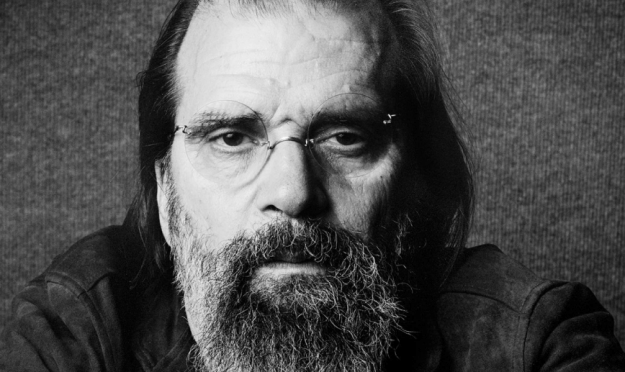
Baez

From American Songwriter interview, 2013.

Joan Baez epitomizes the ideal of the American folk singer. Ever since rising to national prominence in the early ‘60s, she’s stood at the crossroads of music and social protest, adhering firmly to the belief that music can in fact change the world.

Baez cut her teeth as a singer in the Cambridge, Massachusetts folk scene of the late ‘50s, when she was enrolled in college at the Boston University School Of Drama. She was signed to Vanguard Records in 1960, and soon became an international sensation. Early in her career, she met Bob Dylan, who at the time was hailed as the second coming of Woody Guthrie. Baez helped introduce the young Dylan to the world at large, sharing the stage with him and recording his songs.

Throughout her career, Baez has primarily been known as an interpreter of other people’s work. However, many of her own compositions, such as “Diamonds And Rust” and “Here’s To You,” reveal her depth as a lyricist and songwriter.

Baez continues to record and tour – and she looks and sounds great. Her last album, Day After Tomorrow, was produced by Steve Earle, and features songs by Elvis Costello, Gillian Welch, Tom Waits and others.

Do you remember the process of writing that song? Was that one that came in a burst or did you cultivate it for a while?

As this story is being written, Baez is set to embark upon a tour of France, followed by another tour with Kris Kristofferson, whom she first met at the Isle of Wight festival years ago. We spoke with the singer about Dylan, songwriting, and the state of American politics.

You’re known primarily for the songs you cover. Was there ever a point when you considered writing more of your material?

I haven’t written for the last 20 years. I think the poetry in my songs is really good. And I think the melodies are really good. And I think the only trick with my songs is that they’re not the kind of songs that people are urged to cover because they’re more personal. I write them more personal; it’s like reading a poetry book.

“Diamonds And Rust,” which is one of your more well-known compositions, fits more into that personal category.

Yeah, and it’s the only one that crossed over from very personal to being acknowledged in a very big way.

Well, it’s funny because I was writing it and it had nothing to do with what it turned out to be [Ed note: It’s widely believed to be about Bob Dylan]. I don’t remember what it is, but I think I was writing a song. It was literally interrupted by a phone call, and it just took another curve and it came out to be what it was.

Your history with Bob Dylan is a significant part of your legacy as an artist, which I imagine has been a double-edged sword for you. Was there ever a point where you considered not covering Dylan songs in concert?

His songs are so amazing. Even through his dormant period, for me, his songs can stand on their own. They’re the best.

When you play the Dylan songs live, does your relationship to them feel more aesthetic than personal?

Well, yeah. I haven’t seen him at a lot of them [my concerts], but he was very sweet in my documentary. So, I think the playing field’s level, and the songs are what they are.

How Steve Earle Gave Voice to Forgotten Miners on Ghosts of West Virginia — Rolling Stone

Photo by Jacob Blickenstaff

Beneath the veneer of his country-rock stylings, the early work of Steve Earle is shot through with moving descriptions of working-class life. His stirring debut album from 1986, Guitar Town, is haunted by characters hopelessly mired in small-town and rural America, barely scraping by in landscapes that are as bleak spiritually as they are impoverished. On the title track, Earle writes about his own life, with a deft nod to Hank Williams: “Nothin’ ever happened ‘round my hometown/And I ain’t the kind to just hang around/But I heard somethin’ callin’ my name one day/And I followed that voice down a lost highway.” It’s a nod, of course, to Williams’ classic “Lost Highway,” a song written by Leon Payne.

This image of small-town life and the urgency to leave it behind is as blue-collar as it is timeless Americana. But Earle’s characters are not so much conquered by fate as embattled by the forces of culture and economics — and he returns to these subjects for his latest project, Ghosts of West Virginia, out Friday. In these early works, there is the distance between aspiration and reality, and it is here where the struggle to survive with some semblance of meaning intact is maintained. On the song “Someday,” a Springsteen-esque anthem from Guitar Town, Earle relates the tale of a young man who pumps gas by the interstate yet yearns to know “what’s over that rainbow.” In “No. 29,” a tune from Earle’s sophomore album Exit O, a middle-aged man is sustained by little more than his glory days on the gridiron, which he relives every Friday night when he watches the town’s star tailback, wearing the narrator’s old jersey number, play at the local high school. Early Steve Earle was country music, all right: songs about the frustrated working man and the tender mercies that keep him going through hard times. But in Earle’s case, it is country music written by someone who knows the city just as well.

Read the full essay on Rolling Stone.

We Know Better

image

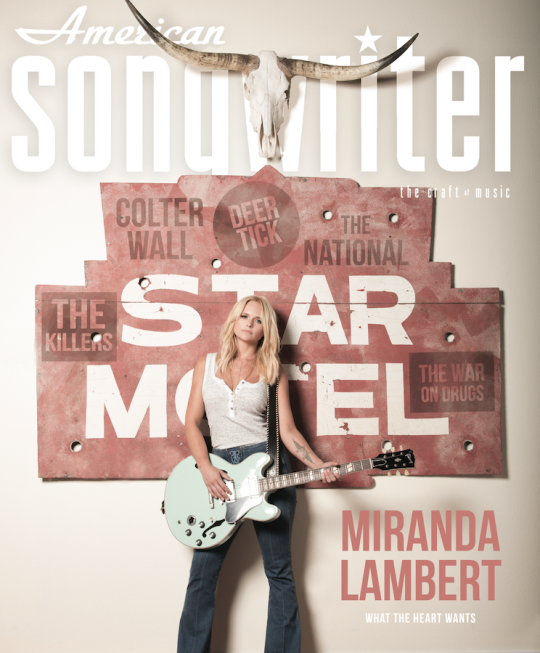
The September/October 2016 issue, featuring Miranda Lambert on the cover, hits newsstands on September 12, but the digital edition will be ready and available for download on September 6. In addition to the feature on Lambert, the issue includes profiles of The National, The War On Drugs, Colter Wall, The Killers, Torres, Ray Wylie Hubbard, and many more. Below is the editor’s note from the new issue.

This issue is going to press just days after a 32-year-old woman named Heather Heyer was run over and killed in broad daylight in Charlottesville, Virginia while protesting a white supremacist rally. Nineteen others were reported injured that day, including a black man named Deandre Harris was severely beaten in a parking garage by some of the marchers.

President Trump drew ire for not immediately denouncing the white supremacists with Unite The Right, a segment that is understood to be part and parcel of his base. The following Monday he finally rebuked them, but for many it was too little, too late. There were also more callings for the firing of White House Chief Strategist Steve Bannon, whose prior work at the right-wing website Breitbart, Bannon once claimed, helped create the platform for the alt-right, a movement dedicated to white supremacy and white nationalism.

As of press time there are plans for more white supremacist rallies and Richard Spenser, the buttoned-up de facto leader of the movement, has vowed to make Charlottesville the center of its universe.

There will no doubt be a flood of songs about Charlottesville. It was a historical moment, to be sure. Wilco released one just two days after the event, with proceeds benefiting the Southern Poverty Law Center. “My dad was named after a Civil War general, and he voted for Barack Obama twice,” Wilco frontman Jeff Tweedy said upon the song’s release. “He used to say, ‘If you know better, you can do better.’ America — we know better. We can do better.”

It’s been argued Trump’s appeal to the white working class is due to the group’s economic desolation. But the alt-right, whose actual numbers don’t appear to be that large, are driven by other things as well. Spencer’s motivation appears to be purely ethnocultural. He is the son of a north Dallas ophthalmologist and holds degrees from the University of Virginia, the University of Chicago, and Duke University. He does not come from a desperate economic situation — he just wants a white nation state.

*******

Art and politics have always been tricky bedfellows, and it is a difficult balancing act when songwriters take on the big societal issues. How constructive is agitprop or rhetoric in songwriting? And how do you avoid just preaching to the choir?

Steve Earle, no stranger to politically tinged songs, says the job of songwriting is about empathy, about making people see the humanity in those different from them (a tall order when dealing with neo-Nazis). Bruce Springsteen has adroitly walked the line between the political and personal. A lifelong Democrat who campaigned for Obama and Hillary Clinton, Springsteen’s audience comprises fans from all political stripes, even though he has caught heat at times. A New York Police group, for instance, called for a boycott after the Boss wrote and performed“American Skin (41 Shots),” a song from ’99 about the shooting of Amadou Diallo by four NYPD plain-clothes officers. Springsteen continues to play the song in concert to this day.

So much of American folk music, it seems, has tilted toward the left. Pete Seeger and Woody Guthrie were not partisans but they frequently targeted fascists and authoritarianism. The famously omitted verse of Guthrie’s “This Land Is Your Land” questions the legitimacy of private property and his song “The Unwelcome Guest,”from the Billy Bragg and Wilco Mermaid Avenue sessions, is a Marxist anthem if there ever was one.

Country music, throughout its history, has spoken to a certain social structure, one that is largely religious and conservative. Haggard’s “Okie From Muskogee” was in many ways a tribute to the white working class. Haggard wrote it, he said, in support of the type of people he grew up with, the ones who were going to be sent to Vietnam because they had no other choice. He was tired of seeing them get picked on by the hippies and privileged class, so he stood up for them.

The late Lou Reed once asked Vaclav Havel, the dissident playwright from Czechoslovakia whose work helped dismantle Communism, and who later became president of the Czech Republic, if art and music could change the world. Havel said art could not change things on its own, but added that it could change people, and it was up to them to take it from there.

Since Trump’s election, there has been a growing chorus calling for country artists to speak out against racism, since they have the ear of rural and conservative America. One mainstream country singer, Kip Moore, took to Instagram after Charlottesville and repudiated the racism he saw growing up that still exists.

“The gift of kindness may start as a small ripple that has the potential of turning into a tidal wave,” Moore wrote. “… It starts with each one of us individually if we wanna change what this world looks like. Go out of your way to take care of people and spread kindness … I’m not tryin’ to preach, but I’m way more concerned with the state of my fellow brother than the state of my Instagram following. Take a break from your 100th bathroom selfie and pay attention to what’s taking place around you.”

Well said, Kip.

— Caine O’Rear, Editor in chief

Written August 14, 2017

Steve Earle, Lucero Summon Old Spirits At Ryman Gig

Late in his set at the Ryman Auditorium, Steve Earle said he’d stood onstage in Chicago many moons ago and told fans that all of his dreams had come true. It was in that moment, he said, that he realized he needed to find some new dreams, and find them fast.

One of those second-act dreams came true Friday night when the so-called last of the hardcore troubadours, whose career has spanned 17 albums and survived all manner of slings and arrows, headlined the Ryman for the first time.

“This is a big deal for us,” he told the crowd.

A child of Texas, Earle was seven years old visiting his grandmother in Nashville, he said, when he first came to the Ryman, where he watched from the balcony as Bill Monroe performed on the Grand Ole Opry. He said he’d been thinking about that experience all day before launching into “You Broke My Heart,” an old-timey sounding country waltz that he wrote in the spirit of the venue.

“You Broke My Heart” features on Earle’s latest, So You Wanna Be Outlaw, an album that functions as a tribute of sorts to Waylon Jennings and Willie Nelson and their fight to wrest artistic control away from the anal retentive Nashville studio system. Like so many country greats who get slapped with the problematic “outlaw” tag, Earle’s output has been both traditional and subversive, a fact that was evident in a set list that moved peripatetically across genres.

The front end of Earle’s show drew heavily from the new album, and the third song of the night, “The Firebreak Line,” tipped its hat to America’s firefighters. With wildfires menacing much of the West, the tune is a modern-day folk number that finds Earle channeling his innermost Woody Guthrie. Another set highlight was “News From Colorado,” a song he co-wrote with his niece Emily Earle and ex-wife Allison Moorer before they split.

“Emily is in the crowd tonight, and Allison is not,” Earle deadpanned, adding that the audience would be hearing more from his niece, a Nashville-based songwriter who “survived for four weeks on The Voice without managing to end up in the hot tub with CeeLo.”

Hanging over the night, as if in benediction, was the legacy of Guy Clark, a mentor to Earle and a host of other Texas and Tennessee songwriters through the years. Before performing “Goodbye Michelangelo,” a song written about Clark shortly after his death, Earle spoke about the “L.A. Freeway” writer’s final days and the all-night bus trip he took with Clark’s inner sanctum to deliver Guy’s ashes to Santa Fe. He then talked about his old teacher’s decision to co-write late in his career, a move that inspired Earle’s own recent co-writing ventures.

Back in the ‘70s, Clark had advised against co-writing, but he eventually changed his tune. “Mainly I just got stuck, I ran out of shit to say,” he told American Songwriter in 2011. “I’ve found that with co-writing, there are a lot of young phenomenal songwriters and guitar players that come over here and write. And I learn so much from these guys. I’ll go, ‘Wow, how did you think of that?’ Or, ‘let me learn it.’”

Earle encored the show with “Desperadoes Waiting For A Train.” A song from Clark’s first album about a young kid and his hero’s death, it brought the night full circle.

Opening the show was Lucero, the Memphis bar-band exemplars who were playing the Mother Church for the first time. “We’ve never played the Ryman before but this is quite a place ya’ll have got,” said frontman Ben Nichols, who swigged whiskey throughout the set and joked that “you’d be nervous too if it was your first time playing the Ryman.”

There must be something about the Ryman and the memory of grandparents. Earle spoke about his grandmother, and before the last Lucero song of the night, Nichols wondered aloud what his grandfather would have thought about him playing the august venue. With just his accordionist, the unassuming frontman then delivered an emotional reading of “The War,” a song from 2005’s Nobody’s Darlings that recounts his grandfather’s experience in World War II. “Cause takin’ orders never suited me, giving them out was much worse,” Nichols sang, summoning a spirit kindred to his own.

Steve Earle on the Making of “Terraplane,” And Then Some …

Steve Earle’s old friend has always been the blues, but never has the prolific and mercurial songwriter released a quote unquote blues album. But that will change on February 17 with the arrival of Terraplane Blues, an album that takes its name from the Robert Johnson song about fast cars and even faster women.

Earle, who currently resides in New York City, cut the record this fall in Nashville at House of Blues studios over a 6-day stretch with his band the Dukes. It’s a bit of a breakup album, he says, what with it coming on the heels of his recent split with singer-songwriter Allison Moorer. Terraplane is a raw and dirty affair sonically, and moves from acoustic East Texas blues numbers to boogie-rock to early Stones-type ballads, with one spoken-word piece in iambic pentameter thrown in for good measure. The record was produced by R.S. Field and is being released by New West Records.

We hung out with Earle in the studio  and chatted about the album, and a host of other topics, including the Shakespeare authorship controversy, where Elvis really learned how to “shake it,” and why Earle’s writing songs for ABC’s Nashville.

So how long have you been thinking about making a blues album?
For a while.

I’d thought about doing it at some point as long as seven or eight years ago. I basically had a couple of things going. I wrote some songs that aren’t on this record, and they were sort of headed in one direction, and then the blues songs started to come along. And I don’t know why, but I decided that I’d make a blues record and then I’d make a country record, so that’s what I’m going to do. The country record’s like half-written. And some of the stuff [on the country record] I wrote for Nashville, just because T-Bone [Burnett] asked me to.

The TV show?

Yeah.

Now when I think of Steve Earle making a blues album, I think of the Mance Lipscomb, Lightnin’ Hopkins kind of stuff.

That’s there, but I decided on the Mance thing – there’s a Mance thing and a Lightnin’ thing. You know, Lightnin’ played with a band whenever he could. Mance didn’t, but I don’t think it was a choice. What Mance really did was he played dance music on one guitar when he first started out. So we did a thing that’s very much Mance, but we did it with a band. It’s all acoustic. You know, I’m playing guitar and Chris [Masterson] was playing a baritone resonator. I think that’s what he’s playing. We’ll get drums on it, and upright bass. It’s very much the kind of thing Mance did, the sort of in-between blues and ragtime. I mean, there’s no such thing as between blues and ragtime. There are people that, most of them wearing bowling shirts, will probably listen to this record and say that some of it’s not the blues. But they would be mistaken.
And “Tipitina” is the blues. It’s the 16-bar blues. And pre-war “St. James Infirmary” is the blues. So that stuff’s included. There’s a boogie. I chose Canned Heat rather than ZZ Top for that path. But there’s one song that’s based on the fact that I very much believe, for me, where I come from, the first two ZZ Top records are blues records. And that one track that rocks pretty hard is kind of from that.

So is “Terraplane Blues” your favorite Robert Johnson tune?

No, my favorite Robert Johnson tune is probably “From Four Until Late.” “Terraplane” just seemed like a good title. It’s a car. It’s a fast car. I’ve never wanted to learn how to play “Terraplane,” and I don’t know for sure if I will do it. I’m trying to figure if I can do it. It’s a hard song to sing, so I gotta find some version of it that works for me. [If I do record it], it’ll be an extra track. You have to have an extra track or two.

I know you’re a big patron of Matt Umanov’s guitars in Greenwich Village. 
I’m a big patron of guitar shops in general.

I understand you’re friends with Zeke Schein who works there. He’s a big Robert Johnson guy. 

Zeke knows more about this stuff than anybody that I know. I spent hours talking to him about this record. He knows what tuning all the songs are in. Zeke’s a really good player. He plays all that shit.

Do you think the general perception of blues these days is that it was just a form of folk music and that the dance element and the popular element of what blues used to be in the ‘30s and ‘40s has gotten lost?

Yeah, I mean that’s one thing – this record’s got a song that’s sort of based on “Smoke Stack Lightning.” And “Smoke Stack” – all those Chess records were jukebox records. They were made for people to dance to. They weren’t long and there wasn’t a lot of improvisation on them. They were improvising, but there wasn’t a shitload of long solos because they wrote two minute and 30 second records. And that’s represented here. But it very much sounds like this band. It’s the best band I’ve ever had. The existence of the band was part of the inspiration for making the record. Finally doing it had as much to do with Chris being in the band as anything else because I never had the guitar player to do it.

Did your time in New Orleans working on HBO’s Treme inform this album? 

Absolutely.

It wasn’t until recently that I learned that “My Bucket’s Got A Hole In It” was actually taught to Hank Williams by that blues musician who’s from New Orleans.

“Tee Tot” [Rufus Payne] is the story … I don’t know how much there is [to all that] … there’s all those stories about how black music and white music … I don’t know. The legend says that Elvis got all those moves from watching black gospel groups and watching bands on Beale Street. I know where he got everything he got. It was from Wally Fowler. Wally Fowler was the founder of the Oak Ridge Boys. He was the first white gospel singer to perform the way that black gospel groups did. You know, to not just stand there. He was the first real showman in white gospel music and he founded the Oak Ridge Boys. And there’s been an Oak Ridge Boys ever since.

When Guitar Town was written I was writing for Sunberry/Dunbar, which belonged to the Oak Ridge Boys and was run by my publisher, Noel Fox, who was the last bass singer in a non-secular version of the Oak Ridge Boys. Oak Ridge Boys are a gospel group. And [Richard] Sterban took over. Sterban came from J.D. Sumner, who replaced Noel because Noel quit. Noel went out and worked for Olan Mills or something, you know, selling people pictures of themselves for years. When the Oaks got big they brought Noel back to run their publishing company. He was a great song man. He’s gone now, but there would be no Guitar Town without Noel. He told me to write an album and not worry whether or not it would get you a record deal, and I had just lost my first record deal after being here for 12 or 13 years. I was pretty discouraged, and didn’t have much faith in myself as a writer anymore. And I wrote the songs that became Guitar Town in about 11 months.

But I heard all the war stories from him and from the Oaks and from those guys during that period, and they set me straight on where Elvis got that shit, and I believe it’s true. It just makes more sense. I went back and found a couple of films of Wally Fowler performing and [I was like] “ohhh …”

But it took a while to get poor white people and poor black people at each other’s throats, and it didn’t always take. There was already someone who was interested, like upper middle class kids like Sam Phillips slummin’ just because they loved the music. He ended up starting Sun Records, that kind of stuff. So you know, it couldn’t stay contained forever, the two things. And Sam knew, and that’s not a legend. He looked for years and [said], “If I can find a white kid, a good looking white kid who can sing this stuff, then I’m going to get rich.” He didn’t get as rich as he should have, but he got rich.

You’ve got a history of borrowing from the blues lexicon in your own tunes. And you taught that course at the Old Town School of Folk Music years ago, I think it was titled “The Cool Shit To Steal.” How do you walk that line between borrowing from traditional material and coming up with original stuff? You know, so much of the folk tradition is obviously about borrowing. 

It is, but in the blues it’s really tricky because it’s a limited genre. Some of this stuff is definitely post-Bob Dylan blues. Dylan started making blues records on purpose a long time ago. It begins on Bringing It All Back Home and it’s fully realized on Highway 61. Everything is in a blues form from that point on for a while, until probably Nashville Skyline or John Wesley Harding maybe. And I thought that it would be sort of fun to do something where I didn’t necessarily have to come up with a lot of melodies, that I would find at least the components for the melodies in this toolbox that’s called the blues.

Some of it’s more original that I thought it would be, melodically. The lyrics I pushed as hard as I’ve ever pushed. Some of the best lyrics I’ve ever written are on this record. I wrote a spoken word piece in iambic pentameter again. That’s me making up for my lack of education. I didn’t get a chance to write in iambic pentameter in high school because I only got halfway through the 9th grade.

So are you still a big Shakespeare buff?

Yeah. I don’t think that the glovemaker’s son wrote those plays, but yeah. I think Edward de Vere, the 17th Earl of Oxford, wrote them. So does the greatest Shakespearean actor of our time, so did Mark Twain, so does Meryl Streep.

I don’t know if I believe that. Is there evidence?

There’s tons of evidence. There’s evidence both ways. You should read all the books and make up your own mind about it. There’s no way it was a bunch of people. It was one person, in my mind, and it pisses Billy Bragg off because he thinks I’m being elitist, and I’m far from an elitist.

There’s no way [it was] someone who’d never been to Italy, was illiterate, or in other words couldn’t form words, and that’s probably true of Shakespeare and most actors of his time. He could read but he couldn’t write, because that was a much harder thing to learn to do then. He had no intimate knowledge of life at court, and didn’t have political protection to keep him from getting his fucking head chopped off with some of the things he was parodying and some of the things he was writing about when he was writing them.

So the theory about de Vere is that he was either Elizabeth’s son or Elizabeth’s lover. Some people even think both. My guess is that he was her son, or somehow related to her, anyway. And so he got away with it. But it’s one person, it’s a singular genius voice. There’s no way it was more than one person, no way there was more than one person that brilliant in Elizabethan England, when there were only a 100,000 people in London and the whole area. It just doesn’t make sense.

Like with Marlowe and Ben Jonson. Their voices were so different from the Shakespeare plays, there’s just no way …

Yeah, and Ben Jonson is where a lot of the clues that it may have been de Vere come from. Ben Jonson wrote the preface to the First Folio, he’s the one who called him “The Soul Of The Age” and all that stuff. And they all were writing really great stuff, but nobody was writing anything like that. And nobody really emulated him in his time. Shortly after he died people did. And he became a big deal – Shakespeare’s plays were being staged and they were hits in London. And at that moment Elizabeth was patronizing theater. She didn’t go out to the theater, she couldn’t do that, but plays were brought in and performed at court. And she was the very first monarch in Europe that did that, which is another clue.

But there are a lot of books about it, and there’s a lot of evidence, and people are horrified of it. There’s a film called Anonymous that’s about the authorship and it’s just a shoot-em-up. Every theory is about Edward de Vere being the actual William Shakespeare, and who the real William Shakespeare was, and why he got set up. I think it’s really simple. I think he had to have a front because he was the Earl of Oxford and he couldn’t be a playwright, so I think he just set up a guy and paid him, because Shakespeare retired and went back to his hometown and set himself up in a wool business and fucking sold wool for the rest of his life after becoming the greatest playwright and actor of his age. It just doesn’t make sense.

He was a hoarder too; he hoarded grain during the plague, which was a bad thing to do.

Yeah, he was a businessman. That’s what he was. He was a Republican. But yeah, I believe that.

(American Songwriter, April 2015)
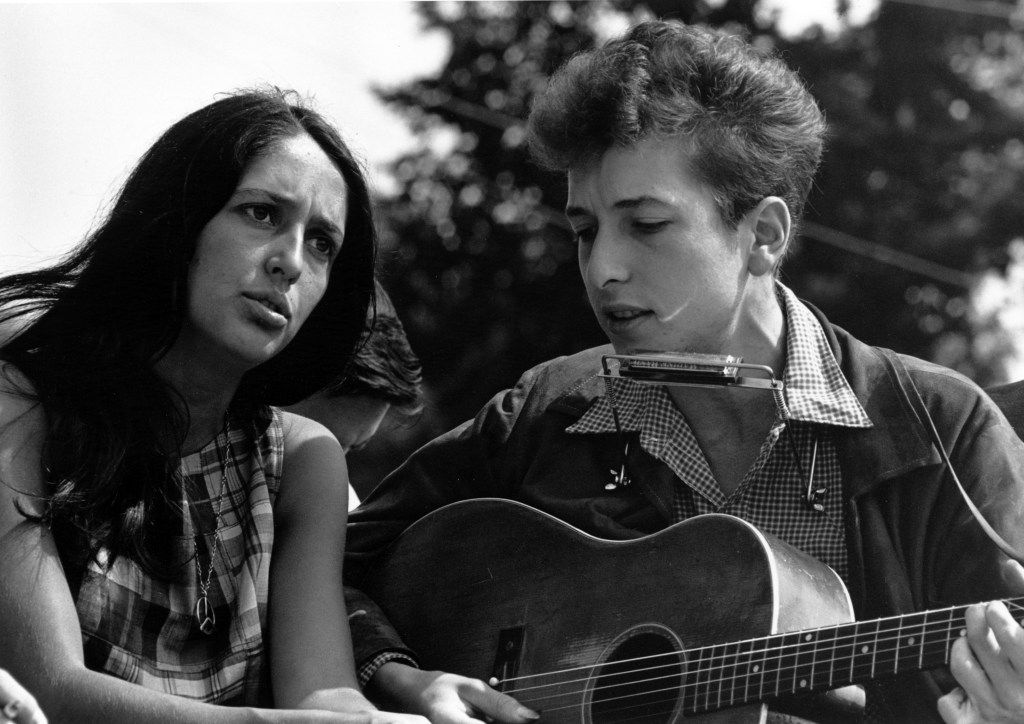
Steve Earle, The Revolution Starts Now (Q&A)

How does this album exactly define the word “revolution”?
 
The Revolution starts now in that it starts as soon as you wake up and realize that it’s been going on with or without you, and that your input is needed. I’m not a believer in violent revolution, but only because a lot of people learned that for me, that came before me. I don’t blame the shape the country’s in on them –I blame it on us. I blame it on people that think like I do that went to sleep, that became less involved. And I think the part of it that people have a hard time getting through their heads is there’s never going to be a time that we can coast. Our brand of democracy just doesn’t –and I’m not sure any brand of democracy- lends itself to that. Ours definitely doesn’t. I don’t really have a problem with conservatives –I don’t agree with them. But these guys that are in power right now aren’t conservatives, you know, they’re neocons, which aren’t conservatives. What scares me more than anything else right now is we’ve got liberals that are afraid to call themselves liberals, and conservatives who won’t say out loud that this guy isn’t a conservative and he’s running the country into the ground, because he’s not [a conservative]. These are not conservative policies. I voted for Bill Clinton twice, the only Republican that I ever voted for. And he was a lot more conservative than Bush ever thought about being, with most of the thing conservatives are normally worried about.
 
In the liner notes, you used the word “immediate” to describe the atmosphere surrounding the recording of the new album. Is this an album just for these times, or is it meant to reverberate beyond that?
 
Some of it is just for this second, but some of it is not. I think “The Revolution Starts Now” is for all times. And I think Rich Man’s War could be about any war. It’s about three wars that are going on right now.
 
It takes an interesting turn with that last verse.
 
Yeah, well the deal is the people who sit around and decide it’s time for us to go to war very rarely get shot at, and I think that’s part of the problem.
 
Is it harder for artists to speak out and be heard now than it was, say, during the Vietnam era?
 
Well, we’re just living through this weird little pocket of time we’re somebody came up with this bizarre idea that it wasn’t appropriate for artists to comment on the society that they live in. That’s a new idea.
 
Mark Twain said the artists are the true patriots.
 
That’s it. That’s what Kerry meant when he was speaking before all those artists and said, “you are the heart and soul of America.” It probably wasn’t his best way to phrase it, but that’s what he meant. We’re people, you know, and a lot of us come from pretty humble backgrounds. And I come from a moderately humble background. My dad was an air-traffic controller and a GS-13 when he retired. We were comfortable but there were five kids.
 
You’ve started to write poetry and prose over the last few years, as well as paint and act. Has working in these mediums had any effect on your development as songwriter?
 
Oh yeah, I think “Warrior” would have been completely impossible without my involvement in theater. It would never have occurred to me to write a spoken-word piece in iambic pentameter if I had not been heavily involved in theater for the last five years.
 
Who are you trying to reach with the new album? I think it’s pretty safe to say that the people who have bought your other albums will buy this one as well.
 
Yeah, they will. I’m trying to reach the people that have been quiet and aren’t O.K. with what’s going on. They know something’s wrong, but haven’t been comfortable with saying something about it. I think that’s happening and that people are starting to look for something. The reaction to this record so far has been so overwhelmingly positive. It’s very early but it’s much different than when Jerusalem came out. I had the usual squawkers [with Jerusalem]–the people I was trying to piss off, and they responded the way that they normally do.
 
And that was mostly just because of John Walker’s Blues.

 
Yeah, and with this one I even got a four-star review in the New York Post, which kind of concerns me. My one-star review for Jerusalem [in the N.Y. Post] is one of my prouder moments. It’s been much easier to get [this album] on radio so far. It’s the second day out, we’re number five at Amazon, and that’s a pretty good indicator for me. I’m an adult artist, so I sell records at Barnes & Nobles and Amazon and Borders –those are my biggest retail outlets. I think I’m hoping to reach people that are not necessarily hard-core progressives but are starting to realize they got lied to. It’s regular people that will go and die if we keep pursuing this policy we’re pursuing. And it won’t end in Iraq. It’s not designed to end in Iraq. It’s really insane. They’re talking about us never not having troops in harm’s way. That’s what they want, and it’s not their kids.
 
Truman said Korea was going to be a police action over the weekend.
 
Yeah, and we’re still there.
 
You’ve helped a lot of young bands and artists get their start with E-squared. I’m thinking specifically of Marah and the V-Roys. Was that a way of doing the same kind of thing Townes and Guy did for you?
 
Yeah, producing records and signing bands like that was a teaching process. I like to teach – I do sometimes. But I try to approach that [producing] as a teacher. And some people are more teachable than others, and sometimes it’s a better experience than others.
 
Any advice for aspiring young songwriters?
 
It’s tough nowadays. Always be willing to do the work, but always be suspicious of anything anytime anybody asks you to change the art itself, because probably the people that are asking you have never made art before. Especially if someone who has never made any art before tells you how to make art, you should definitely process that information very, very carefully.
 
Would this album have come out differently had you spent more time writing songs and recording in the studio, or do you like the sense of urgency it has?

It would have been different and it probably wouldn’t have been as urgent. I think it was made exactly the way it needed to be made and I’m pretty proud of it.

(American Songwriter, 2004)