Caine O'Rear is a writer and editor based in Mobile, Alabama. He is the former editor in chief of American Songwriter Magazine. Follow him at www.instagram.com/caineorear.
Editor’s note from American Songwriter’s November/December 2017 issue
The music world was still reeling from the events in Las Vegas when news came across the transom that Tom Petty had died.
It seemed like the universe’s idea of sick joke.
Petty’s death sent shock waves across the music world and his legions of fans. And it came when we were still trying to process news of the worst mass shooting in modern American history, a mind-numbing act that left 59 dead and nearly 550 wounded. The shooting occurred at a country music festival, so, naturally, for the people of Nashville, it hit close to home. There was something so chilling about the affair that no one mentioned the news in our office the day it happened. Such are the times we live in.
And then later that afternoon, I heard an intern say, “Oh man, we lost Tom Petty.” Reports of his death were initially erroneous, as Petty did not actually die until later that night, after suffering cardiac arrest earlier that morning. But we knew the score when the news broke.
What made Petty’s death so shocking was the fact that he’d just completed a mega-successful tour, a 53-show run that celebrated the 40th anniversary of the Heartbreakers’ debut album. We had caught the show in Nashville at Bridgestone Arena, back in April, and Petty and his band were very much in fine form. The energy level was high and he delivered a set that was heavy on the hits, with the audience seemingly singing along to every word. In the frenzy of that moment, it was hard to fathom a world without Petty’s songs in it.
This issue closes with a remembrance of Petty by Paul Zollo, who collaborated with the late songwriter on a book called Conversations With Tom Petty, originally published in 2005. Petty was always suspicious of journalists and kept his cards close to his chest, but with Zollo he was, quite literally, an open book. The Gainesville, Florida native knew he had a gift, but he was also a consummate craftsman, as he revealed to Zollo, working and reworking songs until they were just right. For Petty, songwriting was a calling. Like so many of our great artists, he had no choice but to follow the muse.
And he never lost sight of what makes people fall in love with rock and roll in the first place.
“The secret, really,” he said, “the most important thing, is: Have a good time. Don’t take it too seriously. You’ve got to take it seriously enough that it happens. But don’t let anything throw you … and if you keep it on that level, and be sure you’re enjoying it, then that will carry and they’ll enjoy it … So I always try to enjoy it. And the audience sustains me. That is the truth.”
His appreciation of the audience was not lost on those who loved his music. They always knew they were part of the equation. His shows were a party, and everyone was welcome at the table.
Petty hated the idea of trying to appeal to a core “demographic,” a notion he felt was anathema to the spirit of rock and roll. “I get a lot of letters from little children, and I really like that, because little kids don’t lie,” he said.
P.T. Barnum’s proclamation that “there’s a sucker born every minute” may be a golden rule of show business, but Petty stood in steadfast opposition to that idea. His songs were uncommonly honest. And that, I think, is what makes them so great. The notion of authenticity in music and art is a ridiculous one, yet it’s the subject of endless debate in Nashville, especially where country and roots music is concerned. But the point is always moot. Everyone knows an honest song when they hear one.
Margo Price, our cover subject, is no bullshit artist, either. Her debut solo record, 2016’s Midwest Farmer’s Daughter, established her as one of Nashville’s young songwriting luminaries. That record was passed up by every Nashville label she sent it to before finding a home at Jack White’s Third Man Records, who embraced it with open arms. It seems plausible to assume the other labels deferred for demographic reasons, because “Hands Of Time,” the album’s centerpiece, is undeniable. An epic cry of the heart, the song chronicles Price’s rough and tumble childhood, the death of her baby years ago, and the slings and arrows that attended the early days of her career. Her new record, All American Made, comes just one year after her debut, and it is even better than its predecessor, which is no small feat.
Finally, we drop in on Bruce Springsteen at one of his residency shows on Broadway. The performance was everything we hoped for, and more, and a reminder of just how nourishing rock and roll can be in the darker hours.
It’s Sunday afternoon in Havana, in late September. Tonight Rufus Wainwright will perform on the stage of the Garcia Lorca Auditorium, an opulent theater space in the Gran Teatro de la Habana, a neo-Baroque showpiece that is one of the architectural marvels of Old Havana. It was here — back in 2016 — that President Obama delivered his historic address to the island, becoming the first sitting U.S. president to visit Cuba since Calvin Coolidge did so in 1928.
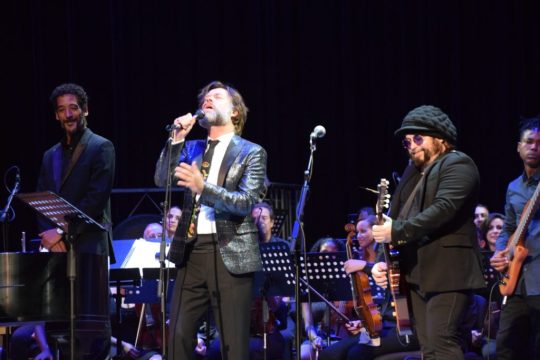
Tonight, the classically trained Wainwright will play alongside the theater’s symphony orchestra. Carlos Varela, a Cuban folk-rocker and occasional protest singer who rarely performs live anymore, will open the show, sounding at times like a Latin mashup of Roy Orbison and Tom Petty.
The concert is a big affair. The patrons arrive shortly before the 5 p.m showtime. They are dressed with a casual elegance and get out of their taxis at the entrance to the theater. The humidity is oppressive. It is just weeks after Hurricane Irma has menaced the island, leaving 10 Cubans dead, massive flooding in the streets, and much of the island without electricity for more than a week. To the tourist eye, there are few signs of the hurricane’s mark in downtown Havana, other than the closing of the Malecón, the esplanade along the water that runs through seven kilometers of the town. But there are Canadian diplomats sitting next to me, talking about the damage in other parts of the country and the suffering it has caused.
Wainwright’s show is part of a music and cultural tour of Havana that was put together by the U.S. travel company Music Arts Live, with Wainwright performing two shows during the week. The Sunday performance is the final accent on a week-long moveable feast of food, art and music, capped every night with performances from some of Havana’s top musicians at various locales throughout the city.
Tonight’s show is special, in part because it finds Wainwright performing with Cuban musicians for the first time. The theater, with its wraparound balconies, chandeliers and frescoed ceiling, boasts an old-world elegance. So much of the Cuba experience is about the illusion of feeling “back in time,” and this night is no exception. The Montreal native performs frequently with orchestras, and his music is well suited to the format. There is also the understanding that an event like this — a prominent American musician performing with a Cuban orchestra — may not happen for some time, as relations are not good between the two countries.
Halfway through his set on Sunday night, Wainwright, speaking through an interpreter, tells the crowd: “I am American and Canadian. And let’s just say that in Cuba I feel more Canadian. I love the United States … ”
Suddenly, there is a problem with his mic.
“Is that Donald Trump cutting off the sound?” he quips to much laughter.
And then he continues: “I do feel that at the start of the Obama years that things started to look more positive between Cuba and the United States. And now the cat’s been let out of the bag, and we must come together as people, no matter what the Orange Monster says.”
And with that, Wainwright breaks into the darkly foreboding “Going To A Town.”
I’m going to a town that has already been burnt down
I’m going to a place that has already been disgraced
I’m gonna see some folks who have already been let down
I’m so tired of America
There is a sustained and solemn applause from the crowd and the Cuban girl sitting next to me is crying.
*****
A few weeks after the show, the situation between U.S. and Cuba deteriorated. The U.S. State Department expelled 15 Cuban diplomats from the Cuban embassy in Washington, and the Trump administration sent home 60 percent of its embassy staff in Havana, citing a series of “sonic attacks” against American diplomats living there. The attacks, most of which allegedly occurred in 2016, reportedly caused brain swelling and permanent hearing loss in some victims. As a result, Cuban diplomats were kicked out of Washington for not protecting Americans on Cuban soil. The State Department also issued a travel warning saying Americans could be attacked if they visit the island. The U.S. government stopped short of blaming the Cuban government for the attacks, and some have speculated the attacks were the work of Russia, a country whose ties to the island run long and deep. Recently, the Cuban government released a statement saying the noise came from cicadas, believe it or not.
******
Early on in the trip, Wainwright tells his fans at the Melia Habana hotel that the mission of the trip is to help keep U.S-Cuban relations intact. It’s a quixotic statement but one that’s sincere.
Wainwright fell in love with Cuba five years ago, when he first visited the island with his husband, Jorn. At the time, they wanted to see Cuba while Fidel Castro, who died in 2016, was still at the helm. “We were seduced by the architecture and climate, but it was really the people who brought us back,” Wainwright says. “And there was a period with Obama about reconnecting and moving on and it was exciting to be a part of it. And now that the American situation [with Cuba] is not so great, I thought it was important to keep the conversation [that Obama started] going.”
During his time in office, Obama sought rapprochement between the long-time adversaries, even calling for Congress to lift the 54-year embargo on the Communist-ruled country: a plea that would fail to materialize. But progress was made. Diplomatic relations resumed for the first time since the Castro-led revolution in 1959, and foreign embassies in both countries reopened. Some restrictions on American travel to the island were eased, and tourists could bring rum and cigars back to the States. Trump has since sought to overturn several of these measures.
“For all of our differences, the Cuban and American people share common values in their own lives, a sense of patriotism and a sense of pride, a lot of pride,” Obama said during his speech in 2016. “And that’s just why I believe our grandchildren will look back on this period of isolation as an aberration, as just one chapter in a longer story of family and of friendship.”
With the way things are going, that may very well not be the case. But this night at the Gran Teatro is about friendship, it seems. The Cuban minister of culture is even reported to be in the crowd. During the show, Wainwright plays a cross-section of his hits from his nearly 20-year career, including the old chestnut “Cigarettes and Chocolate Milk,” a paean to his former indulgences and wilder days. We also hear a selection from his 2010 debut opera Prima Donna. Symphony conductor Giovanni Duarte commands the baton and works well with Wainwright, who comments throughout the show on his classical influences and notes which songs were informed by composers like Ravel and Verdi. Carlos Varela joins Wainwright late in the set. There is also a performance of the Leonard Cohen standard “Hallelujah,” a staple of Wainwright’s repertoire.
*******
A few days before the show at the Gran Teatro, Wainwright and his coterie of fans pay a visit to the National School of Art, a division of the Instituto Superior de Arte. The students, high schoolers, are dressed in uniform — white button-downs with brown pants for the boys and brown skirts for the girls. They represent some of the most promising young musical talents in Cuba, and the school’s list of alumni is long and distinguished.
We are seated outside near a courtyard, and the air is suffocating. Wainwright is there for a Q&A session. He is joined by symphony conductor Giovanni Duarte, an alumnus of the school. Duarte tells the students he lived outside of Havana as a student and had to rise at 4 a.m. each day to make it there on time. “The only thing that saved us all [in those days] was music,” he tells the students, speaking of Cuba’s Especial period, a time in the ‘90s that found Cuba suffering extreme economic distress in the wake of the collapse of the Soviet Union, who had subsidized much of the island’s economy during the Cold War.
An NSA student by the name of Brayan Alvarez dazzles us with his gifts on piano. His piece incorporates elements of classical, ragtime and native Cuban influences. The students at NSA receive general education courses, but the focus here is on the music. They are tested at the pre-kindergarten level, and those who score high in music aptitude are put on a specific track.
Javier Mendez, a self-assured 16-year-old student, steps up to the mic (“I speak English” he says) and volunteers his talents to the crowd, performing Aretha Franklin’s “Ain’t No Way.”
Later, during the Q&A session, Wainwright speaks through an interpreter. There is very little English in Cuba, outside of the tourist center, though private English instruction is reportedly on the rise.
“I always knew I wanted to be a popular performer,” he tells the students at one point. “I chose to use my classical influences as a secret weapon. I like to do that without them knowing what is happening.”
He adds that Nina Simone was the first artist he heard that made him believe it was possible to fuse classical and popular music.
But more than anything else, Wainwright says, he considers himself a songwriter. Early on in his career, he says he would work on his songwriting for hours a day. And then it got easier, he says, and the songs started coming faster. It was then that he decided he needed to challenge himself, so he started writing operas. “When it gets easy, maybe it’s time to try another avenue,” he says.
Wainwright’s first opera, Prima Donna, debuted in 2010, and he’s currently at work on another called Hadrian, set to premiere in Toronto in the fall of 2018.
As the morning winds down, a student from the audience asks Wainwright if he’ll play a song. He responds that he won’t play anything on the piano but will perform a tune with just the vocal.
He then relates a story about his late mother, the Canadian folk-singer Kate McGarrigle. He says that after she died, even though he’s not particularly religious, he went to three churches in New York to light a candle for her, and none of the churches had any candles in stock. “At first I took it as a message [from her],” he said, [that said], “I’m okay, you don’t have to do this anymore. Then I went to Paris and visited Notre Dame Cathedral and lit a candle and I realized my mother just wanted a very different venue.”
Then he proceeded to sing “Candles.”
It’s always just that little bit more
That doesn’t get you what you’re looking for
But gets you where you need to go
But the churches have run out of candles
*****
On the second night of the trip, Wainwright’s group of 100 or so fans — mostly Americans with a smattering of Australians, Europeans and Canadians thrown in the mix — are treated to a private, stripped-down concert at the Teatro de Belles Artes in Old Havana. The show is heavy on banter and Wainwright alternates between a Steinway and Sons piano and a Martin acoustic. We hear two Leonard Cohen covers, including “So Long, Marianne,” as well as few numbers from Wainwright’s recent Shakespearean sonnets album.
The following evening involves a concert at Palacia de la Rumba in the neighborhood of Vedado, a cool and happening arts neighborhood that is also home to the University of Havana. The first band we hear is Yoruba Adabo, one of Cuba’s best-known purveyors of rumba, a style of Cuban music and dance that originated in the late 19th century. Yoruba Adabo practice Yoruba, a West African religion that is often incorporated into Santeria, which mixes West African religions with Roman Catholicism and is practiced widely in Cuba. The group’s performance is attended by dancers, and the crowd, including Wainwright, joins in, giving it their best despite the awkward spectacle it provides.
Next up is the group Interactivo, a jazz collective that has collaborated with many world-class artists, including Wynton Marsalis. The leader of the group is Roberto Carcassés, a keyboard player who graduated from the National School of the Arts in the early ‘90s. For many in attendance this is one of the musical high water marks of the trip.
*******
International tourism has grown substantially in Cuba over the last decade. Even when the U.S. government said it was verboten for Americans to travel to the island — a violation of the Treasury Department’s “Trading With The Enemy Act” — the more enterprising found their way around the restrictions. But for many on this trip, this seemed like it might be the last time they could legally visit Cuba for a while.
In 2010, Raul Castro loosened restrictions to allow for more private enterprise. One local I met there, who did not want her name published, lives in an apartment that her father bought her for $30,000 cash. (The buying and selling of property officially became legal in Cuba in 2011.) Airbnb’s are also now legal in Cuba, and this writer stayed at three different locations, with rates ranging from $20 to $50 per night.
Much of the Cuban economy now operates on the black market. Standard state-sponsored “straight jobs,” even ones that require a higher education degree, pay very little, so many Cubans take up side hustles to make ends meet. The average Cuban salary is around $25 per month. Black market gigs could involve things like driving an unmarked taxi and catering to tourists or selling fake Cuban cigars on the street. Food rationing still exists, and all Cubans receive a monthly allotment of rice, sugar and oil, but it’s not enough to live on.
There seems to be a constant shortage of humanitarian goods. One of my Airbnb hosts tells me there is only one store in Havana that is carrying toilet paper at the moment. “This is how it is in Havana,” he says with a laugh.
Another Cuban I meet says he had an opportunity to move to the United States, under a very special circumstance allowed by the Cuban government, but decided against it, reasoning that life as an immigrant in the U.S. would prove too difficult. “I’m not rich but I have a nice life here,” he says.
Monuments to the revolution pervade the town. A sign along the road to the airport reads “Socialism or death” in Spanish. Another billboard advertises the upcoming elections in 2017 and 2018, with the tagline “a genuine demonstration of democracy.” One sees very few image of Fidel Castro, as the former leader requested that his image not be reproduced across the country, but the visage of Che Guevara, who was Argentinian but fought with Castro in the revolution, is ubiquitous.
Some Cubans harbor hope for political reform when Raul Castro steps down as president in 2018. Miguel Diaz-Canel, a Communist Party official that currently serves as one of the country’s vice presidents, is said to be the logical successor. The name of Raul’s daughter, Mariela, a social progressive, has also been mentioned.
One is tempted to avoid the romanticized portrait of a place that often attends a vacation, but there is no denying that the people in Cuba are incredibly friendly and warm. There is also very little violent crime in Cuba — guns and drugs are basically non-existent— so the place feels unnaturally safe from those threats, at least. Hitchhiking is a national pastime, along with baseball and flirting, I’m told. You always feel like a fiesta could strike up anywhere.
*****
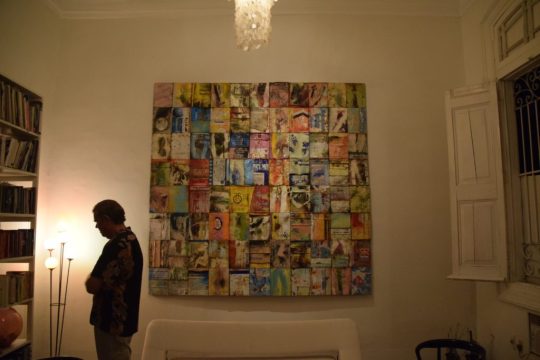
On Sunday night, after the show at the Gran Teatro, Wainwright and his group head to the house of his friend Pamela Ruiz, an American expat who grew up in New York City and now lives in Havana. Ruiz runs a paladar — a unique Cuban concept whereby the owner runs a restaurant out of their place of residence — from her villa in Vedado. Ruiz’s husband is a Cuban visual and mixed media artist named Damian Aquiles. (Their home was the subject of a 2015 New York Times magazineprofile, where they’ve entertained the likes of Will and Jada Pinkett Smith.)
The evening is the perfect cap to a great week of music, art, friendship and history. Aquiles’ artwork adorns the walls, and there are two bars serving mojitos. Later, we are served paella out of a huge vat. This is the best meal we’ve had all week by a long shot, and we all feel lucky to get a privileged glimpse into this secret garden of Havana.
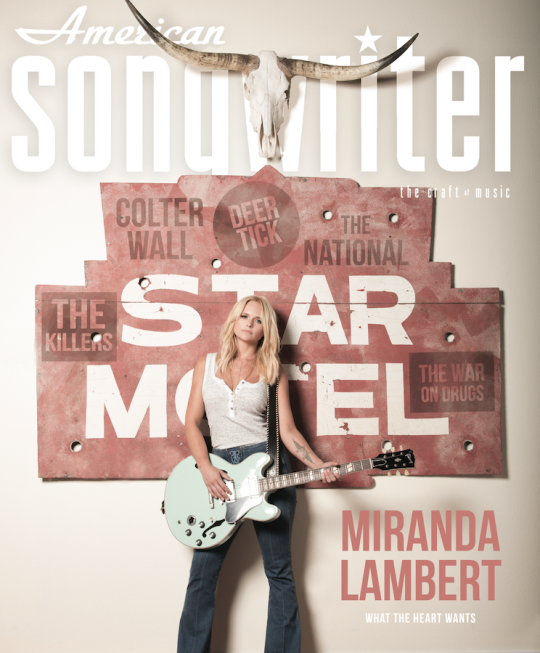
The September/October 2016 issue, featuring Miranda Lambert on the cover, hits newsstands on September 12, but the digital edition will be ready and available for download on September 6. In addition to the feature on Lambert, the issue includes profiles of The National, The War On Drugs, Colter Wall, The Killers, Torres, Ray Wylie Hubbard, and many more. Below is the editor’s note from the new issue.
This issue is going to press just days after a 32-year-old woman named Heather Heyer was run over and killed in broad daylight in Charlottesville, Virginia while protesting a white supremacist rally. Nineteen others were reported injured that day, including a black man named Deandre Harris was severely beaten in a parking garage by some of the marchers.
President Trump drew ire for not immediately denouncing the white supremacists with Unite The Right, a segment that is understood to be part and parcel of his base. The following Monday he finally rebuked them, but for many it was too little, too late. There were also more callings for the firing of White House Chief Strategist Steve Bannon, whose prior work at the right-wing website Breitbart, Bannon once claimed, helped create the platform for the alt-right, a movement dedicated to white supremacy and white nationalism.
As of press time there are plans for more white supremacist rallies and Richard Spenser, the buttoned-up de facto leader of the movement, has vowed to make Charlottesville the center of its universe.
There will no doubt be a flood of songs about Charlottesville. It was a historical moment, to be sure. Wilco released one just two days after the event, with proceeds benefiting the Southern Poverty Law Center. “My dad was named after a Civil War general, and he voted for Barack Obama twice,” Wilco frontman Jeff Tweedy said upon the song’s release. “He used to say, ‘If you know better, you can do better.’ America — we know better. We can do better.”
It’s been argued Trump’s appeal to the white working class is due to the group’s economic desolation. But the alt-right, whose actual numbers don’t appear to be that large, are driven by other things as well. Spencer’s motivation appears to be purely ethnocultural. He is the son of a north Dallas ophthalmologist and holds degrees from the University of Virginia, the University of Chicago, and Duke University. He does not come from a desperate economic situation — he just wants a white nation state.
*******
Art and politics have always been tricky bedfellows, and it is a difficult balancing act when songwriters take on the big societal issues. How constructive is agitprop or rhetoric in songwriting? And how do you avoid just preaching to the choir?
Steve Earle, no stranger to politically tinged songs, says the job of songwriting is about empathy, about making people see the humanity in those different from them (a tall order when dealing with neo-Nazis). Bruce Springsteen has adroitly walked the line between the political and personal. A lifelong Democrat who campaigned for Obama and Hillary Clinton, Springsteen’s audience comprises fans from all political stripes, even though he has caught heat at times. A New York Police group, for instance, called for a boycott after the Boss wrote and performed“American Skin (41 Shots),” a song from ’99 about the shooting of Amadou Diallo by four NYPD plain-clothes officers. Springsteen continues to play the song in concert to this day.
So much of American folk music, it seems, has tilted toward the left. Pete Seeger and Woody Guthrie were not partisans but they frequently targeted fascists and authoritarianism. The famously omitted verse of Guthrie’s “This Land Is Your Land” questions the legitimacy of private property and his song “The Unwelcome Guest,”from the Billy Bragg and Wilco Mermaid Avenue sessions, is a Marxist anthem if there ever was one.
Country music, throughout its history, has spoken to a certain social structure, one that is largely religious and conservative. Haggard’s “Okie From Muskogee” was in many ways a tribute to the white working class. Haggard wrote it, he said, in support of the type of people he grew up with, the ones who were going to be sent to Vietnam because they had no other choice. He was tired of seeing them get picked on by the hippies and privileged class, so he stood up for them.
The late Lou Reed once asked Vaclav Havel, the dissident playwright from Czechoslovakia whose work helped dismantle Communism, and who later became president of the Czech Republic, if art and music could change the world. Havel said art could not change things on its own, but added that it could change people, and it was up to them to take it from there.
Since Trump’s election, there has been a growing chorus calling for country artists to speak out against racism, since they have the ear of rural and conservative America. One mainstream country singer, Kip Moore, took to Instagram after Charlottesville and repudiated the racism he saw growing up that still exists.
“The gift of kindness may start as a small ripple that has the potential of turning into a tidal wave,” Moore wrote. “… It starts with each one of us individually if we wanna change what this world looks like. Go out of your way to take care of people and spread kindness … I’m not tryin’ to preach, but I’m way more concerned with the state of my fellow brother than the state of my Instagram following. Take a break from your 100th bathroom selfie and pay attention to what’s taking place around you.”
Jonny Fritz lifted more spirits Sunday night than any Nashville preacher could have managed.
For a special one-off show, the artist formerly known as Jonny Corndawg reunited with his old sidekick Joshua Hedley for a night of laughter (and occasional tears) at Nashville’s Basement, a venue Fritz has played innumerable times throughout his career. It was a joyous event, and it felt like getting a dose of the old-time religion, of the sort that involves snake handling and speaking in tongues.
Two years ago Fritz moved to Los Angeles after living in Music City off and on for the past decade. Sunday’s show felt like a homecoming of sorts, with Fritz even remarking at one point that “this feels like home.” And though the part-time leathersmith and occasional American Songwriter contributor espouses a “don’t look back” philosophy, there was a hint of nostalgia in the air for the left-of-center Nashville country scene of the mid to late aughts.
It’s been nearly a decade since we first made the acquaintance of Fritz, back when he was a raw-boned Virginian with a shaved head who bore more than a passing resemblance to a young Billy Bob Thornton. By then he had recorded a few DIY albums, traversed India on a mystic pilgrimage and written a series of “marriage songs” in the midst of a Yerba Matte binge in Argentina. Naturally, we became fast fans. In fact, he may be the only man on Earth we’d send to interview David Allan Coe.
For Sunday night’s show at the Basement, Fritz played mostly stuff from his latest album, the Jim James-produced Sweet Creep. He also dipped into his back catalog for old favorites like “Trash Day,” “Silver Panty Liners” and “Chevy Beretta,” a cult classic he played as early as 2009 at the Basement with Caitlin Rose (who was in the crowd Sunday night) and John McCauley of Deer Tick.
Hedley, who recently signed a solo deal with Third Man Records, did time as Fritz’s fiddle player for years and his playing Sunday night was just as poignant as we remembered it. On stage, the Florida native is like Sancho Panza to Fritz’s Don Quixote, and a better match of performers is not easily imagined.
Wearing tinted glasses and a leisure suit with a front pocket overstuffed with $2 bills, Fritz spun various tales of misadventure throughout the night, including one about going on a Tinder double date with Robert Ellis in downtown Nashville. Another yarn involved his guitar-making father, who, in his previous career as a helicopter nurse, once arrived on the scene to treat a man who’d had his throat slashed in a case of mistaken identity. “Now, that’s a bad day,” Fritz quipped, speaking about the victim.
Before Fritz took the stage, Hedley played a solo set on acoustic guitar. “It’s good to not be playing for tips, for four hours,” he said, referring to the years he spent playing at Robert’s Western World on Lower Broadway. Hedley’s songs are sad as shit, and he warned that anyone in the crowd who was experiencing depression issues might want to leave. The Florida native, who’s also collaborated with Alabama rapper Yelawolf, played a set of originals and covers, including two Mickey Newbury numbers.
One of Hedley’s own tunes, “Don’t Waste Your Tears,” recalled Kris Kristofferson’s “For The Good Times” in its sad beauty. Before playing another original, “Broken Man,” Hedley told a story about a gig in Charlottesville, Virginia, where a woman came up to him after the show and told him that the song had made her cry. When she asked him what it was about, he said, “a one-night stand.” She just got disgusted and walked away, he said.
Editor’s note: Shortly after this article was published, Joshua Hedley tweeted: “Just to clarify; I love playing at @RobertsWWorld for tips and I’m doing it tonight and every Monday at 10pm til I die or get fired.”
Late in his set at the Ryman Auditorium, Steve Earle said he’d stood onstage in Chicago many moons ago and told fans that all of his dreams had come true. It was in that moment, he said, that he realized he needed to find some new dreams, and find them fast.
One of those second-act dreams came true Friday night when the so-called last of the hardcore troubadours, whose career has spanned 17 albums and survived all manner of slings and arrows, headlined the Ryman for the first time.
“This is a big deal for us,” he told the crowd.
A child of Texas, Earle was seven years old visiting his grandmother in Nashville, he said, when he first came to the Ryman, where he watched from the balcony as Bill Monroe performed on the Grand Ole Opry. He said he’d been thinking about that experience all day before launching into “You Broke My Heart,” an old-timey sounding country waltz that he wrote in the spirit of the venue.
“You Broke My Heart” features on Earle’s latest, So You Wanna Be Outlaw, an album that functions as a tribute of sorts to Waylon Jennings and Willie Nelson and their fight to wrest artistic control away from the anal retentive Nashville studio system. Like so many country greats who get slapped with the problematic “outlaw” tag, Earle’s output has been both traditional and subversive, a fact that was evident in a set list that moved peripatetically across genres.
The front end of Earle’s show drew heavily from the new album, and the third song of the night, “The Firebreak Line,” tipped its hat to America’s firefighters. With wildfires menacing much of the West, the tune is a modern-day folk number that finds Earle channeling his innermost Woody Guthrie. Another set highlight was “News From Colorado,” a song he co-wrote with his niece Emily Earle and ex-wife Allison Moorer before they split.
“Emily is in the crowd tonight, and Allison is not,” Earle deadpanned, adding that the audience would be hearing more from his niece, a Nashville-based songwriter who “survived for four weeks on The Voice without managing to end up in the hot tub with CeeLo.”
Hanging over the night, as if in benediction, was the legacy of Guy Clark, a mentor to Earle and a host of other Texas and Tennessee songwriters through the years. Before performing “Goodbye Michelangelo,” a song written about Clark shortly after his death, Earle spoke about the “L.A. Freeway” writer’s final days and the all-night bus trip he took with Clark’s inner sanctum to deliver Guy’s ashes to Santa Fe. He then talked about his old teacher’s decision to co-write late in his career, a move that inspired Earle’s own recent co-writing ventures.
Back in the ‘70s, Clark had advised against co-writing, but he eventually changed his tune. “Mainly I just got stuck, I ran out of shit to say,” he told American Songwriter in 2011. “I’ve found that with co-writing, there are a lot of young phenomenal songwriters and guitar players that come over here and write. And I learn so much from these guys. I’ll go, ‘Wow, how did you think of that?’ Or, ‘let me learn it.’”
Earle encored the show with “Desperadoes Waiting For A Train.” A song from Clark’s first album about a young kid and his hero’s death, it brought the night full circle.
Opening the show was Lucero, the Memphis bar-band exemplars who were playing the Mother Church for the first time. “We’ve never played the Ryman before but this is quite a place ya’ll have got,” said frontman Ben Nichols, who swigged whiskey throughout the set and joked that “you’d be nervous too if it was your first time playing the Ryman.”
There must be something about the Ryman and the memory of grandparents. Earle spoke about his grandmother, and before the last Lucero song of the night, Nichols wondered aloud what his grandfather would have thought about him playing the august venue. With just his accordionist, the unassuming frontman then delivered an emotional reading of “The War,” a song from 2005’s Nobody’s Darlings that recounts his grandfather’s experience in World War II. “Cause takin’ orders never suited me, giving them out was much worse,” Nichols sang, summoning a spirit kindred to his own.
When Pablo Picasso saw the prehistoric cave paintings at Lascaux in southwestern France for the first time, in 1940, he remarked that modern art had invented nothing. The sophistication of the 17,000-year-old images — mostly animals in the form of bison, bulls and horses, some of which appear to be in motion — humbled him to the point that he questioned his own ideas about art, and his role in its history. Or so the story (which may be totally apocryphal) goes.
In 1955, Chuck Berry released “Maybellene” to the world. The song introduced an iconic guitar sound and several Berry themes that he’d continue to thread throughout his songs: girls, cars, and the open road. Sixty-two years later, the tune crackles with such energy and spirit one is left to wonder whether modern rock has invented anything. With few exceptions (The Beatles’ Revolver and Dylan’s “Like A Rolling Stone”), it seems there has been little that has approached the heights of “Maybellene,” that has kicked open the doors with such force and promised so much new life.
Berry died this March at the age of 90. “He is rock and roll in its pure essence,” Keith Richards wrote in Rolling Stone after his passing. “He was the granddaddy of us all.” John Lennon, also one to acknowledge his debt to his forebears, famously said Berry’s name was synonymous with the art form.
Before his passing, Berry recorded an album of original songs called Chuck that was released this June. It was his first release since 1979. Some of the songs date back to the ’80s, and the story of how the album came to be made is a long and circuitous one. Berry enlisted help from his family and his new record label Dualtone, whom we interview in the cover story.
By all accounts, Berry was a complicated man, guilty of some indiscretions in his time that are hard to ignore. But there are also testimonies that reveal a generous spirit and beloved family man. It seems fitting that Berry sprang from St. Louis, a town on the Mississippi River, that mysterious waterway traveled by Huckleberry Finn and Jim that is symbolic of so much of the nation’s history and racial past. Like his fellow founding father, Elvis, Berry synthesized blues, R&B and hillbilly music to create a whole new sound that transcended racial lines and perhaps sought, on some level, to bridge that great divide.
As Stephen Deusner points out, Berry taught us how to be a rock songwriter. “He wrote with verve and clarity, borrowing from the American songbook and using ‘Wabash Cannonball’ and ‘Old Brown Jug’ as the raw materials.” Berry once told Robbie Robertson that he drew from poetry to craft his early songs. Lennon certainly appreciated his lyrical innovation. “In the ’50s, when people were virtually singing about nothing, Chuck Berry was writing social-comment songs, with incredible meter to his lyrics,” he said.
Berry is not just an artist for this world. Back in 1977, when NASA launched the Voyager 1, “Johnny B. Goode” was featured on the “golden record” carried by the spacecraft, along with selections from Bach, Mozart, Beethoven and bluesman Blind Willie Johnson. The record was meant to serve as a document of life on Earth in our time and as a potential gift to extra-terrestrial life. Now in interstellar space, it is the farthest man-made object from the planet.
“This is a present from a small, distant world, a token of our sounds, our science, our images, our music, our thoughts and our feelings,” former President Jimmy Carter says on the record. “We are attempting to survive our time so we may live into yours.” Indeed.
Four songs into his set Tuesday night at Bridgestone Arena, Tom Petty announced that the band’s next song had not been played live in more than a decade.
And with that, Petty and the Heartbreakers kicked into “You Got Lucky,” an ominous masterpiece of a song that elicited a chorus of “hell yeah”s when the minor chords of Benmont Tench’s synthesizer blasted through the speakers.
It was a testament to Petty’s seemingly bottomless repertoire of hits that he could dust off a song like that willy-nilly and still have it be an anthemic arena sing-a-long.
With the exception of the opening number, “Rockin’ Around (With You)” — the first song on the first Heartbreakers record — and a few other cuts, Tuesday night’s show was heavy on the hits, despite the tour being billed as a celebration of that album’s 40th anniversary.
It was also one of the more raucous and engaged crowds this writer has ever seen at Bridgestone. When Petty played Bonnaroo back in 2013, his set was borderline lethargic, and perhaps that was intentional, given the stoner vibe of the festival. But Tuesday night’s show stood in defiant counterpoint to that. And the crowd, which spanned several generations, responded in kind.
Around the front of the stage, in the not-so-cheap seats, one could find a who’s who of Nashville-based musicians, including Robyn Hitchcock and Wilco’s Pat Sansone. Petty even remarked at one point that if you’re not a guitar player in Nashville, you’re a songwriter. But for the most part, the 66-year-old kept the stage banter to a relative minimum, calling the Nashville crowd “unbelievable” and saying “we can hear every word you’re singing.”
Indeed, it seemed at times that the sold-out crowd knew every word to every song. And it was remarkable to consider just how well these songs have aged through the years. So many of these classic Petty cuts seem to exist in the ether, and the very idea of a world without his music is hard to fathom.
Petty’s voice is raspier than it was in his heyday, but it still gets the job done. And the Heartbreakers, led by guitarist Mike Campbell, who these days resembles a dread-locked Captain Jack Sparrow, never break stride. It’s easy to see why Rick Rubin has long called them the best rock and roll band in the world.
When Petty and the Heartbreakers released their debut back in ’76, some critics dismissed them as a “nostalgic” act. How wrong they were. The final track of that debut album, and the final song of the night, “American Girl,” still crackles with thunder, sounding as fresh and vital as the day it was released.
Death came calling like a thief in the night, as they say, and took some of our best songwriters with him. David Bowie, Prince, Leonard Cohen, Merle Haggard, Guy Clark. There were many more but one loses count.
We were lucky to have the above as long as we did. All raised holy hell in their time, yet defied the rock-and-roll cliché whose story ends with a good-looking corpse. Each slayed personal demons, survived trends and turbulence in the music business, and continued to write well into their winter years — leaving behind bodies of work that will inspire for some time.
Bowie and Cohen, in particular, said goodbye at the top of their game, serving up two of the best albums of the year.
Even before news of his death broke, Cohen was slated to appear on the cover of this issue. In early October, Senior Editor Paul Zollo, an old acquaintance of the maestro, was invited to attend an international press event in Los Angeles heralding the release of You Want It Darker. The album was debuted in its entirety and a Q&A session followed.
It was a special evening. At one point during the group interview, Cohen singled out Zollo and told the audience, “I just want you to know that Paul Zollo did one of the best interviews with me that I ever did.”
That interview from 1992, which is referenced in the cover story, is full of bon mots and little starbursts of wisdom about the craft. Cohen, an ordained Buddhist monk, was also monastic in his approach to songwriting, often rising at 4:30 a.m. to begin the day’s work. For him, it was always a struggle. “Some people may find it encouraging to see how slow and dismal and painstaking is the process,” he told Zollo, before showing him some of the 60-odd discarded verses he had written for “Democracy.”
There’s a lot more to chew on in this issue, as we sit down with Paul Simon, Randy Newman and Bob Weir, all veteran songwriters who are still busy being born, to borrow Dylan’s phrase, and still raising the bar in the Tower of Song.
– Editor’s Note, American Songwriter – January/February 2017 edition
It is said that some art lovers who visit Florence, Italy experience Stendhal syndrome, a psychosomatic condition whereby one becomes so overwhelmed in the presence of famous art that they get physically ill. The phenomena is named after the French writer Stendhal, who, upon visiting Florence for the first time in the early 19th century, described being “in a sort of ecstasy … close to the great men whose tombs I had seen. Absorbed in the contemplation of sublime beauty … life was drained from me … and I walked with the fear of falling.”
Perhaps more than a few visitors to Graceland and Sun Studios have felt this. And though we didn’t exactly faint when walking by the Jungle Room and reflecting on the delights of a fried peanut butter and banana sandwich, it’s hard not to be overtaken by Memphis, and all it has to offer music fans.
Simply put, we had a blast hanging out in the Bluff City while researching this issue. Our trip included a visit to Al Green’s church, the Full Gospel Tabernacle, where we took in an inspiring session of largely improvised gospel (though Rev. Green was not in attendance that Sunday) before moving on to Presley’s estate just down the road.
We got a private tour of Ardent Studios, the place where Alex Chilton’s band Big Star cut all three of its records. We hit Goner Records and Shangri-La Records, two must-see places for any serious record collector. Later, a trip to Sun Records served as a good reminder of the genius of Sam Phillips and just how visionary (and crazy) this man was. As the writer Peter Guralnick told American Songwriter last year, “Sam envisioned [early rock and roll] long before it existed — before it had a name or expression.” If Memphis only had Sun Records to claim, that alone would be enough.
Downtown nightspots like Earnestine & Hazel’s, a former brothel that is purportedly haunted and offers live jazz and blues, did not disappoint. And neither did Raiford’s, a raucous, family-owned late-night disco that first opened its doors nearly 40 years ago and is still going strong.
*****
Tennessee residents are lucky to have two world-class music cities within its borders. No other state can make such a boast. But Memphis is very much its own entity, musically speaking, and shares little cross-pollination with its more countrified cousin Nashville.
So much of Memphis’s musical history draws from the blues tradition of the Mississippi Delta. And many a Memphis native will tell you that, culturally, the city is as much a part of Mississippi as it is Tennessee. But as Luther Dickinson, guitarist for the North Mississippi All-Stars and a solo artist in his own right, points out, what constitutes Memphis music is not bound by geographical lines. And it’s not so much the Memphis sound (as that is a wide pretty wide cosmos unto itself) as it is “the Memphis attitude … it is underground, outsider music that transcends where it comes from.”
The body of work put by Stax records during its heyday in the ’60s and ’70s certainly transcends region. This issue’s cover story looks at the Stax songwriting team of Isaac Hayes and David Porter, a serendipitous pairing that yielded such iconic soul classics as “Soul Man” and “Hold On, I’m Comin’,” to name a few.
Hayes passed away in 2008 but Porter continues to work on behalf of Memphis’ musical legacy. He now serves as the president of the Consortium MMT, a non-profit organization that is working to create and develop a sustainable music industry in the city. He has also been in involved with the Stax Music Academy, an after-school music program that offers music education and mentoring for at-risk Memphis youth. Be sure to check out our story on the academy later in this issue.
We also explore Memphis’s sometimes-ignored indie-rock scene, with a particular focus on the long-running underground punk extravaganza GonerFest and the music of its patron saint, the late Jay Reatard, whose madcap sound and persona functioned as a refreshing juxtaposition to the usual Memphis fare. And we talk to confessional folk songwriter Julien Baker, who at just 20-years-old is making a name for herself with a debut album whose maturity belies her young age.
April is the cruelest month, and with it came the death of Merle Haggard, widely regarded as one of the greatest singers and songwriters in country music history.
The obits called him the “patriarch of outlaw country” and the man who “defined the outlaw aesthetic.” If any country musician could lay claim to the “outlaw” designation, it was Merle, who went to San Quentin prison at age 20 for robbery and an attempted jail escape.
Despite the “outlaw” tag, Haggard stood apart from trends and movements. He was fiercely independent and exceedingly complex as a man and artist. (“There are about 1,700 ways to take “Okie From Muskogee,” he once said.) His work drew as much from blues, jazz and Western swing as it did from the country music of the time. Along with Buck Owens, he is credited with creating the “Bakersfield Sound,” which is often seen as a reaction to the slicker sounds coming out of Nashville in the mid- to late-’50s. I think Haggard was just making the music he wanted to make at the time, and disinterested in the goings-on of Music City. The “Bakersfield Sound” was not a reactionary aesthetic, as far as I can tell.
The popular storyline concerning cover subject Sturgill Simpson, as well as other luminaries like Chris Stapleton and Jason Isbell, is that they represent the “New Outlaws,” a group of subversives hell-bent on upending the machinery of Music Row and restoring “authentic” country music to its rightful place on the throne. It is a narrative that has been played out ad nauseam in the public prints.
From my vantage, all three of these artists are songwriters first and foremost, writing songs and recording music to the best of their ability. Their affiliation with country is largely by virtue of having been raised in the South. No artist worth his salt wants to be confined to a movement, or compared to something that came before.
So much of American journalism cribs from other journalism. The tired old storylines seem to get recycled over and over again, and this is especially true in music journalism. As listeners and fans, we are forced submit to these manufactured narratives that are promulgated by publicists and the media to sell records. “Daddy worked on a railroad.” “I got drunk and thrown in jail.” “I got kidnapped by aliens and was force-fed LSD, please listen to my record.”
It all gets a bit old. Why not just focus on the music, and maintain some air of mystery where the biographies are concerned.
In our cover story, Simpson tells writer Andrew Leahey he didn’t think he had a career when he made his last album, Metamodern Sounds In Country Music, believing at the time that it was the last record he would get to make. Why not go for broke? he thought. His new album, A Sailor’s Guide To Earth, is equally bold, drawing on a wide kaleidoscope of American musical influences. Simpson self-produced the album and recorded it in five days. He went into the studio to lay down some demos but found the groove and called it a wrap.
Writing good songs is not easy. You have to go wherever you can, using the materials at hand. Merle told American Songwriter in 2010 that he spent his professional life chasing the muse. “That’s what keeps me alive,” he said, “that hope that I’ll write the song that’ll knock me out and that will be better than ‘Working Man Blues,’ and better than ‘Mama Tried.’ That’s my reason for believing.” It seems Merle was in competition only with himself.
Another artist featured in these pages who has forged his own path is Will Oldham, a former actor turned recording artist who makes albums under the moniker of Bonnie ‘Prince’ Billy. His latest offering features lyrics that were taken from the fortunes of fortune cookies he had collected over decades. Talk about a novel approach.
Finally, we are retiring our long-running Deathbed contest this issue, and replacing it with “The High Five” (presented by Martin Guitar), which will feature a rotating cast of topics, the first one being “The Five Songs I Wish I’d Written.” We look forward to reading your entries.




 Caine O'Rear